Ruto jolts Judiciary over series of rulings against govt projects
By Aloys Michael, January 28, 2026President William Ruto has scoffed at the judiciary over rulings that have halted or overturned key government policies, arguing that the decisions undermine the will of voters expressed in the 2022 General Election.
The Head of State has cast the decision as an effort to preserve programmes that mirror the electorate’s priorities.
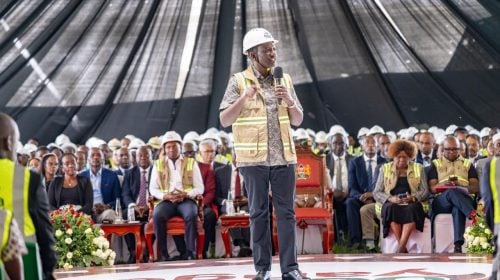
Speaking on Wednesday, January 28, 2026, at State House, Nairobi, during the swearing-in ceremony of newly appointed Court of Appeal judges, Ruto warned that some rulings risk slowing down his administration’s development agenda.
“I have been candid about this reality and, on several occasions, questioned judicial decisions that appear to hinder critical public policy. Some rulings seem to cross into the realms of judicial overreach, or even, as some say, tyranny,” Ruto said.
“I will be respectfully approaching the courts to help us understand so that if the manifesto is not important, we stop wasting time with it.”
Ruto maintained that his administration has consistently complied with court orders despite frustrations over some judgments, revealing that he intends to petition the courts for clarification on the legal standing of policies derived from the party manifesto.
“I want to understand when the people vote for a manifesto, which is endorsed as a policy document, where that manifesto stands when implementation is challenged, sometimes to the detriment of millions who voted for it,” he said.
Ruto-court push back
The developments come in the wake of a High Court decision that nullified President Ruto’s 2025 appointment of 21 advisers.
Justice Bahati Mwamuye issued orders barring the government from paying any salaries or benefits to the advisers after finding that the appointments were made without the mandatory consultation with the Salaries and Remuneration Commission (SRC).
The court ruled that the failure to assess the financial implications rendered the appointments unconstitutional, forcing all 21 advisers to vacate office with immediate effect, a major legal blow to the administration.
Separately, in December 2025, the High Court suspended the implementation of the National Infrastructure Fund after a constitutional petition questioned its legality. Despite the ruling, President Ruto has continued to push for the fund, arguing that it is critical to driving economic transformation.
The decision came after Margaret Gikenyi, J. Benjamin, Eliud Matindi, and two others challenged the implementation in court, citing constitutional violations.
In the same month, the High Court invalidated President Ruto’s Executive Orders that aimed to restructure public hiring and regulate the management of state corporation boards and staff.