Ruto allies intensify Nyanza push amid rising opposition influence
By Aloys Michael, March 25, 2026President William Ruto’s political machinery has shifted into high gear in Nyanza as the race toward the 2027 General Election gathers momentum, with his allies fanning out across the region in an aggressive charm offensive aimed at reshaping long-standing voting patterns.
Yet even as the administration rolls out development projects and courts key local leaders, the opposition is tightening its grip, leaving pro-Ruto factions, particularly those aligned to Orange Democratic Movement (ODM) and broad-based arrangement, at a precarious crossroads.
Core to the strategy is a calculated attempt to integrate Nyanza, comprising Homa Bay, Kisumu, Migori, Siaya, Kisii and Nyamira, into the national political mainstream, which Ruto is eyeing to cement his re-election calculus.
The Kenya Kwanza administration has adopted a multi-pronged approach focusing on infrastructure development, economic empowerment and security stabilisation, signalling both a policy shift and a political gambit.
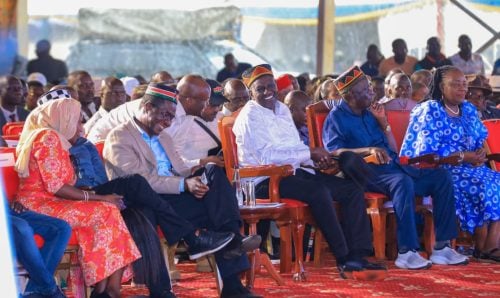
During a five-day development tour of Luo Nyanza, the president sought to reframe his engagement with the region as one rooted in long-term transformation rather than short-term political gain.
Addressing residents in Migori and Homa Bay, he dismissed criticism that he was expending political capital in a region unlikely to support him.
“Ati wananiambia nisikuje Nyanza ati hakuna watu wengi. Ati hapa hakuna kura nyingi. Mimi naambia hao viongozi hii Kenya si ya wale wengi peke yao. Hii Kenya ni ya wengi na wachache,” he said.
“Kazi yangu kama kiongozi wa taifa hii ni kushughulikia wenye kura nyingi na chache na tutawazamisha asubuhi na mapema.”
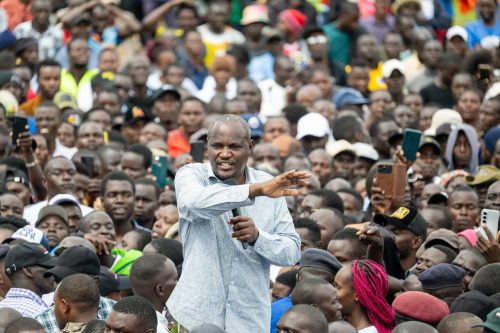
Key allies within government have amplified this message. Energy Cabinet Secretary Opiyo Wandayi urged unity behind the president, arguing that political fragmentation would weaken the region’s bargaining power.
“There are only two formations going into 2027. President William Ruto or Rigathi Gachagua. Ruto is our friend, let us have our own issues, but we must agree that he is our friend,” he noted.
“We have to stay united and vote as a bloc because that is the only way our vote will count.”
However, this position is far from universally accepted. Treasury Cabinet Secretary John Mbadi struck a different tone, asserting that Nyanza must ultimately chart its own path to national leadership.
“When Ruto is exiting, this region must produce the next president of Kenya, and we will give you the right people with the right qualifications and right competence,” Mbadi made it clear.
The Gusii chessboard
Nowhere is this tension more evident than in the Gusii region, where the political ground appears to be shifting rapidly.
Once considered a reliable ODM stronghold with growing inroads by Ruto’s United Democratic Alliance (UDA), Kisii and Nyamira are emerging as battlegrounds shaped by new allegiances and rising political figures.
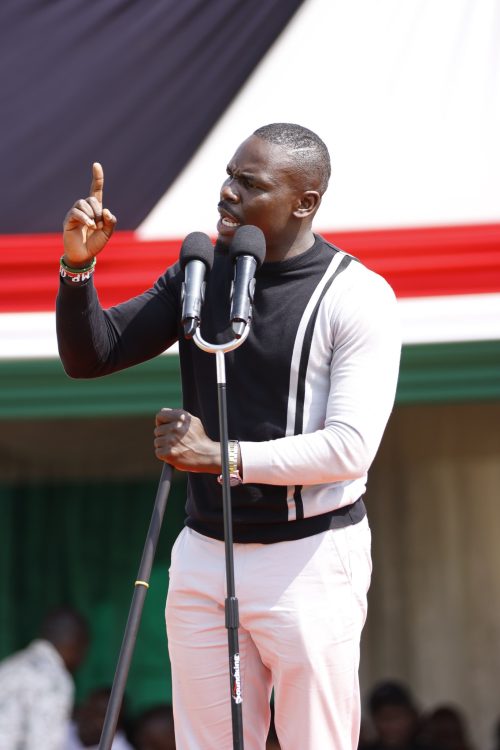
The growing influence of Jubilee deputy party leader Fred Matiang’i has disrupted traditional alignments, presenting a formidable challenge to both ODM and UDA. His endorsement as a presidential candidate and his consolidation of support within the Gusii community signal a strategic effort to build a cohesive regional voting bloc that could anchor a broader opposition coalition.
In Gusii, Matiang’i’s elevation as a community spokesman has further cemented his stature, transforming him into a focal point of political realignment.
Ruto’s upcoming tour of Kisii and Nyamira is therefore laden with high stakes. While such visits traditionally attract large crowds, even as critics caution that attendance does not necessarily translate into electoral support.
“I was telling them, Kisii is locked. Please believe us. But there were too many noisemakers out there. They kept shouting because they were eating at the table, saying their milk is from a funny cow, the People’s Democratic Party (PDP) boss said.

Beneath the surface, there are indications that both UDA and ODM operatives are grappling with a more fluid and unpredictable political landscape.
Local leaders allied to the president have sought to counter this momentum by rallying behind a development-first agenda. Kisii Governor Simba Arati, alongside other pro-government figures, has called for regional unity and alignment with leadership capable of delivering tangible results. Their messaging frames support Ruto as a pragmatic choice rather than an ideological shift.
“We must speak with one voice as a region. Our strength lies in unity and in aligning ourselves with a leadership that can deliver tangible development,” Arati said.
Yet the opposition’s resurgence is difficult to ignore. Recent rallies in the Gusii region have drawn enthusiastic crowds, suggesting a level of grassroots energy that pro-government efforts have struggled to replicate.
For ODM-aligned leaders working with Ruto, the situation is particularly delicate. Their cooperation with the government places them at odds with sections of their traditional support base, raising questions about political survival and long-term alignment.
As the opposition consolidates and new power centers emerge, these leaders face mounting pressure to redefine their positions.