Resign or fight on? Why Kindiki faces a defining dilemma ahead of 2027
By David Nthua, July 28, 2026Deputy President Kithure Kindiki’s political dilemma is not unique.
History shows that deputy presidents facing isolation must choose between preserving access to power and protecting their careers beyond the government they serve.
Kindiki insists he will remain President William Ruto’s running mate in 2027.
He recently told leaders seeking the position to forget it, declaring that the “Ruto-Kindiki ticket” would be on the ballot.
Yet pressure around him is growing.
ODM has declared the deputy presidential position non-negotiable in any 2027 agreement with UDA. It is also demanding a 50-50 share of government.
Wycliffe Oparanya, Hassan Joho and Gladys Wanga are among the names being considered for Ruto’s running mate.
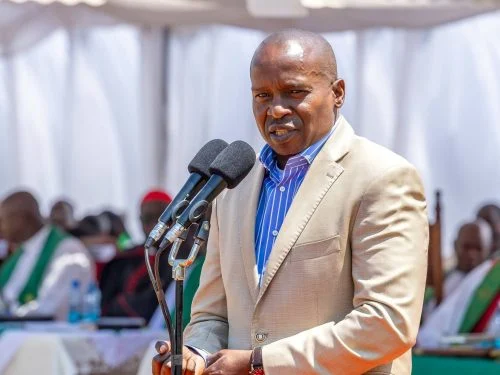
Public Service Cabinet Secretary Geoffrey Ruku has added to the uncertainty. He supports Kindiki but says Mt Kenya East would still back Ruto even if the President picked another running mate.
The Standard has also reported that intergovernmental coordination duties previously handled by Kindiki’s office have been assigned to Prime Cabinet Secretary Musalia Mudavadi.
The transfer does not remove Kindiki from office, but it feeds the perception that his political space is shrinking.
Resignation has rebuilt political careers before
Kindiki’s predicament has historical parallels.
In Zambia, Levy Mwanawasa resigned as vice-president in 1994 following differences within Frederick Chiluba’s administration.
He briefly left frontline politics but returned as the ruling party’s presidential candidate in 2001.
He won and became Zambia’s third president in January 2002.
Mwanawasa’s case shows that resignation can separate a politician from an unpopular administration. It can also preserve an independent identity for a future comeback.
Kenya’s Jaramogi Oginga Odinga followed a different path. He resigned as vice-president in 1966 after falling out with President Jomo Kenyatta.
He then formed the Kenya People’s Union and established himself as the country’s leading opposition figure. He never became president, but his political identity survived long after he left government.
In the United States, John C Calhoun resigned as vice-president in 1832 after deep disagreements with President Andrew Jackson. He moved to the Senate and remained an influential national politician.
His career illustrates how leaving a powerless deputy position can create room for a separate political platform.
These examples do not prove that resignation guarantees success. They show that remaining in office is not always the only path to political survival.
Why Kindiki’s situation is more difficult
Kindiki lacks what made those political exits viable.
Mwanawasa eventually secured a presidential vehicle. Jaramogi had an ideological following and formed his own party.
Gachagua now has DCP and has demonstrated electoral machinery through the Ol Kalou by-election.
DCP candidate Sammy Kamau Ngotho secured 35,440 votes in Ol Kalou. UDA received 5,450.
The nearly 30,000-vote margin weakened Kindiki’s argument that government and opposition forces were evenly matched in Mt Kenya.
However, resigning immediately would leave Kindiki without the deputy presidency, without control of UDA and without an established political vehicle of his own.
Under Article 149 of the Constitution, a vacancy in the deputy president’s office would allow Ruto to nominate a replacement within 14 days.
The National Assembly would then vote on the nominee within 60 days. Kindiki’s departure could therefore allow his replacement to consolidate government networks before 2027.
Gachagua has alleged that Ruto’s allies are frustrating Kindiki in the hope that he will resign. No public evidence has established that the President is directing such a campaign.
Kindiki still has reasons to fight on. An Infotrack survey placed him at 34 per cent as the most preferred person to deputise Ruto. His office also gives him visibility and direct access to government programmes.
Resigning could free Kindiki to build an independent career. It could also end it prematurely.
Remaining in office protects his immediate power. It also risks leaving him politically exposed should Ruto eventually trade the running-mate position for ODM’s support.