Muturi reprimands Ruto over State House overspending culture
By Aloys Michael, March 6, 2026Former Attorney General and Public Service Cabinet Secretary Justin Muturi has taken a swipe at President William Ruto over what he termed excessive spending at State House, even as the government touts austerity measures.
Speaking on Friday, March 6, 2026, during the United Alternative Government’s rally in Tharaka Nithi County, Muturi questioned the logic of lavish expenditure at the seat of executive power while ordinary Kenyans face economic hardships.
“It cannot be that the Kenyan government, the State House of Kenya, spends Ksh17 billion in a single year, whereas the White House in Washington, America, which we go to beg from, spends Ksh12.6 billion. That is embarrassing. Here we are spending so much of taxpayers’ money, yet we still have to beg while the citizens suffer,” he said.
Muturi’s comments come in the wake of revelations that the State House budget for the current financial year has nearly doubled, reaching Ksh16.998 billion following mid-year supplementary allocations under an emergency clause that allows spending without parliamentary approval.
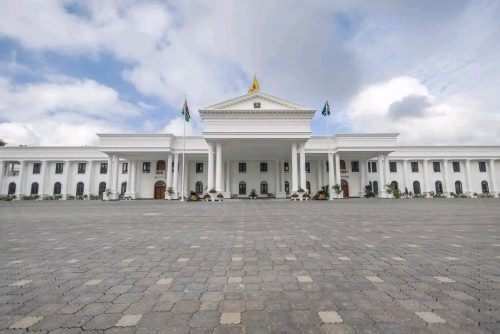
According to documents submitted to the National Assembly by National Treasury Cabinet Secretary John Mbadi, the State House first sought an additional Ksh2 billion on September 8, 2025, citing the need to cater for other operating expenses, which were not classified as emergencies.
Subsequent approvals under Article 223 of the Constitution allowed additional disbursements to cover operational and maintenance enhancements at the State House.
The mid-year allocations propelled the State House budget well above similar institutions in both developed and regional nations. For comparison, the White House in the United States spends about Ksh12.6 billion, Germany’s presidential office Ksh7 billion, Portugal Ksh2.6 billion, and France Ksh17.5 billion.

Misuse of public funds?
In Africa, Kenya’s State House expenditure eclipsed that of Nigeria (Ksh3.1 billion), South Africa (Ksh7.8 billion), Algeria (Ksh8.9 billion), and Tanzania (Ksh1.7 billion).
The surge in spending has set a record: Ksh16.998 billion is the highest allocation for State House since 2013. Recurrent expenditure accounts for Ksh16.1 billion, while development spending remains stagnant at Ksh894.91 million.
The Controller of Budget, Margaret Nyakang’o, has expressed concern that State House risks exhausting its budget mid-year, highlighting the strain on public finances and raising questions about fiscal prudence.
The National Treasury documents also outline the disbursement schedule, showing payments totalling Ksh4.4 billion across multiple dates between December 2025 and February 2026.

The cumulative allocations mark a Ksh3 billion increase over the previous financial year, when the total State House budget stood at Ksh12.07 billion.
In June 2025, the National Assembly approved a baseline State House budget of Ksh8.6 billion, which included Ksh7.7 billion for recurrent expenditure and Ksh894.91 million for development. By February 2026, the budget had surged to Ksh16.998 billion, driven largely by recurrent spending.
Muturi argued that such expenditure is incompatible with the government’s rhetoric of cost-cutting and fiscal responsibility, criticising the contradiction of high spending at the very office meant to oversee governance, while ordinary citizens bear the brunt of economic strain.
“The government cannot preach austerity to Kenyans and at the same time authorise extravagant spending at State House. This is a matter of accountability and respect for taxpayers’ money,” he stated.