MP Robert Mbui reveals why he hesitates moving impeachment motion against Ruto
By Mustafa Juma, April 20, 2026Kathiani Member of Parliament (MP) and Deputy Minority Leader in the National Assembly, Robert Mbui, has revealed why he is reluctant to pursue an impeachment motion against President William Ruto.
Speaking during an interview with a local TV station on Monday, April 20, 2026, Mbui cited political realities, parliamentary dynamics, and what he describes as executive influence over legislative decisions.
He said that while he has considered several motions against the Head of State, including impeachment, the process would be highly complicated and potentially ineffective under the current political environment.
Mbui argued that attempting to impeach the president would trigger a chain of political and procedural challenges that could undermine the effort from the outset.
He noted that securing the required signatures in Parliament would be difficult, suggesting that lawmakers may face pressure not to support such a motion.
“The president doesn’t believe in the rule of law. There are many motions that I have contemplated, including the impeachment of the president, but if I attempt to do that, it only opens a Pandora’s box because, first, getting the people to sign; there will be people who will be coerced not to sign. Secondly, even that debate itself, since parliament is about numbers, those on the majority side who are listening to what the executive is telling them will always oppose, even if you bring an excellent proposal,” he said.
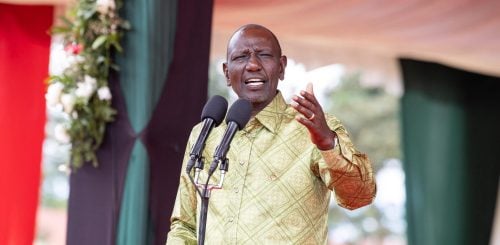
Executive influence in Parliament
The MP also raised concerns about what he termed executive dominance over parliamentary processes, alleging that majority side lawmakers often align with the executive position even when alternative proposals are presented.
He argued that this dynamic weakens legislative independence and affects oversight functions.
According to Mbui, even well-structured proposals can fail if they are not aligned with executive preferences.
Oversight role
Robert Mbui further cited recent disagreements over the National Infrastructure Fund, where he and other lawmakers had proposed stronger parliamentary oversight.
He claimed the executive opposed the proposal, which he believes would have enhanced accountability in the management of public resources.
The MP said such incidents demonstrate the ongoing struggle between Parliament’s oversight role and executive authority.
“There are some proposals that we made when we were dealing with the national infrastructure fund recently, and we proposed that let parliament have a little bit more of an oversight on that fund, but unfortunately, when we did that, the executive opposed it. It was actually taking away power from the house,” he said.
Despite the challenges, Mbui said he believes in using public platforms to highlight governance concerns, even when legislative success is uncertain.
He argued that informing citizens about what he perceives as institutional weaknesses is important for long-term democratic accountability.
“I know that sometimes we may not succeed even if we have brilliant ideas, and that is why sometimes we spend our time telling the people what is going wrong so that when we get an opportunity, we can show them how to get things right,” the lawmaker stated.