Advertisement
Mithika Linturi to Ruto: Retain Kindiki in 2027 if Mt Kenya minority tribe balance truly matters
Monday 22nd June, 2026 08:30 AM|
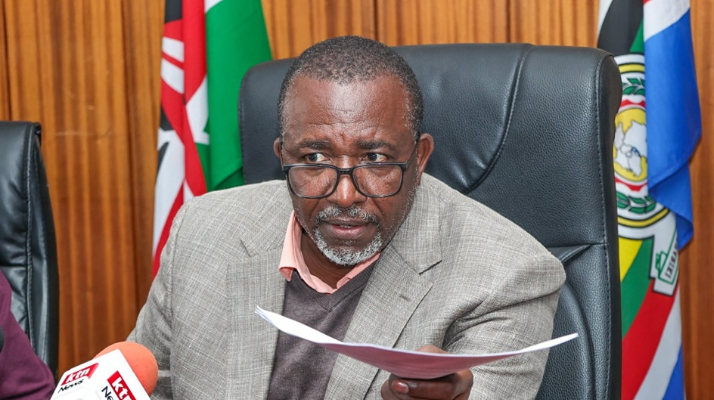
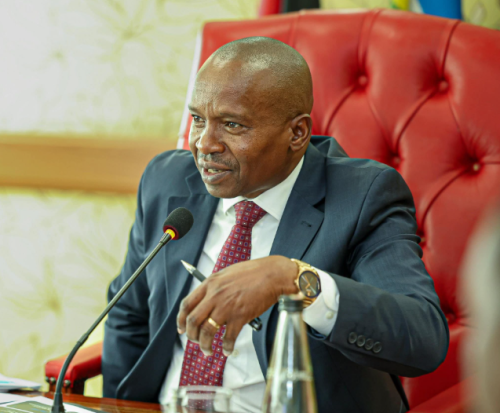
Former Agriculture Cabinet Secretary Mithika Linturi has told President William Ruto to retain Deputy President Kithure Kindiki as his running mate in the 2027 General Election, arguing that the decision would test whether the Head of State is committed to balancing political interests in the Mt Kenya region.
Speaking during a late-night television interview on Sunday, June 21, 2026, Linturi said the appointment of Kindiki was initially framed as a move to restore political dignity and representation for minority communities within Mt Kenya.
“If they, whose idea was to bring respect to the minority in Mt Kenya, pick Kindiki as your running mate again in 2027,” he said.
He added: “If you are saying it is dignity which he was bringing, I am requesting William Ruto, if you are a man who keeps your word, give us Kindiki as your running mate next election. We shall also see that you meant well.”
2022 election strategy and Kindiki’s earlier rejection
You Might Also Like
Linturi revisited the 2022 presidential election, saying he had advised Ruto against selecting Kindiki as running mate, warning that it could cost him politically.
“In 2022, what William Ruto wanted is, and I am the one who told him that if you pick Kindiki, we are going to lose the election,” he said.
He claimed that political dynamics at the time were already shaped by competing regional interests and coalition arrangements.
“Because Raila had chosen Martha Karua, and you know Uhuru was retiring. The best person because this is politics, we will fit in government somewhere else, but let this seat go with Gachagua. He took my advice that time,” he added.
The former CS also claimed that tensions had existed.
“But they hated me a lot, and also, there is a message Kindiki sent me while he was so annoyed with the decision I took, but it was the best,” he said.
“Even during this impeachment, I told William Ruto. I told him that the greatest responsibility is to manage this relationship. People are coming here with emotions that we have a deputy president, yes, we have him, but we must be able to feel him,” he said.
Linturi also raised concerns over disparities in public appointments, citing a recent recruitment process within the Kenya Revenue Authority (KRA) investigations directorate.
“Recently, there was an interview from KRA, and there was a Tharaka person, whom Kindiki was unable to give the position, and he was number one in the interview. They chose number five,” he claimed.
He added that such decisions were creating resentment among communities who expected fair representation in government.
“But Kindiki has no problem; they are messing with him, since they have no respect for him,” he said.
Warning on 2027 political direction
When asked what would happen if Ruto retained Kindiki as running mate in 2027, Linturi predicted voter backlash and declining political support.
“Kenyans have a date with him on the 10th of August; they do not want him,” he said.
He also pointed to parliamentary voting patterns on the Finance Bill as evidence of weakening support for the government.
“He is also going to mess with the careers of a lot of people. The Finance Bill was in parliament the other day. Out of 349 MPs, those who voted to support the Finance Bill are 122 MPs,” he said.
“Ask yourself: if you are convinced that Ruto is the best, why are you worried about being associated with him? Why are you afraid of being labelled, whether you support or oppose the Finance Bill? Many MPs are not brave enough, and this will become clear after Parliament is dissolved – they will abandon Ruto.”
The former CS further warned against what he described as efforts to divide the Mt Kenya region into political blocs, arguing that such moves would weaken its bargaining power nationally.
“Addressing the splitting of the mountain: there is something called strength of togetherness, and we should resist anyone with the idea of splitting because we have a bigger seat,” he said.
He claimed that there was a deliberate political strategy aimed at weakening the region’s influence ahead of the 2027 elections.
“This is because the whole idea is about how he can weaken GEMA’s strength economically and politically by splitting the numbers,” he said.
Political engineering in Mt Kenya
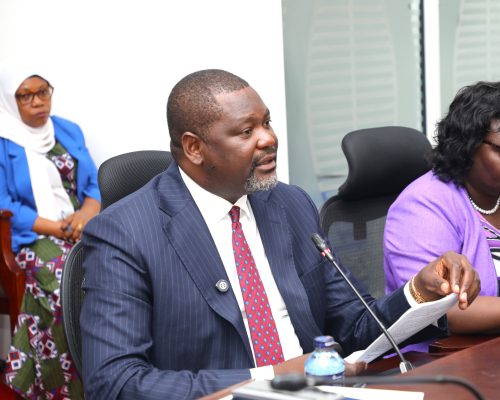
The former Cabinet Secretary claimed that officials, including Public Service Cabinet Secretary Geoffrey Ruku, are being used to influence divisions within the Mt Kenya region for political advantage ahead of the 2027 elections.
“Ruku and other agents are being used to influence so that our political figures can decrease,” he said.
He argued that such efforts were designed to weaken the region’s bargaining power and reduce its political influence at the national level.
“Meru should watch out because these political novices and younger ones should be cautious because they will be promised everything,” he said.
Claims on voter arithmetic and political influence
He linked the claimed political strategy to the 2022 election results, arguing that Mt Kenya voting strength remains central to national politics and is now being targeted for fragmentation.
“Ruto received 7.1 million votes. 47 per cent of those votes came from GEMA. GEMA gave him 3.4 million votes. 3.7 million is what he sought outside,” he said.
He added that the removal of former Deputy President Rigathi Gachagua and the sidelining of some political figures had shifted political calculations.
“After chasing the likes of Mithika and impeaching Gachagua, now there is a red card. For him now (Ruto), to find how he would look for at least 1.5 million is to split Meru, Embu and Kikuyu,” he said.
He warned that leaders from Mt Kenya East, particularly Meru, should remain cautious of political mobilisation efforts.
“The bigger brother in Mt Kenya East is the Meru, and politics being what it is, it’s dictatorship of the majority, although we must respect the majority to have their say,” he said.
Statistical breakdown of Mt Kenya voter strength
Linturi gave detailed voter figures to show why unity matters. He said Ruto received 7.1 million votes in 2022, with 47 per cent – or 3.4 million – coming from GEMA. The remaining 3.7 million came from outside the region.
After the removal of Gachagua and criticism of figures such as Linturi himself, Ruto now needs fresh support, Linturi argued. Splitting Meru, Embu and Kikuyu areas would be one way to try to secure around 1.5 million votes. He broke down registered voters from the 2022 register:
- Meru: around 1,048,663 people voted across the country.
- Tharaka: 100,745.
- Mbeere: 109,239.
- Embu: 242,223.
Adding Tharaka, Embu and Mbeere gives roughly 400,000 votes from the smaller groups. Meru alone has over a million. Kikuyu voters total 4,707,242. He described Meru as the bigger brother in Mt Kenya East and warned younger leaders against being used to divide the region.
| Category | Figure | Interpretation |
|---|---|---|
| Ruto total votes (2022) | 7.1 million | National win margin basis |
| GEMA contribution | 3.4 million (47%) | Mt Kenya bloc influence |
| Ruto’s 2022 outside GEMA votes | 3.7 million | Rest of country support |
| Meru registered voters | 1,048,663 | Total country-wide participation |
| Meru resident voters | 772,000 | Local electorate base |
| Tharaka voters | 100,745 | Mt Kenya East minority group |
| Mbeere voters | 109,239 | Mt Kenya East minority group |
| Embu voters | 242,223 | Mt Kenya East bloc |
| Combined Tharaka + Embu + Mbeere | ~400,000 | Smaller Mt Kenya East bloc |
| Kikuyu voters | 4,707,242 | Largest GEMA subgroup |
| Combined GEMA strength | ~6.2 million | Potential unified voting bloc |
He argued that despite being smaller in numbers, minority groups were being used to drive division within the larger Mt Kenya bloc.
“The stats are like this: when you go back to the 2022 voter register… So when you add Tharaka, Embu and Mbeere, it’s 400,000 votes. Meru has a million. So they are just 40 per cent,” he said.
Warning on fragmentation and historical lessons
He said the continued fragmentation of Mt Kenya would weaken its national influence and reduce its bargaining power in future elections.
“And the people who are championing the break-up of Mt Kenya, it’s these minorities,” he said.
He warned that leaders promoting division, including Ruku and other emerging political actors, risked destabilising regional unity.
“If we want to be helped and we join hands with our brothers since we share a common heritage, and have existed for the longest, we together in the basket join to 6.2 million together with Tharaka, Embu and Mbeere, we are safer,” he said.
He compared the current political situation to past elections, arguing that division had historically weakened Mt Kenya’s ability to secure national leadership.
“What we might miss is failing to understand the legacy Kibaki left us; we were always being ruled by the minority for the longest, by being split that way,” he said.
He added that past leaders had used similar strategies to divide voting blocs, which he said should be avoided.
“The same card Moi played is what Ruto want to use to split us. Kibaki knew, he rallied us, and the constitution was passed,” he said.
He concluded that numerical unity remains key under the current constitutional framework.
“The requirement for president is 50 per cent plus one vote. Mt Kenya, or GEMA, controls 47 to 49 per cent in numbers. As long as we are compact, none can be president without our support,” he said.
Author
Kenneth Mwenda
Kenneth Mwenda is a business, sports, and politics digital writer with over seven years of experience in journalism, covering breaking news, feature stories, and in-depth analysis across a range of beats.
For inquiries, he can be reached at [email protected]
View all posts by Kenneth MwendaLatest News

Advertisement
More on Inside Politics