Matiang’i advises Ruto: This is how I would spend Ksh17B State House expenditure
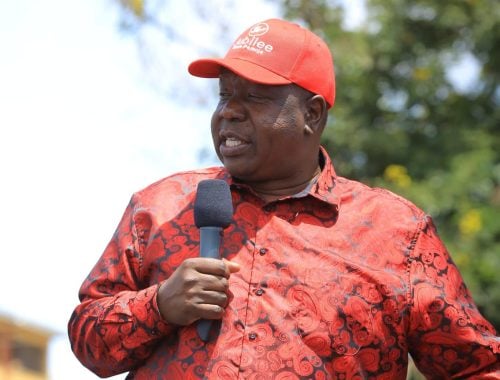
By Aloys Michael, April 30, 2026Jubilee deputy party leader Fred Matiang’i has criticised the rising cost of running State House, questioning Kenya’s fiscal priorities amid a surge in public expenditure that has pushed the presidency’s budget to record levels.
Speaking on Thursday, April 30, 2026, in an interview on a local radio station, Matiang’i warned that unchecked wastage and corruption could have severe consequences for the country’s economic stability.
“It is like we borrow money to steal it. If we cannot stem wastage and corruption, Kenya will sink. The other day, top state officials insulted me when I asked why the State House can have a huge budget and allocations compared to Moi Teaching and Referral Hospital. There is no maternity or operation ward in the State House. What are you doing with a lot of money?” he asked.
He further challenged the justification of the ballooning State House budget, arguing that national priorities should be anchored on essential public services such as healthcare and education rather than administrative luxury.
“If you give me Ksh17 billion, before we start anything, I will take away Ksh14 billion and allocate Ksh7 billion to health and education, respectively, and the Ksh3 billion I can return at the end of the year.”
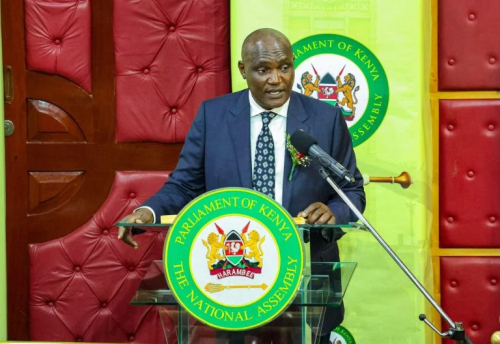
Matiang’i’s remarks come at a time when scrutiny over State House expenditure has intensified following revelations from National Treasury documents submitted to the National Assembly by Treasury Cabinet Secretary John Mbadi.
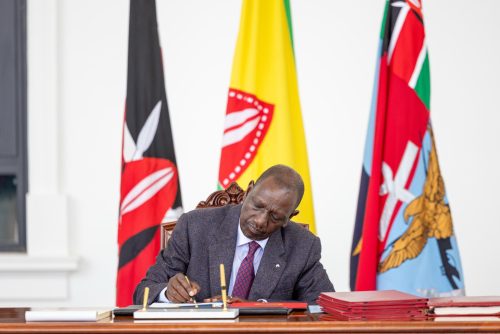
The documents show that the State House initially requested an additional Ksh2 billion on September 8, 2025, citing operational expenses that were not classified as emergencies.
Subsequent approvals under Article 223 of the Constitution allowed further disbursements aimed at enhancing operations and maintenance at State House, pushing spending significantly higher than earlier projections.
The mid-year adjustments propelled the State House budget above comparable institutions globally, raising questions about fiscal prudence.
For context, the White House in the United States reportedly spends about Ksh12.6 billion, Germany’s presidential office Ksh7 billion, Portugal Ksh2.6 billion, while France’s presidential budget stands at approximately Ksh17.5 billion.
In Africa, Kenya’s State House expenditure has also surpassed that of Nigeria at Ksh3.1 billion, South Africa at Ksh7.8 billion, Algeria at Ksh8.9 billion, and Tanzania at Ksh1.7 billion, fueling debate over whether Kenya’s executive spending is aligned with regional economic realities.
The scale of the increase has been particularly striking. The current allocation of Ksh16.998 billion marks the highest State House budget since 2013.
Of this amount, recurrent expenditure accounts for Ksh16.1 billion, while development spending remains comparatively low at Ksh894.91 million.
Controller of Budget Margaret Nyakang’o had previously raised concerns that State House risks exhausting its budget before the end of the financial year, warning that the trend places additional strain on public finances and raises broader questions about fiscal discipline within government.
Wastage of resources?
National Treasury records also reveal a detailed disbursement schedule showing payments totalling Ksh4.4 billion made between December 2025 and February 2026. The cumulative allocations represent a Ksh3 billion increase from the previous financial year, when the total State House budget stood at Ksh12.07 billion.
In June 2025, Parliament approved a baseline allocation of Ksh8.6 billion for State House, including Ksh7.7 billion for recurrent expenditure and Ksh894.91 million for development. However, by February 2026, the figure had nearly doubled to Ksh16.998 billion, driven largely by operational and recurrent spending increases.
Nyoro jolts Ruto
The former Interior and Education Cabinet Secretary’s utterances come days after Kiharu MP Ndindi Nyoro condemned the allocation of nearly Ksh17 billion to State House in the 2025/2026 financial year, arguing that such spending is unjustifiable as ordinary Kenyans face rising living costs, unpaid teacher interns, and underfunded essential services.
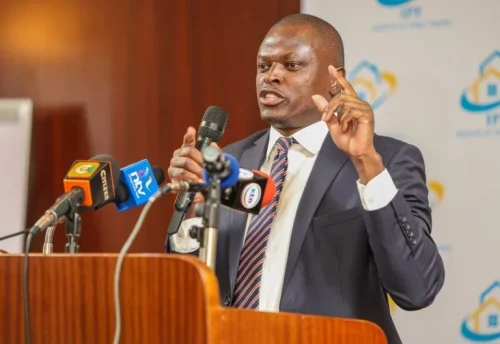
In a post on March 16, 2026, Nyoro questioned the scale of the allocation, highlighting that the amount could instead confirm 44,000 Junior Secondary School interns into permanent and pensionable terms, providing stability to the education sector.
He emphasised that leadership should prioritise national interests over personal or political gains.
“Instead of wasting that money in political sloganeering, that money is better off funding our education sector or our health sector,” Nyoro said.
He added that even in an election year, campaign funds should come from personal sources rather than taxpayers, and urged leaders to reduce selfishness in governance.
“So that, tukipewa chance ya uongozi tufupishe ubinafsi tafadhali na tuweke kenya mbele, kwa sababu hatutakumbukwa kama viongozi na ile pesa tuli accumulate, lakini na kazi ambayo tulifanyia nchi yetu ya Kenya.” The statement read in part.
Nyoro also urged leaders to put aside personal ambition and selfishness if given the chance to govern, stressing that their legacy will not be measured by the wealth they accumulate but by the tangible work they do for the country.
He called on officials to prioritise Kenya’s interests, reminding them that meaningful contributions to national development, rather than personal gain, define true leadership and leave a lasting impact on citizens.