Maraga slams Ruto’s cybercrimes law for threatening free speech, dissent
By Kenneth Mwenda, October 21, 2025Former Chief Justice David Maraga has strongly criticised President William Ruto’s government over the recently signed Computer Misuse and Cybercrimes (Amendment) Act, 2024, saying it is designed to stifle free speech and silence political dissent under the pretext of fighting cybercrime.
Speaking at a press conference on Tuesday, October 21, 2025, Maraga said the amendments to the 2018 law go beyond curbing online crime and instead give the government powers that can be used to suppress public expression and protests.
“First, the amendments to the Computer Misuse and Cybercrimes Act, in essence, seek to control and crush political dissent and protests in the guise of expanding protections from cybercrime criminals,” Maraga said.
“It is not lost to us that in June 2024, when Kenyan youth rose up against the Finance Bill, President Ruto labelled them criminals and terrorists. We are aware that efforts are underway to seek immediate legal redress. We fully endorse those efforts and will render our full support.”
Also watch: Head of Presidential Special Projects and Creative Economy, Dennis Itumbi, defends cybercrimes law, says it is not new.
Expanded powers raise fears
The new law, which President Ruto signed on October 15, expands the government’s definition of cybercrime and increases penalties for online offences. It gives authorities wider powers to block access to digital platforms, compel service providers to hand over user data, and order the removal of content deemed illegal or false.
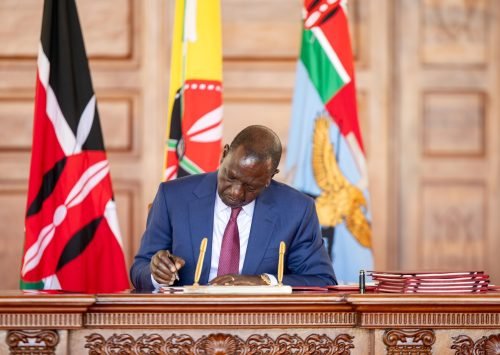
Government officials have defended the law, saying it modernises Kenya’s cyber framework in response to rising online fraud and digital crime. However, critics argue that the vague definitions in the amendments, such as ‘false publications’ and ‘offensive content’, could be weaponised to target activists and ordinary citizens critical of the state.
Under the law, the spread of false or misleading digital content now carries criminal penalties, while unauthorised access includes any form of entry into a digital system without express permission, even if no data is stolen or altered. The amendments also extend cyber harassment to cover persistent digital communication through social media and messaging platforms.
Opposition politicians have also expressed concern that the government is tightening control over the digital space ahead of future political mobilisation by young people, who have increasingly turned to social media to organise protests and express dissent.
The Ruto administration has argued that the law targets online criminals and ensures accountability in digital spaces. The government says the rise of misinformation, phishing scams, SIM card fraud, and cyber harassment calls for tougher measures.