Advertisement
Leo wa Muthende claims rejected finance bill 2024 would have solved unemployment
Monday 19th January, 2026 09:39 AM|

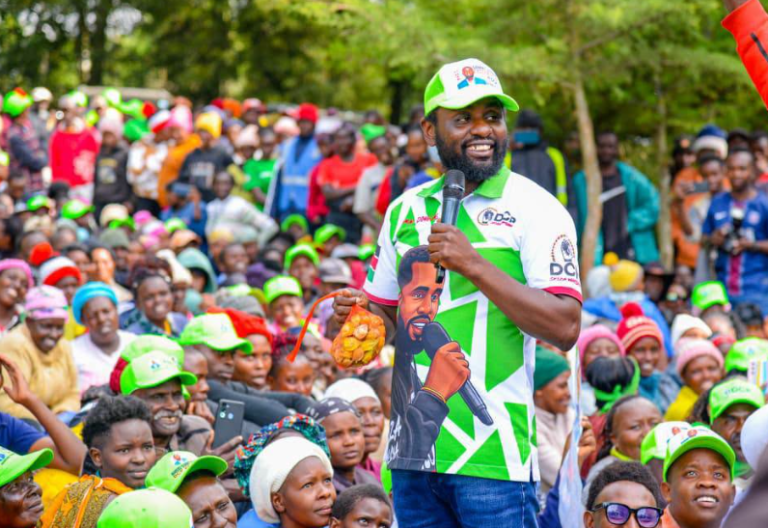
The newly elected Mbeere North Member of Parliament (MP), Leo wa Muthende, has claimed that the Finance Bill 2024 that led to the Gen Z uprising would have solved some of the perennial problems in the country, such as unemployment.
Speaking on Monday, January 19, 2026, during an interview with one of the local TV stations, Wa Muthende argued that it was wrong for Gen Z and some leaders to term the bill as draconian.
According to him, taxes had been raised on imports so that local manufacturers could be supported.
“I want to tell the Gen Zs that the bill that you crashed was actually going to solve some of the perennial problems we have, like unemployment. When taxes are raised to support local manufacturers, importers gang up and call it a draconian rule, and some members of parliament, who I don’t know how much they read that bill, come out to support Gen Zs; it is actually a sad situation,” Wa Muthende said.
Local manufacturers’ competition
You Might Also Like



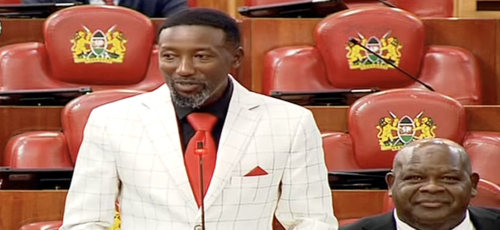
When he was pressured to explain how the controversial bill that was eventually withdrawn by President William Ruto following violent Gen Z protests would have helped solve the unemployment problem, Wa Muthende failed to give a clear explanation but argued that increasing taxes on imports would have given room for local manufacturers to compete.
“We have a lot of imported products. So when you increase taxes on imported products, you are not just going for money from people’s pockets; you are also giving room for local manufacturers to compete,” he said.
Bill split and passed
National Assembly Majority Leader Kimani Ichung’wah once disclosed that the controversial Finance Bill 2024 was later split into four separate bills and passed by Parliament.
Speaking during the burial of Douglas Kanja’s father on Thursday, October 23, 2025, Ichung’wah explained that dividing the bill allowed the government to revive development projects that had previously stalled.
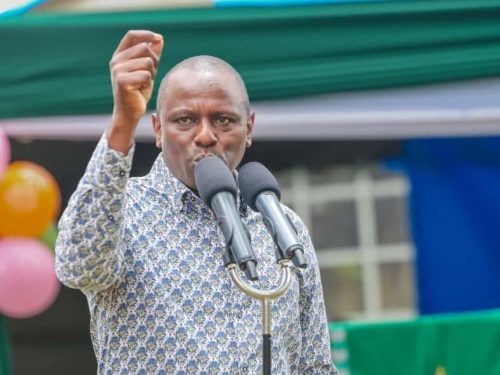
He said the split bills contained provisions that had initially been removed following public opposition during the protests, noting that their passage has now enabled the government to resume key projects.
Ichung’wah further revealed that many of the beneficial clauses in the original Finance Bill 2024 were lost after the legislation was rejected, which delayed the implementation of several government programmes.
He stated that the restructuring of the bill into four separate parts was necessary to reintroduce essential measures aimed at boosting revenue collection and development.
“Na baadae tulipoirekebisha tukaikatakat ile bill ikawa mara 4, tukaipitisha hio ndio maana leo hii mnaona maendeleo,” Ichungwah said.
Ichungwah further attributed the rejected Finance Bill 2024 to the failure of state operatives drumming up support for government agendas, leaving Kenyans to rely on falsehood.
Author
Mustafa Juma
View all posts by Mustafa JumaLatest News








Advertisement
More on Inside Politics