Advertisement
Jimi Wanjigi says opposition hopefuls lack clear agenda ahead of 2027
Monday 18th May, 2026 07:17 AM|

Safina party leader and businessman Jimi Wanjigi has criticised emerging opposition figures ahead of the 2027 General Election.
Speaking during an interview with a local TV station on Sunday, May 17, 2026, night, Wanjigi claimed that most of the current opposition figures lack a clear policy agenda capable of addressing Kenya’s deepening economic and governance challenges.
Wanjigi singled out several opposition-linked figures, arguing that many have focused more on political slogans and anti-government rhetoric than on presenting concrete solutions for the country.
Questions over opposition direction
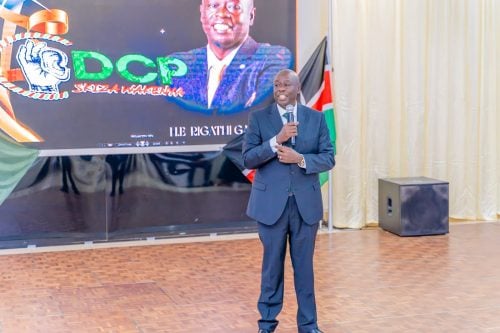
Wanjigi said he had not heard substantive policy proposals from former Deputy President Rigathi Gachagua or activist Boniface Mwangi.
You Might Also Like

“I have not heard of Rigathi Gachagua’s agenda apart from one term. I haven’t heard of Boniface Mwangi’s agenda,” he said.
According to Wanjigi, Kenya’s next election should be driven by serious policy discussions rather than emotional politics or personality-driven campaigns.
Maraga singled out
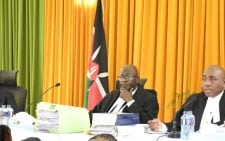
The businessman, however, acknowledged that former Chief Justice David Maraga had at least attempted to articulate a governance philosophy centred on the rule of law.
“One person I have heard talk quite clearly is Maraga. He talks about the law; we shall adhere to the law,” Wanjigi said.
However, he quickly questioned whether such commitments would be practical once confronted with Kenya’s economic realities.

Debt crisis concerns
Wanjigi raised concerns about the country’s debt burden, arguing that whoever takes power in 2027 will inherit a government struggling with repayment obligations and shrinking fiscal space.
“He is faced with the first budget, where 100% of tax revenue is going to debt payment. How does he pay salaries? What will he do? He will borrow,” Wanjigi said while referring to Maraga’s potential leadership challenge.
The remarks reflect growing national anxiety over Kenya’s public debt levels and the increasing proportion of government revenue directed toward debt servicing.
Wanjigi further argued that even leaders campaigning on constitutionalism and legal compliance could eventually be forced into difficult decisions once in office.
He pointed to borrowing restrictions under Kenyan law, noting that public debt is constitutionally expected to fund development projects rather than recurrent expenditure.
“What does the law say about borrowing? You can only borrow for development,” he said.
“When you sit in office, you will break the law that you said you are going to adhere to.”
Political debate ahead of 2027
The remarks come amid intensifying political realignments and early positioning ahead of the 2027 presidential race, with opposition figures increasingly attempting to build national coalitions against President William Ruto.
Wanjigi’s comments reflect a growing demand for issue-based politics and detailed economic planning as the country grapples with high debt levels, rising fuel prices, unemployment, and public frustration over the cost of living.
The businessman has, in recent months, positioned himself as a vocal critic of both government policy and what he views as a weak opposition strategy as he popularises his 2027 presidential bid.
Author
Mustafa Juma
View all posts by Mustafa JumaLatest News


Advertisement
More on Inside Politics