Jimi Wanjigi: Ruto is running against nothing other than the economy itself
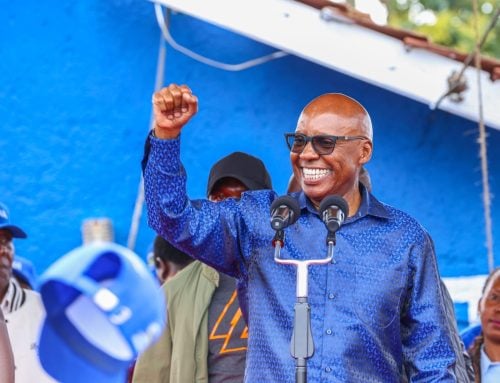
By Kenneth Mwenda, July 2, 2026Safina Party leader Jimi Wanjigi has stated that President William Ruto will face no real political opponent in 2027 except the state of Kenya’s economy.
Speaking during a morning radio interview on Thursday, July 2, 2026, Wanjigi said the next election will be decided on economic performance, not personalities or party politics.
He argued that the cost of living, rising debt, and job losses have defined everyday life for Kenyans over the past several years. In his view, the economy has become the central issue that will shape the 2027 general election.
“The question this coming election, rather, is about the economy of Kenya. William Ruto is running against nothing else. It’s him plus the economy of Kenya. Nothing else,” Wanjigi said.
He added that any candidate who avoids the economic question will fail voters.
“If anybody is running for this seat and is unable to address the economic question, then they are failing the electorate. Completely failing the electorate,” he said.
Debt and economic pressure
Wanjigi pointed to unemployment, business closures, and heavy taxation as signs of economic strain. He said many households are struggling because of reduced opportunity and rising costs.
However, he identified national debt as the core problem. According to him, Kenya’s borrowing has grown faster than its ability to generate revenue.
“The biggest burden on our lives is a debt that doesn’t seem to go away. It just keeps increasing, even though we are paying it,” he said.
Wanjigi compared debt levels across governments using tax revenue as the measure. When Moi handed over to Kibaki, tax revenue stood at 200 billion shillings and debt at 600 billion – three times the revenue. Kibaki cut the ratio to two times by growing tax revenue to 1 trillion and debt to 2 trillion. Uhuru Kenyatta left office with debt at 9 trillion and tax revenue at 2.2 trillion, a ratio of 4.5 times
Ruto’s government took over in 2022 with that 9 trillion debt. Wanjigi said it now stands at Ksh13 trillion, while recent tax revenue reached about 2.6 trillion.
“We are now at five times. More than five times now,” he said.
He also raised concern about debt servicing, arguing that it consumes most government revenue.
Wanjigi said the high debt burden leaves little money for essential services such as education, healthcare, salaries, and county funding. He argued that government has increasingly relied on domestic borrowing to cover deficits.
He also reiterated concerns he has raised previously about the long-term trajectory of Kenya’s debt, warning in earlier remarks that the repayment trend could stretch up to 2040 if current patterns continue. In that statement, he said annual debt servicing would keep rising year after year, warning that the pressure would persist for decades without major fiscal reforms.
The Safina Party leader also questioned the structure of Kenya’s financial system, pointing to what he described as inconsistencies in reported domestic borrowing and financial assets. “That is 11 trillion. Where is this 2 trillion? … That is 2 trillion; we don’t know where they got it from,” he said.
Political realignments ahead of 2027
The comments come as political activity intensifies ahead of the 2027 general election. Wanjigi has already confirmed his presidential ambition, saying, “I am running. That is for sure.”
He also recently held a meeting with former Deputy President Rigathi Gachagua at his Wamunyoro residence, where discussions focused on Kenya’s political direction and what Gachagua called the “liberation cause”.
Gachagua said the consultations are part of broader efforts to shape a future administration.
“I have greatly benefited from his insights and experience in the formation of governments,” he said.
Wanjigi insists that the 2027 election will revolve around economic credibility. He argues that voters will focus on debt, taxes, and livelihoods rather than traditional political alliances.
For him, the outcome will depend on who convinces Kenyans that they can fix the economy.
“The question this coming election is about the economy of Kenya,” he said.