Inside Ruto-Orengo previous talks as rift deepens over political parties’ mergers
By Aloys Michael, May 6, 2026As Kenya’s political chessboard steadily tilts toward the 2027 General Election, a new layer of intrigue is emerging from behind-the-scenes engagements between President William Ruto and Siaya Governor James Orengo, centred on the future of coalition politics, the fate of affiliate parties, and the growing tension over political party autonomy within the Kenya Kwanza framework.
In the unfolding debate is a quiet but consequential consolidation drive within the ruling alliance, aimed at folding smaller affiliate parties into the United Democratic Alliance (UDA) to present a unified political machine.
The strategy is designed to eliminate fragmentation risks and strengthen Ruto’s re-election bid, even as the Orange Democratic Movement maintains that it will either be the government or be in the next government.
But in an interview with K24 TV on Wednesday, May 6, 2026, Orengo reflected on his past discussions with Ruto, revealing a long-standing ideological friction over whether Kenya’s democracy benefits from strong coalitions or dominant single-party structures.
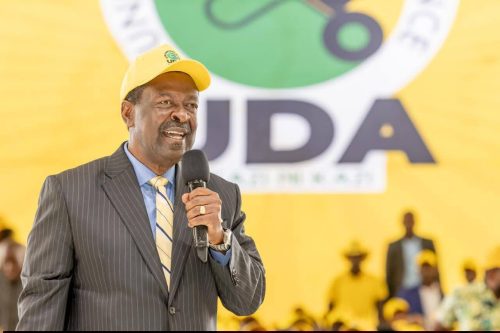
“I have explained to Ruto himself when I sat with him, even before matters of a broad-based arrangement had begun. I told him, first of all, do not break up parties, because I had already seen the parties that had entered the Kenya Kwanza coalition, such as Mudavadi,” Orengo said, referencing Musalia Mudavadi’s Amani National Congress (ANC), which later dissolved into UDA.
“I told him we fought people like Kenneth Matiba; he should do everything possible to ensure we protect these parties, but it is as if he did not hear.”
Orengo’s warning speaks to a deeper constitutional and democratic concern: the risk of eroding multiparty competition in favour of a dominant political formation.
According to him, Kenya risks losing the pluralistic gains hard-won since the early reform era if coalition partners are absorbed into a single party structure.
Yet Ruto’s camp appears unmoved, insisting that political consolidation is necessary for governance efficiency and electoral strength.
Parties succumbing to UDA’s pressure?
The push is already visible across the coalition, with high-profile alignments reshaping the political map.
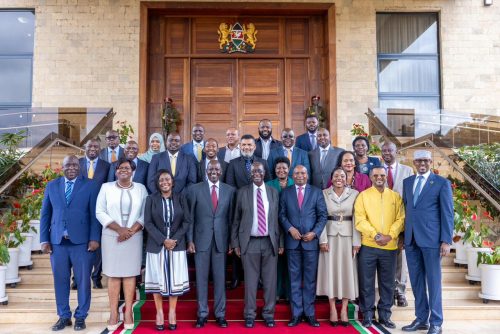
Prime Cabinet Secretary Musalia Mudavadi has already dissolved ANC into UDA, while Senate Speaker Amason Kingi announced that his Pamoja African Alliance (PAA) will not field candidates in 2027. Meanwhile, Labour CS Alfred Mutua has resisted similar pressure, insisting his Maendeleo Chap Chap Party will remain independent and active.
However, not all coalition partners are comfortable with the direction of travel. National Assembly Speaker Moses Wetang’ula has firmly rejected calls to dissolve Ford Kenya, warning that forced mergers undermine democratic freedoms. His party leadership insists that political diversity within coalitions is not a weakness but a democratic strength.
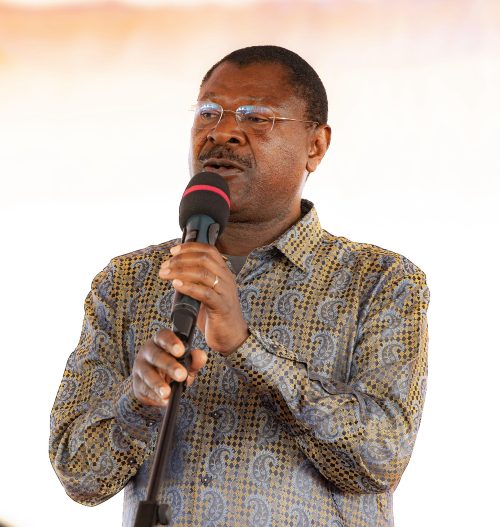
“The FORD Kenya Party cannot and will not be dissolved. It can only be enhanced and protected for future generations,” party officials have maintained in earlier statements.
The debate over party autonomy comes at a politically sensitive moment for Ruto, whose administration is under pressure to demonstrate tangible development gains.
“We have a clear and demonstrable track record in delivering housing, health, education, roads, and other critical infrastructure,” Ruto said.
However, beneath the development narrative, political undercurrents remain volatile, particularly in Western Kenya and Rift Valley regions, where grassroots mobilisation linked to the late ODM leader Raila Odinga continues to gain traction.
Orengo argues that the tension between coalition unity and party independence could define the 2027 election cycle, adding that the Grand Coalition precedent must remain a key historical benchmark.
“When we were in the Grand Coalition Government, where Raila had influence, we had 22 ministers, and Kibaki also had about 22,” Orengo noted, highlighting how power-sharing once allowed institutional balance between rival blocs led by Raila and former President Mwai Kibaki.
This comes even as the ODM-Linda Ground faction is pushing for an equal share of the government as its 2027 pre-election pact with Ruto’s UDA, which is courting the outfit to solidify his reelection bid.
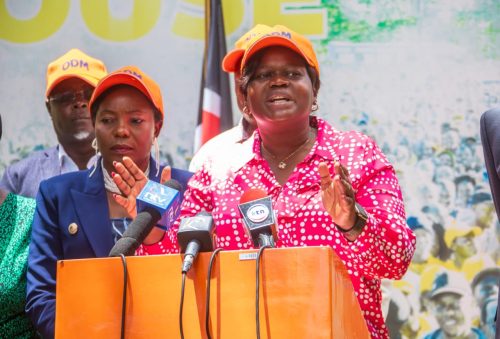
Speaking on Sunday, February 1, 2026, during a roadside rally in Dandora, Nairobi County, ODM national chairperson Gladys Wanga said the Orange party had mandated its leader, Oburu Odinga, to engage President Ruto in dialogue aimed at forging a balanced political arrangement.
Wanga stressed that ODM was not seeking token inclusion but a fair 50/50 stake in national leadership.
“Sisi kama ODM tumesema hivi, Dr Oburu Odinga aingie katika mazungumzo na President William Ruto, wasikizane, ile ng’ombe ikatwe katitaki ODM ichukue nusu, UDA ichukue nusu,” Wanga said
As coalition arithmetic continues to shift, the central question remains whether Kenya Kwanza will fully consolidate into UDA or retain a multi-party coalition identity.