Ichung’wah explains Finance Bill 2026 consideration process
By Faith Lagat, May 26, 2026National Assembly Majority Leader Kimani Ichung’wah has called on Kenyans to actively participate in the consideration of the Finance Bill 2026, urging the public to rely on official parliamentary documents and avoid misinformation circulating online.
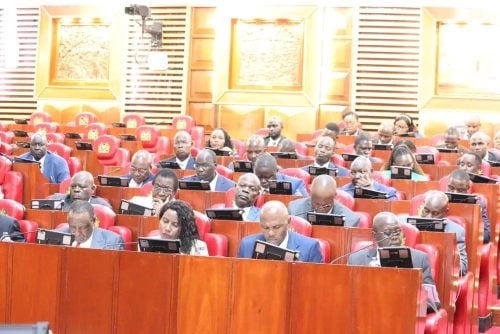
Speaking to the Parliamentary Broadcasting Unit ahead of the resumption of House sittings on May 26, 2026, Ichung’wah outlined the stages the bill will undergo in Parliament and stressed that public participation remains a critical part of the legislative process.
“We expect to go through the Finance Bill as part of the pre-budget cycle. Kenyans should participate adequately and understand the process,” he said.
Public participation process
Ichung’wah explained that after the first reading, the Finance Bill 2026 is subjected to public participation before lawmakers proceed to the second reading stage where MPs debate the published proposals. He noted that views collected from the public would guide amendments during the Committee of the Whole House stage.
“You cannot reject a whole bill. Even to change a comma, you have to move an amendment,” he stated.
If the Finance Bill reaches the Third Reading in the National Assembly, it undergoes its final debate stage where only minor technical amendments such as corrections and renumbering are allowed. MPs then vote, with a simple majority required for passage of an ordinary Bill.
Once approved, it is sent to the president for assent under Article 115. The president has 14 days to assent, refer it back with reservations, or take no action. If referred back, Parliament may reconsider and pass it again, in which case a two-thirds majority is required to override presidential reservations. If no action is taken within 14 days, the Bill automatically becomes law.
The Majority Leader warned against relying on misleading information shared on social media, saying some political actors were spreading false claims about provisions that do not exist in the bill.
He urged Kenyans to access the authentic Finance Bill through Parliament’s official platforms to better understand the proposed tax measures and economic policies.
The remarks come after the 2024 Finance Bill sparked nationwide protests and widespread criticism over controversial tax proposals, forcing the government to withdraw some measures.
Stakeholders raise concerns
At the same time, the National Assembly Departmental Committee on Finance and National Planning has continued receiving submissions from stakeholders across the country.
During sessions in Kiambu County, companies including The Coca-Cola Company and law firm Anjarwalla & Khanna opposed Clause 36(a) of the bill, which seeks to remove excise duty exemptions on goods imported from East African Community partner states that meet Rules of Origin requirements.
The firms argued that the proposal could increase production costs and disrupt regional trade, especially for manufacturers relying on imported packaging materials such as glass.
Committee Chairperson Kuria Kimani acknowledged the concerns, saying lawmakers must balance support for local industries with compliance to East African Community trade agreements.
Government clarifies proposals
The National Treasury has also moved to clarify several contentious proposals in the Finance Bill.
Principal Secretary Chris Kiptoo stated that there is no new 25 per cent excise duty on mobile phones and dismissed reports suggesting the return of previously rejected proposals such as VAT on bread.
Treasury officials said the bill seeks to streamline taxation on digital services, virtual assets and card payments while improving tax compliance.
Business groups, including the Federation of Kenya Employers and the Kenya Association of Manufacturers, have proposed PAYE reviews, tax relief on manufacturing inputs and lower corporate taxes to ease pressure on businesses and workers.