How United Opposition is swaying Gusii region as ODM crumbles
By Aloys Michael, February 24, 2026A charged political atmosphere has swept across the Gusii region as the United Opposition pitched camp in what was once considered an impregnable Orange Democratic Movement (ODM) zone.
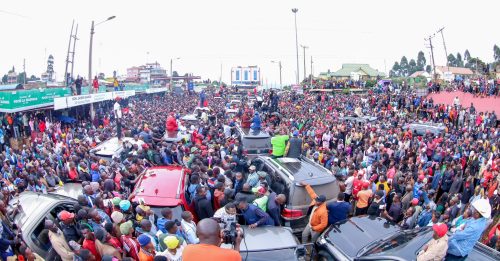
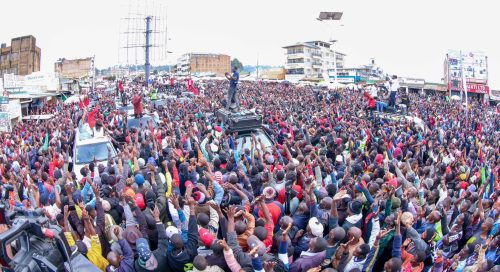
From Ekerenyo Grounds to Kisii Stadium, the turnout told a story that leaders allied to President William Ruto would rather downplay: the ground is shifting, and fast.
At Ekerenyo Grounds, the venue was fully packed, with tens of thousands turning up to warmly receive the United Opposition brigade. The crowds later forced their way into Kisii Stadium as Jubilee Deputy Party Leader Fred Matiang’i and his counterparts climaxed their road trips across Nyamira and parts of Kisii counties.
On Tuesday, February 24, 2026, the caravan heads to Kitutu Chache North and Kitutu Chache South before winding up in Nyaribari Chache, with rallies set to conclude on Wednesday in South Mugirango and Bomachoge.
Matiang’i is a wave
For a region long regarded as ODM’s bedrock, the optics were unmistakable. The party associated with the late opposition chief Raila Odinga appears to be losing its once iron-clad grip, even as the ruling United Democratic Alliance (UDA) struggles to consolidate meaningful inroads.
Instead, Jubilee, under Matiang’i’s stewardship, is emerging as the new rallying point.
Matiang’i, already endorsed by Jubilee to run for president in 2027, is not merely conducting courtesy visits. His tour signals a calculated attempt to consolidate Gusii into a solid voting bloc that can anchor a broader joint opposition ticket.
In a season defined by elite pacts, tactical confusion and loud propaganda, Matiang’i represents the one variable Ruto has struggled to neutralise: competence fused with regional credibility.
Recent political trends reinforce that perception. On November 27, 2025, pro-Matiang’i candidates swept all three by-elections in Nyamira’s Nyamaiya, Nyansiongo and Ekerenyo wards, a decisive signal that his political brand resonates locally.
The victories rattled both ODM operatives and UDA allies, some of whom have publicly dismissed the momentum as temporary.
But the endorsements piling up around Matiang’i suggest otherwise. MPs Patrick Osero (Borabu), Anthony Kibagendi (Kitutu Chache South), Obadia Barongo (Bomachoge Borabu) and Clive Gisairo (Kitutu Masaba) have openly backed him, strengthening his mobilisation machinery on the ground.
Kisii Senator Richard Onyonka framed the rallies as a litmus test for the community’s resolve.
“This team that is coming wants to confirm whether you have truly embraced your own horse, Matiang’i, as you claim, or whether you are just joking. This is the opportunity to demonstrate that he has our support and that they can rely on it,” he said.
Ground slippery
The broader opposition calculus is equally strategic. Former Deputy President Rigathi Gachagua, now leader of the Democracy for Citizens Party, maintained the importance of strong regional bases in negotiating national power.
“Mobilisation for bargaining edge must start with each principal’s base. Elaborate consultations in Mt Kenya led to the formation of DCP,” Gachagua said.
“It is only through a strong home base that one can negotiate presidential ambitions effectively. Mt Kenya is a unique voting bloc with interests only understood by its sons and daughters.”
Speaking in Keroka during the three-day tour, Gachagua was even more pointed in rallying Gusii behind Matiang’i.
“Mimi nataka tukubaliane; ndio mimi niende nitembeze Matiang’i Mlimani aende akutane na his cousin. Ndiyo watu wa Mlima wamuheshimu, lazima aheshimike hapa nyumbani. Sitaki mkubali watoto wadogo wakuje watusi Matiang’i,” he said.
His remarks came after Matiang’i’s coronation as a Kisii elder and community spokesman, a symbolic endorsement meant to cement his stature as the region’s undisputed political kingpin.
President Ruto’s 2027 playbook has increasingly appeared to revolve around fragmenting opposition strongholds and leveraging elite deals, notably the much-discussed UDA-ODM cooperation, to soften resistance in perceived hostile zones.
Yet in Gusii, that strategy is colliding with a rare phenomenon: consolidation rather than division.
Even UDA allies like South Mugirango MP Silvanus Osoro have projected confidence publicly. Privately, however, multiple local leaders concede that the political terrain is becoming slippery for both UDA and ODM operatives.
Thousands of Keumbu residents, hometown of the late Simeon Nyanchae, the last Gusii leader to mount a serious presidential bid in 2002, turned out in symbolic defiance, evoking memories of past regional unity. The message was unmistakable: the community is recalibrating.
Whether this momentum endures until 2027 remains to be seen. But for now, the United Opposition has achieved something few thought possible, turning ODM’s former fortress into contested ground, and transforming Gusii into a pivotal battleground in Kenya’s unfolding succession politics.