How Ruto’s bottom-up promises left many hustlers feeling left behind – Report
By Aloys Michael, May 9, 2026When President William Ruto campaigned for office in 2022, he cast himself as the political outsider who would finally empower Kenya’s struggling majority.
His Bottom-Up Economic Transformation Agenda (BETA) promised to lift ordinary hustlers, boda boda riders, mama mboga traders, small-scale farmers and unemployed youth, who for years felt locked out of an economy seen to favour politically connected elites.
Nearly four years later, however, many of those hustlers say the promise of economic liberation has faded into a daily struggle with high prices, shrinking incomes and mounting taxes.
A new assessment by the Bertelsmann Transformation Index (BTI) 2026 Country Report paints a sobering picture of an administration struggling to turn campaign rhetoric into tangible relief for ordinary Kenyans.
The report notes that the Kenya Kwanza administration entered office promising to provide loans to the masses to stimulate economic activity through its Hustler Fund and to foster inclusive growth.

Instead, it says economic indicators deteriorated soon after the government took power.
“The cost of living soared, with the prices of maize flour, fuel, kerosene and other basic goods reaching record highs,” the report states.
The government inherited an economy weighed down by heavy debt obligations, weak revenues and limited fiscal space. To steady public finances, the administration removed fuel and maize subsidies while introducing a raft of new taxes that critics argue disproportionately hurt low- and middle-income households.
For many Kenyans, the result has been a painful contradiction: a government elected on promises of easing economic hardship presiding over one of the most expensive periods in recent memory.
That frustration is now being amplified by fresh data from the Kenya National Bureau of Statistics (KNBS), which raises questions about some of the administration’s claims regarding economic recovery.
KNBS exposes gaps
The KNBS’ Economic Survey 2026, released in April 2026, presents a mixed picture of the economy, one that validates pockets of progress while exposing significant gaps between official rhetoric and statistical reality.
For months, President Ruto has defended his economic agenda by pointing to improving macroeconomic indicators, increased agricultural production and infrastructure expansion. But the KNBS figures suggest that many of those gains have yet to meaningfully improve household livelihoods.
One of the clearest examples is food production.

In his 2025 State of the Nation Address, President Ruto said national maize production had risen from 44 million bags in 2022 to 67 million bags in 2024, adding that the country was on course for a historic 70 million-bag harvest.
Yet KNBS data tells a far more modest story.
According to the survey, maize production increased by only 2.4 per cent to 45.8 million bags in 2025, a figure significantly below the numbers repeatedly cited by the president.
The discrepancy feeds into a broader public concern that official messaging is increasingly detached from everyday realities.
Sugar production presents another troubling example.
While the president claimed the sector was stabilising, with production surging by 76 per cent, KNBS data showed sugarcane production actually fell by 24.7 per cent to 7.05 million tonnes.
Even flagship projects central to the bottom-up narrative are facing scrutiny.

Unsustainable mega projects?
The affordable housing programme, heavily promoted as both a job-creation engine and a solution to Kenya’s housing deficit, has become one of the administration’s signature initiatives.
President Ruto said the programme had delivered 230,000 affordable housing units and created more than 480,000 jobs and enterprise opportunities.
KNBS data, however, shows that by the end of 2025, about 205,311 housing units were under construction, while employment figures in the construction sector remained significantly lower than the numbers publicly cited by the president.
Private sector construction employment rose by 2.1 per cent to 228,200 workers, while public construction jobs stood at 10,100.
To be sure, the KNBS report also highlights areas of progress.

Milk production increased by 3.5 per cent to 5.5 billion litres in 2025, while the paved road network expanded to 25,400 kilometres. Inflation has also eased from the peaks witnessed in 2023, offering limited breathing room to consumers.
But for many households, the broader reality remains unforgiving.
Real wages have largely stagnated while taxes on fuel, housing, mobile money transfers and basic commodities continue squeezing disposable incomes. Small businesses, the very backbone of the bottom-up promise, continue grappling with weak consumer spending and rising operating costs.
Recognising the growing political pressure, the government now appears to be recalibrating its strategy ahead of the 2027 General Election.
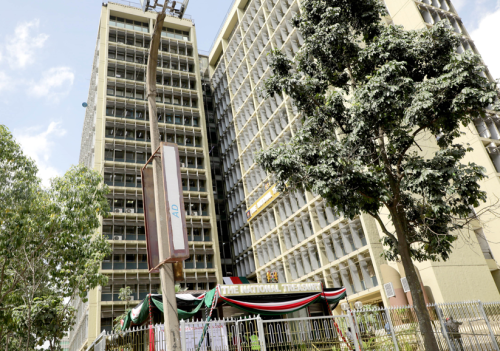
The 2026 Budget Policy Statement (BPS) signals a possible shift away from aggressive taxation towards measures aimed at increasing household incomes, including proposals to review Pay As You Earn (PAYE) and expand tax reliefs.
Treasury officials say the goal is to bring down the cost of living, ensure food security, create jobs and foster inclusive growth.
Yet the administration faces a difficult balancing act.
Kenya still needs to narrow its fiscal deficit while servicing a massive public debt burden. Treasury projections show the government plans to reduce the fiscal deficit from 5.3 per cent of GDP in 2026/27 to 3.3 per cent by 2028/29 through tighter spending controls and improved revenue collection.
For many hustlers who rallied behind the bottom-up movement, however, the debate is no longer about policy language or macroeconomic projections.
It is about whether life is becoming more affordable.
And on that question, a growing number of Kenyans appear unconvinced.