Advertisement
Cherargei: Orengo is doing nothing, but people won’t call him out as he is seen as politically correct
Thursday 14th May, 2026 11:46 AM|

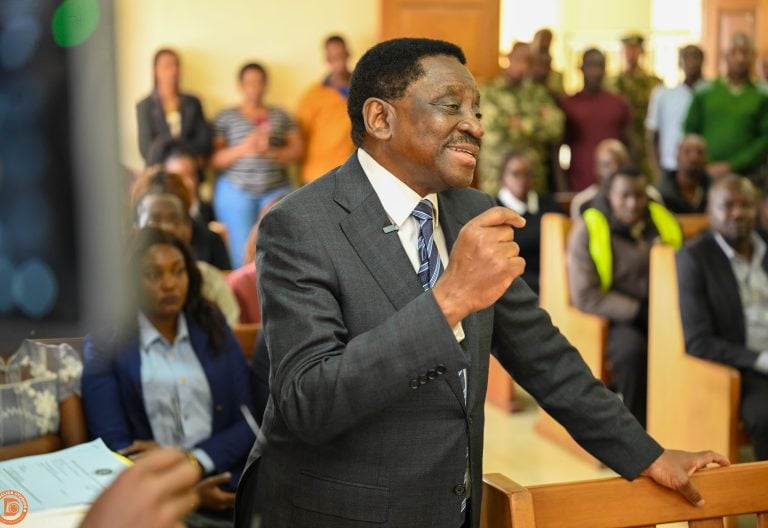
Nandi Senator Samson Cherargei has criticised Siaya Governor James Orengo, accusing him of failing to deliver development while escaping public scrutiny because of his political image.
Speaking during a morning TV discussion on May 14, 2026, Cherargei said some leaders are praised for their rhetoric on rights and governance, while their performance in office is overlooked. He added that some leaders spend too much time on public debate instead of focusing on service delivery.
“People like my brothers here would celebrate a governor of Siaya who is doing absolutely nothing because he’s just jumping up and down and saying ‘human rights, good governance’. But when you go, where is the governor of Siaya? He’s doing nothing,” he said.
“But they cannot call him out simply because he’s politically correct according to their own opinions. But they are quick to call out what President William Ruto is doing, which is okay because it will assist the president to be on his toes.”
You Might Also Like
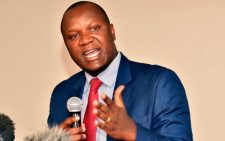
The remarks come at a time when Orengo faces rising political pressure at home. In April 2026, Members of the County Assembly in Siaya threatened to move an impeachment motion against him. They accused his administration of slow project implementation despite approved budgets and delayed procurement processes. Critics in the county say several development plans have stalled within the financial year.
However, Orengo’s supporters argue that he has focused on accountability, governance standards, and public participation. They say his leadership has prioritised transparency and institutional reforms, even if visible development projects have taken longer to roll out.
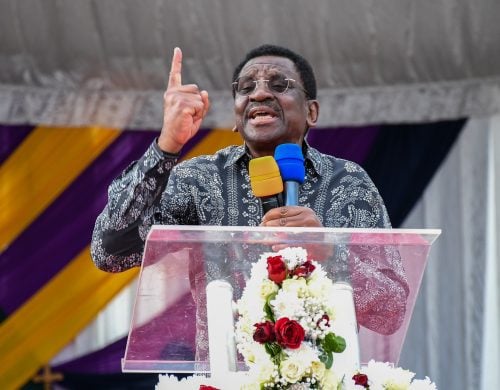
Ruto’s global trade push
Cherargei also defended President William Ruto, saying his international engagements are aimed at strengthening Kenya’s global position and attracting development partnerships.
“I want to confirm to the nation that what the president is doing is trying to ensure that Kenya is strategically positioned internationally and ensure that he pushes for the agenda of Kenyans in terms of development and partnership across the globe,” he said.
He linked Ruto’s recent regional and international trips, including visits to Tanzania, to efforts aimed at expanding trade opportunities. Kenya has been pushing to increase bilateral trade with Tanzania, with targets of over one billion dollars in trade volume in 2026.
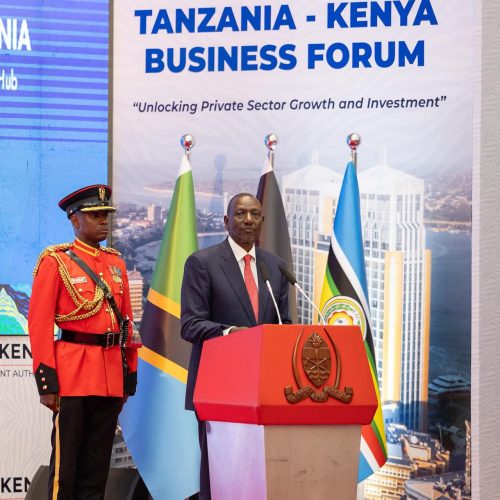
Cherargei, however, said African countries still face significant trade barriers that limit economic growth.
“We will all agree there will never be any equal balance of trade,” he said, adding that countries often protect their own producers through restrictions on imports.
He cited examples within the East African region, saying Uganda and Tanzania often introduce measures to protect local farmers and industries.
“When you go to Uganda, they would want to protect their farmers. They say don’t import this. Kenya, the same thing, Tanzania,” he said.
He called for stronger cooperation under the East African Community trade framework to reduce such barriers.
“With the East Africa trade protocol, we should agree as East Africa on how we need to do business,” he said.
Cherargei also pointed to delays in regional trade as a major challenge. He gave an example of Kenyan tea exports to West Africa.
“The last time that Kenya tried to export tea to Ghana, it reached there after three months,” he said, describing the delays as a serious obstacle to trade.
He argued that intra-African trade remains low because of restrictions, logistics challenges, and protectionist policies. According to him, these issues continue to slow economic integration across the continent.
Author
Kenneth Mwenda
Kenneth Mwenda is a business, sports, and politics digital writer with over seven years of experience in journalism, covering breaking news, feature stories, and in-depth analysis across a range of beats.
For inquiries, he can be reached at [email protected]
View all posts by Kenneth MwendaLatest News
Advertisement
More on Inside Politics