Advertisement
Cherargei hails cybercrime law as key to Kenya’s digital future
Thursday 23rd October, 2025 10:40 AM|

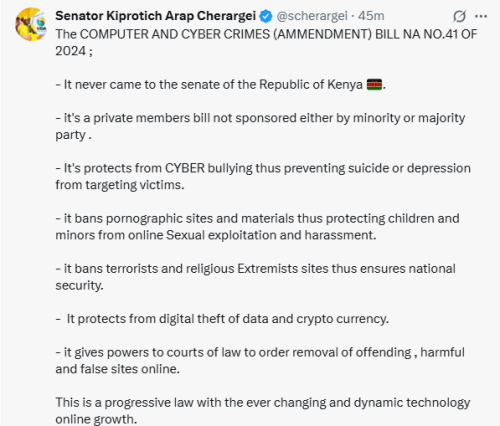
Senator Kiprotich Arap Cherargei has defended the Computer and Cyber Crimes (Amendment) Bill, 2024, saying it is a progressive law aimed at keeping up with the rapid growth of online technology.
Cherargei noted that the bill did not pass through the Senate because it is a private members’ bill, not sponsored by either the majority or minority party.
Taking to X on Thursday, October 23, 2025, Cherargei said the law addresses key digital issues, including cyberbullying, online sexual exploitation, extremist content, and digital theft.
“It protects victims of cyberbullying, preventing depression and suicide. It bans pornographic sites to protect children and minors and blocks terrorist and extremist websites to ensure national security,” he said.
You Might Also Like


He added that the law gives courts the power to order the removal of harmful or false online content. Cherargei described the bill as “progressive,” designed to adapt to the ever-changing digital landscape and strengthen protections for Kenyans in a world increasingly dependent on technology.
Online safety sparks debate
The law was assented to by President William Ruto on October 15, 2025. It allows authorities to apply for pre-emptive shutdowns of websites and digital platforms suspected of hosting illegal activities, including child pornography, terrorism, and extreme religious practices. Section 46A empowers investigators to seek court orders to remove content before it causes harm or spreads widely.
However, the law has faced criticism. Kirinyaga Woman Representative Njeri Maina warned that it could restrict freedoms. Speaking on a local radio station, she expressed concern that the National Computer and Cybercrimes Coordination Committee could shut down platforms like TikTok or X without judicial consultation.
“The National Computer and Cybercrimes Coordination Committee. It has been given express powers by these amendments to switch off to delete websites or applications without any consultation with a judicial authority. So they can just decide at night well we don’t likeTikTok what’s happening there let’s switch it off we don’t like the conversation on Twitter let’s switch it off. This affects freedom of expression, belief, and opinion,” she said.
Supporters of the law, including Dagoretti South MP John Kiarie, defended the changes, citing rising online fraud, phishing, and identity theft.
“What we are observing is that phishing is becoming the order of the day. We seek to avert these increasing incidences of phishing, which can be executed by use of hyperlinks – stealing identities, money, and private information,” Kiarie said.
Other MPs highlighted that the law also addresses international concerns, particularly regarding digital child protection.
While some fear misuse of the law, Cherargei maintains it is a necessary safeguard. He said the bill provides legal tools to protect citizens and institutions from online threats and ensures Kenya remains in step with digital developments.
Author
Kenneth Mwenda
Kenneth Mwenda is a business, sports, and politics digital writer with over seven years of experience in journalism, covering breaking news, feature stories, and in-depth analysis across a range of beats.
For inquiries, he can be reached at [email protected]
View all posts by Kenneth MwendaLatest News








Advertisement
More on Inside Politics