Barrack Muluka: Parliament operating under State House control
By Kiprono Keileb, August 14, 2025Political commentator and Democratic National Alliance (DNA) Party Secretary General Barrack Muluka has accused Parliament of operating under the control of the Executive, warning that the Legislature has abandoned its constitutional role of checking the government.
Speaking during a radio interview on Thursday, August 14, 2025, Muluka said Parliament is being “whipped in State House” and is no longer acting independently. He pointed to recent remarks by President William Ruto as evidence of direct influence over lawmakers.
“Parliament is whipped in State House. If it is being whipped in the State House, and we have seen the president saying, ‘I would like to see who is going to vote differently and there will be consequences,’ then it is clear that the Legislature is not checking the Executive,” Muluka said.
He criticised parliamentary committees, describing them as “extortion forums” rather than oversight bodies. According to him, many committee activities are driven by personal interests rather than public service.
“The committees are extortion forums. When they hear a plane has crashed somewhere, then the committee will quickly send letters to the Cabinet Secretaries, and before you know it, the Chair of that committee is pacing up and down in the corridors of the Ministry that is what the President is talking about and they are going there to collect protection fees,” he stated.
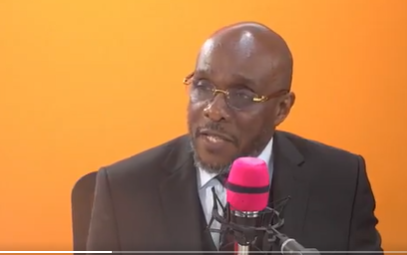
Muluka further alleged that the Executive has been complicit in enabling this culture, allowing parliamentary oversight mechanisms to be compromised. He argued that the cosy relationship between the Legislature and the Executive has eroded accountability and left citizens without an effective check on government power.
In Kenya’s constitutional framework, Parliament is tasked with representing the people, making laws, and overseeing the Executive to ensure that public resources are managed transparently and responsibly. However, Muluka said these responsibilities are being neglected as political loyalty and personal gain take precedence.
His remarks add to the growing debate on the state of Kenya’s governance, with Muluka arguing that blurred lines between the arms of government threaten the principle of separation of powers. Muluka’s assertion that committees have become channels for “protection fees” mirrors long-standing public concerns about corruption within oversight institutions.
As the conversation on governance, accountability, and institutional independence continues, Muluka’s statements are likely to ignite further scrutiny of Parliament’s role and whether it is serving the people or acting as an extension of State House.