5 Ruto’s directives that shocked Kenyans and sparked public uproar in 2025
By Aloys Michael, December 26, 2025In 2025, President William Ruto issued several directives that triggered intense national debate, public protests, and sharp criticism from civil society, politicians, and ordinary citizens.
While some supporters defended his intentions as bold leadership, critics argued that the directives exposed deeper problems around governance, human rights, and the rule of law.
Here are the five directives that stood out for the shockwaves they sent across the country:
Shoot the leg order
One of the most controversial moments came when President Ruto publicly told police officers to shoot violent protesters who were looting and burning properties, saying the act was illegal and deserved the full wrath of the law.
The directive was issued in the context of rising insecurity and violent crime experienced in the June and July protests.
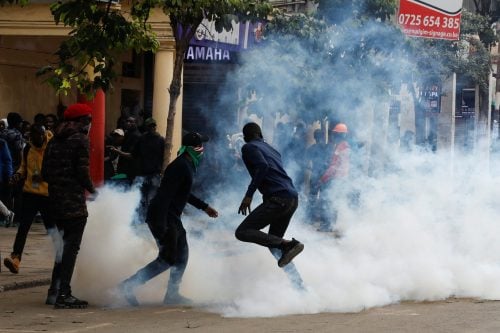
PHOTO/@channelafrica1/X
Human rights groups and leaders, especially the opposition, immediately raised an alarm, warning that such language could encourage extrajudicial killings and abuse of power.
Legal experts also pointed out that Kenyan law does not allow police to use firearms based on verbal orders but under strict conditions defined by the Constitution, adding that it lowered the threshold for use of lethal force, especially in poor neighbourhoods where police accountability has historically been weak.
In an interview with an international TV station, he admitted that he does not regret giving the order, arguing that police had acted under the law and that in case of brutal force against innocent Kenyans the law was clear and legal action against any police officer is and was imminent.
State House church
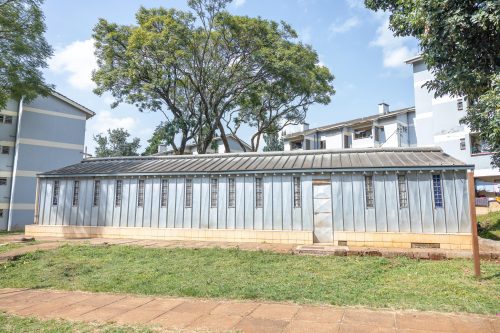
One of the most symbolic controversies arose from the Head of State’s proposal to construct a new church within the State House to replace the existing mabati (iron-sheet) structure.
The President argued that the iron sheet structure diminished the dignity of the country’s highest office, and as a Christian, he expressed willingness to go the extra mile by financing the new church using his own personal resources.
Supporters viewed the move as a reflection of personal faith and moral leadership. However, the proposal was not well received by sections of the public. Critics openly scoffed at the idea, questioning both its necessity and symbolism.
Others raised constitutional concerns, noting that Kenya is a secular state and arguing that establishing a permanent Christian place of worship at the seat of executive power blurred the line between church and state.
The controversy deepened further when Muslim leaders and faithful demanded equal treatment, calling for the construction of a mosque within the State House as well.
This expanded the debate beyond the church itself, reigniting broader national discussions on religious neutrality, inclusivity, and the role of faith in governance.
Ultimately, the issue depicted the enduring tensions between personal belief, constitutional principles, and the need for equal representation in a diverse, multi-faith society.
The Singapore dream
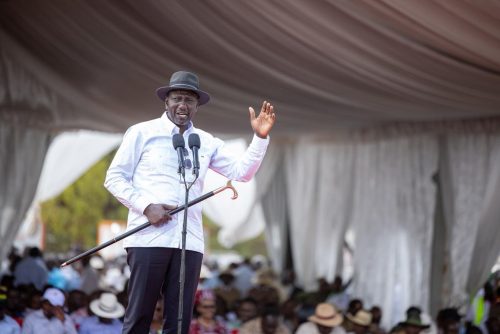
President Ruto’s repeated reference to turning Kenya into a first world county in a period of about 30 years also sparked backlash.
While the ambition sounded inspiring to some, others saw it as detached from Kenya’s social and economic realities. Kenyans received the news with mixed reaction with some dismissing it as a dead cat strategy and an empty reelection talk.
The critcs argued that Singapore’s success was built on strong institutions, low corruption, and heavy public investment, areas where Kenya still struggles.
Raila’s State funeral
The decision by President Ruto to accord the late former Prime Minister Raila Odinga a full State funeral sparked national debate. Many Kenyans did not expect such an honour, given the country’s long history of political rivalry and Raila’s past opposition to successive governments.
Supporters, however, viewed the move as a reflection of the evolving political relationship between the two leaders. Their unexpected bromance under the broad-based government was seen as a gesture of reconciliation and political maturity.
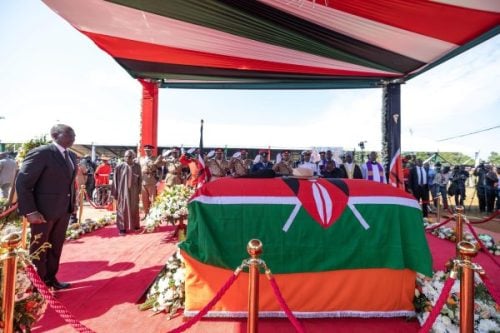
Controversy nevertheless emerged over the decision to grant Raila a 17-gun salute. While some Kenyans questioned whether the honour was warranted, others argued it was a fitting tribute to his stature in national politics.
Gun salutes are symbolic military honours used to recognise high-ranking individuals during state events. The number of shots fired corresponds to rank, with 21 reserved for a sitting Head of State, 19 for former Heads of State, and 17 for former heads of government.
Raila Odinga qualified for the 17-gun salute by virtue of his service as Prime Minister from 2008 to 2013. Beyond that role, his decades-long contribution to multiparty democracy, constitutional reform, and electoral justice cemented his legacy as a towering figure in Kenyan politics.
National ID vetting directive
President Ruto pledged to end the strict vetting process to enable residents in the affected regions to access national identity cards more easily, arguing that many Kenyans had been unfairly denied documentation for years.
He framed the move as a matter of inclusion, citizenship rights, and social justice for communities living in border and marginalised areas.
However, critics strongly opposed the proposal, insisting that strict vetting should be maintained.
They cited persistent security threats along Kenya’s borders, warning that relaxing the process could expose the country to infiltration by non-citizens and criminal networks.
According to this view, rigorous vetting remained essential to safeguarding national security, even as debates continued over how to balance security needs with constitutional guarantees of equality and inclusion.