2027 polls: Will vulgarity and barbs define campaigns?
By Aloys Michael, March 24, 2026With the 2027 general election still months away from the campaign window, the political arena is already heating up, though not necessarily on policy.
Instead, a growing pattern of insults, innuendo and sharply personalised attacks is taking centre stage, raising concern over whether vulgarity will define the next electoral cycle.
From presidential podiums to grassroots rallies, politicians across the divide are increasingly resorting to coarse language to energise supporters and discredit rivals.
In the age of viral clips and algorithm-driven visibility, fiery remarks often travel faster than policy proposals, rewarding leaders with attention and engagement. The result is a political culture where sharp rhetoric, sometimes bordering on outright vulgarity, becomes a strategic tool.
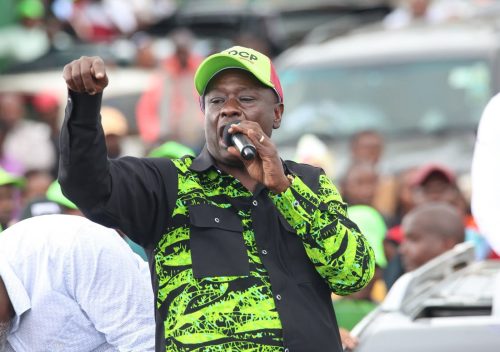
Recent events have amplified these fears. During a development tour, William Ruto appeared to veer off script, launching into a series of insults directed at opposition figures.
What had been framed as an opportunity to highlight government projects instead turned into a platform for personal attacks. The President mocked critics, at one point describing the opposition as brainless, while also making disparaging remarks about individuals’ physical appearance and personal lives.
The dirty game?
Ruto showed limited engagement with official briefings, including the explanation of the Chwele Market design, but devoted significant time to deriding rivals. The remarks included body-shaming comments and accusations touching on sensitive family matters, an approach critics argue undermines the dignity of the presidency.
What may have once been isolated verbal jabs now appears to be evolving into a defining feature of early campaign politics. The shift from issue-based discourse to personality-driven attacks risks lowering the standard of democratic engagement.
According to Amnesty International, the consequences could be far-reaching.
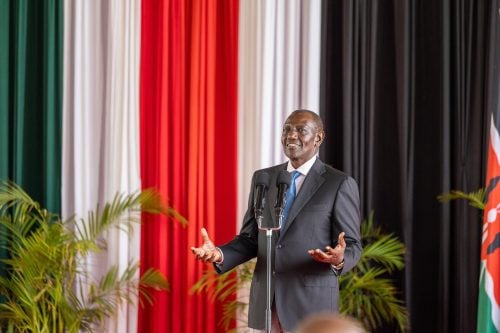
“What has happened in the last two days, you cannot then say that that would be a symbol of national unity. It polarises the country. It polarises individuals. It polarises certain ethnic communities,” the rights group said.
“Knowing how much we are far divided politically, those statements coming from political leadership as high as the President really serve against the good gains that we have wanted to make in chapter 6 of the Constitution on leadership integrity.”
Clergy calls for calm
Such warnings add to a broader concern among civil society groups that Kenya’s political discourse is deteriorating rapidly.
With competition intensifying in a crowded political field, leaders are under increasing pressure to command attention, often at the expense of civility.
Religious leaders have also entered the debate, cautioning that the coarsening of political speech could inflame tensions in a country with a history of election-related unrest. Clerics from the Pentecostal Voices of Kenya have urged restraint following escalating exchanges between top leaders.
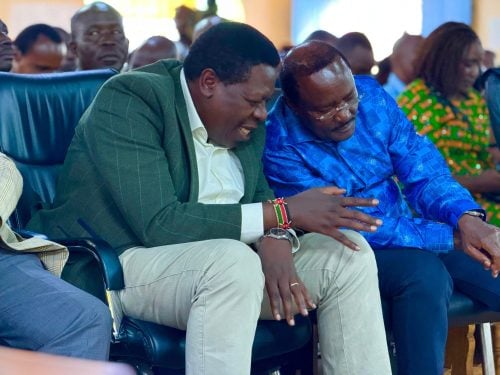
Led by Secretary General Habil Olembo, the group criticised both William Ruto and his former deputy Rigathi Gachagua for what they described as a lack of decorum. Olembo termed the trend “verbal indiscipline,” warning it reflects a deeper crisis in political culture.
“All leaders in this country, stop the insults and early campaign and get back to work,” Olembo said.
The clergy further noted that many Kenyans, particularly young voters, are struggling to identify with leaders who rely on confrontational rhetoric. Instead, they called for a return to respectful, issue-based politics that address citizens’ real concerns.
Yet not all leaders agree on where responsibility lies. National Assembly Majority Leader Kimani Ichung’wah defended the President, suggesting criticism has been one-sided.
“Respect is a two-way traffic: respect me, and I respect you back,” he said.
“You have been called a thief and all names. I am yet to see civil society coming up to call for the respect of the office of the presidency.”
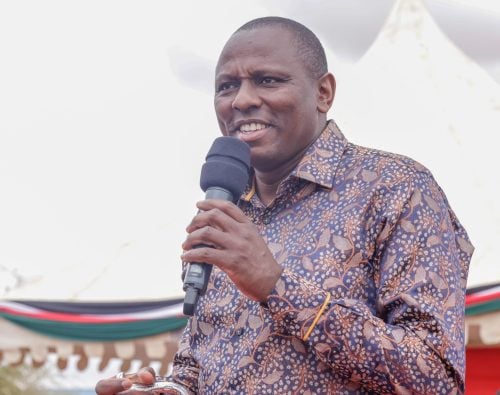
The escalation, however, is not confined to government ranks. Opposition figures have also been accused of sharpening their tone. Eugene Wamalwa has openly criticised the President’s rhetoric, warning that it is crossing dangerous lines.
“Ile siasa umeanza kuona ya matusi, kutoka kwa Rais Ruto, na wenzake. Wanasema palipo moshi pana moto. Sisi tunajua kuna jama Bwana Ruto anapanga,” Wamalwa said.
“Ile matusi alikuwa anarushia viongozi wa upinzani, sasa ametoka kwa matusi, ameenda kwa vitisho. Na ameanza kutoa vitisho kwa viongozi wa upinzani.”
“Sisi tunataka tuambie Bwana Ruto, ya kwamba matusi tumesema sisi hatuna haja na matusi yako. Lakini vitisho hatutakubali uanze kutoa vitisho to the People’s Loyal Opposition. Na sisi hatukuogopi Bwana Ruto.”
Beyond political circles, community leaders have also voiced concern. The Bukusu Council of Elders recently condemned the President’s remarks during his Western Kenya tour, describing them as divisive and unhelpful.
They urged leaders to focus instead on pressing development issues, pointing to stalled infrastructure projects such as the Misikhu-Naitiri and Musikoma-Mungatsi-Lurambi roads.
As Kenya inches closer to 2027, the question remains whether campaigns will pivot back to substance or sink deeper into spectacle.
For now, the growing reliance on insults and viral barbs suggests a political environment where attention often trumps accountability, leaving voters to navigate noise in search of meaningful debate.