Why latest Trump’s orders raise fuel prices jitters ahead of EPRA review
By Aloys Michael, April 13, 2026Kenya is staring at fresh fuel price uncertainty after a dramatic escalation in global oil tensions triggered by new orders from United States President Donald Trump.
The move, which targets the Strait of Hormuz, one of the world’s most critical oil shipping routes, has already sent shockwaves through energy markets, raising concerns just hours before the Energy and Petroleum Regulatory Authority (EPRA) announces its latest fuel price review on Tuesday, April 14, 2026.
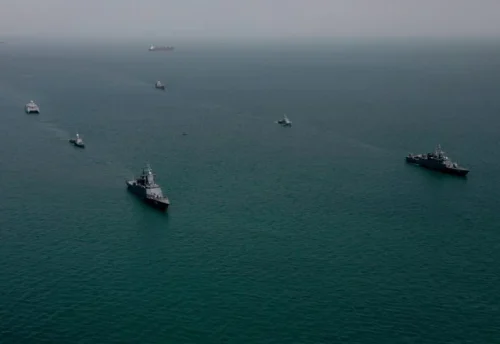
Trump ordered a naval blockade of the strategic waterway following the collapse of peace talks with Iran in Islamabad, Pakistan. The directive, which took effect on Monday, April 13, 2026, signals a sharp turn in US-Iran relations and introduces new risks to global oil supply chains.
“The meeting went well, most points were agreed to, but the only point that really mattered, nuclear, was not. Effective immediately, the United States Navy, the Finest in the World, will begin the process of blockading any and all Ships trying to enter, or leave, the Strait of Hormuz,” Trump wrote in a social media post.
He further warned that US forces would intercept vessels in international waters, particularly those paying transit tolls to Iran, and remove suspected naval mines in the region. The announcement has heightened fears of supply disruptions in a corridor that handles nearly a fifth of the world’s oil shipments.
Fuel prices concern
Markets reacted swiftly. Brent crude prices surged past Ksh13,312 per barrel, reflecting investor anxiety over restricted oil flows and potential shortages.
For Kenya, which relies heavily on imported petroleum products, the ripple effects could be immediate and painful. Global oil trends playing a central role in determining pump prices. Rising international costs often translate directly into higher local fuel prices, affecting transport, food, and the overall cost of living.
Data from the Central Bank of Kenya (CBK) already points to mounting pressure. In its Weekly Bulletin released on April 10, 2026, the bank noted that oil prices had been climbing even before the latest escalation.

“International oil prices increased as concerns about the US-Iran ceasefire for two weeks remained, as continued restrictions on shipping through the Strait of Hormuz and persistent geopolitical tensions sustained upward pressure on prices. Murban crude increased to USD 90.33 per barrel on April 9, down from USD 89.45 per barrel on April 1,” CBK reported.
Murban crude, a key benchmark for Kenya’s imports, rose to approximately Ksh11,730 per barrel, highlighting a steady upward trend that now risks accelerating further.
Locally, the situation is already tense. Motorists in Nairobi and surrounding areas have been grappling with fuel shortages, long queues, and inconsistent supply. EPRA recently confirmed that some petrol stations had temporarily run out of stock due to distribution delays.
Congestion at critical infrastructure points, including the National Oil terminal and Kenya Pipeline Company facilities in the Industrial Area, has slowed fuel movement.

Fuel supply disruptions?
At the same time, there are growing concerns that some oil marketing companies may be limiting supply within the distribution chain, possibly in anticipation of higher prices.
Panic buying has also worsened the situation, as consumers rush to fill tanks ahead of the expected EPRA announcement. This behaviour, while understandable, risks creating artificial shortages and further destabilising supply.
Beyond Kenya, the global economic mood is shifting. Asian stock markets opened lower following Trump’s announcement, signalling broader investor unease about energy security and the potential for a wider conflict in the Middle East.

Meanwhile, Energy Cabinet Secretary Opiyo Wandayi has urged patience ahead of EPRA’s next review, signalling that the disputed consignment would not influence pump prices.
“We cannot pre-empt what EPRA will announce tomorrow. Take it from me, the cost of this consignment will not be factored. We ask Kenyans to be patient and wait for tomorrow to see the measures the government has taken to cushion them,” he said when he appeared before the National Assembly’s Energy Committee on Monday, April 13, 2026.
For Kenyan businesses, the stakes are high. Fuel is a key driver of operational costs, influencing everything from transport and manufacturing to food prices. Any increase at the pump could ripple across the economy, squeezing margins and household budgets alike.
The coming hours will be critical. Whether Kenya experiences a sharp increase in fuel prices or a moderated adjustment will depend not only on local policy decisions but also on how the rapidly evolving geopolitical situation unfolds.
For now, uncertainty reigns, and the cost of that uncertainty may soon be felt at every fuel station across the country.