Wandayi assures country of stable fuel supply under G-to-G deal
By Emmanuel Rono, May 27, 2026Energy and Petroleum Cabinet Secretary Opiyo Wandayi has assured Kenyans that the country’s fuel supply remains secure under the Government-to-Government (G-to-G) fuel importation framework.
Speaking in a presser on Tuesday, May 26, 2026, Wandayi said Kenya has been fortunate to maintain uninterrupted availability of fuel despite global supply chain challenges and rising prices in many countries.
He maintained that the arrangement has shielded the country from shortages experienced in other parts of the world.

“As a country, we are fortunate that with our very robust and resilient government-to-government fuel importation framework, we have not experienced and we are unlikely to experience any form of shortage of these products,” he said.
He added that fuel shortages have become increasingly common in other regions, warning that Kenya’s situation stands in contrast to what is being witnessed globally.
“Fuel shortage has now become a common thing in the region and many other parts of the world. It is now a commonplace seeing motorists queuing for fuel in many countries,” Wandayi said.
Ruto defends G-to-G deal
Ruto also explained that through the Government-to-Government fuel supply framework, the country had secured guaranteed fuel supplies despite global supply chain disruptions, ensuring uninterrupted availability across the country.
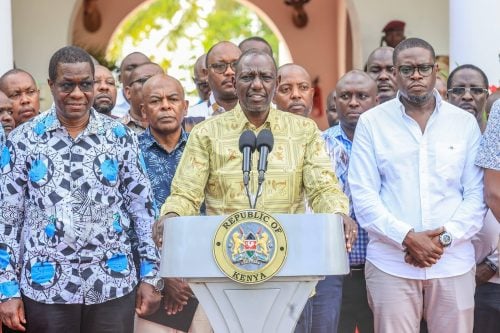
He said the arrangement had stabilised fuel pricing compared to the previous market system, where prices fluctuated sharply every month.
Ruto further stated that during the May–June 2026 pricing cycle, the government had utilised another Ksh7.7 billion for stabilisation and foregone Ksh8 billion in VAT revenue, bringing the total spending for that cycle to Ksh15.72 billion.
He said that as a result, super petrol prices were reduced by Ksh15.87 per litre, diesel by Ksh44.89 per litre, and kerosene by Ksh78 per litre.