Advertisement
Trump wants lower rates, but firing Powell may push them higher
Friday 18th July, 2025 03:00 AM|
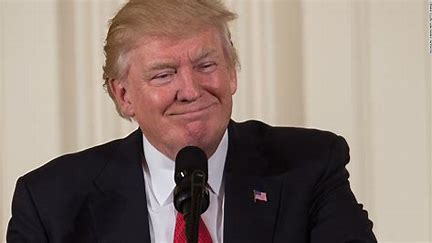
President Donald Trump wants the Federal Reserve to lower interest rates. Firing Jerome Powell, the Fed chair, could have precisely the opposite effect, pushing up costs for homebuyers, businesses and other borrowers.
Trump in recent days has intensified his long-running attacks on Powell, whom he has criticized for holding interest rates at a relatively high level even as inflation has cooled and economic growth has slowed. On Tuesday, the president asked a group of House Republicans whether he should fire Powell, and showed off a draft of a letter that would do so.
Asked on Wednesday whether he intended to fire Powell, Trump said he had no immediate plans for a removal, though he refused to rule it out. If he took such a step, it is unclear whether he would succeed. Powell has indicated his intention to serve out his term as chair, and many legal experts say the law is on his side.
Even if Trump did manage to oust Powell, the move might prove counterproductive. A new chair might be able to persuade enough other Fed officials to lower the short-term interest rates that the central bank directly controls. But the rates that matter to most borrowers are long-term rates, particularly those on 10-year and 30-year federal government bonds, which are the basis for what borrowers pay for mortgages, auto loans and lines of credit for most businesses.
You Might Also Like


The Fed’s decisions influence those rates, but it is investors, through their buying and selling of government bonds, who set them directly. Firing the Fed chair — and, in so doing, undermining the central bank’s long-standing independence — could send them soaring, economists warn.
“If my sole objective were lowering borrowing costs, this would not be the way I would go about it,” said Glenn Hubbard, a Columbia University economist who served as an adviser to President George W. Bush. “It’s not going to work.”
Sure enough, yields on federal bonds — which reflect the interest rates that investors demand to lend the government money — rose sharply Wednesday after news about Trump’s threats broke. They moderated after the president suggested a decision wasn’t imminent.
Firing Powell could push up long-term interest rates for two reasons. The first is inflation: If Trump moves to take more direct control of the Fed’s policy decisions, bond investors may expect more inflation in the years ahead and, as a result, demand higher interest rates.
The Fed, like central banks in most advanced economies, is meant to be insulated from political influence in order to give policymakers the freedom to fight inflation even if doing so is painful in the short term. That is what Powell did during the Biden administration as prices spiked. The Fed raised interest rates to their highest level in decades in order to bring inflation under control, even as forecasters predicted — wrongly, it turned out — that doing so would cause a recession.
Expecting higher inflation
“The Fed’s credibility and independence was critical in getting COVID inflation back down quickly,” said Joseph E. Gagnon, a former Fed economist who is now at the Peterson Institute for International Economics.
If Trump undermines that independence, investors may lose confidence in the Fed’s willingness to take unpopular positions — like keeping interest rates high to stamp out price gains. That could lead investors to expect inflation to be higher on average than it has been in recent decades.
That would affect the price the government pays to borrow money because if investors expect higher inflation, they will demand higher interest rates. An investor who expects prices to rise 2% per year, for example, may be willing to lend the government money at an interest rate of 4%; if inflation averages 3% instead, an investor would need a 5% interest rate in order to make the same return.
The second reason that firing Powell could backfire has to do with the U.S. government’s debt. Trump has said in recent weeks that, by keeping rates high, Fed policymakers are costing taxpayers “trillions of dollars in interest cost.” That’s because the central bank influences — albeit indirectly — how much interest the government owes on its nearly $30 trillion in debt.
Such comments imply that Trump sees it as the Fed’s job to help the government pay its debts, rather than as the job of Congress and the president to set tax and spending policy in a responsible manner. That could encourage even more borrowing when most economists already believe the United States is on an unsustainable fiscal path, in part because of the enormous tax-and-spending bill that Trump signed into law this month.
“Lowering interest rates so there’s less debt and more ability to do things like tax cuts is an extremely dangerous and scary goal for a central bank to have,” said Jason Furman, a Harvard economist and former adviser to President Barack Obama. “Every central bank that has embarked on that path, it’s ended very, very badly.”
If investors lose faith in the government’s ability to make good on its obligations, they could demand a higher rate of return to compensate them for that risk, said Tara Sinclair, an economist at George Washington University who studies the Fed.
“This idea that debt service is going to be somehow lowered by a more politically intervened Fed is exactly wrong,” she said. She noted that, even before this week, bond yields had been rising in ways that suggested mounting concerns from investors.
Experts warning
Trump also flirted with firing Powell during his first term — not long after he elevated him to the chair role. Economists warned at the time that interfering with the central bank was a dangerous precedent. But the context then was different: Inflation had been low and stable for years, and the U.S. debt load, though high by recent historical standards, was generally seen as manageable.
Today, the risks are greater. The surge in prices that followed the pandemic is fresh in people’s memories, and inflation, though far below its 2022 peak, remains above the Fed’s target of 2%. At the same time, the rapid increase in the federal debt — first because of the government’s response to the pandemic, and more recently because of Trump’s tax package — has exacerbated concerns about the long-run fiscal picture.
Both trends make threats to Fed independence more dangerous now than they were during Trump’s first term, said Karen Dynan, a Harvard economist who worked in the Treasury Department under Obama.
“I think the context makes a big difference,” Dynan said.
“Inflation expectations are more at risk of coming unanchored just because we had the bad inflation a few years ago,” she said. “And with government debt so high, the incentive for politicians to try to reduce that burden by meddling with monetary policy is higher.”
Author
The New York Times
View all posts by The New York TimesLatest News







Advertisement
More on Business