Advertisement
Trump to raise 25% tariffs on South Korea
Tuesday 27th January, 2026 07:20 AM|

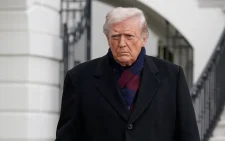
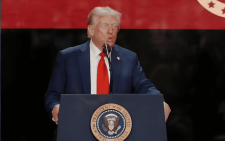
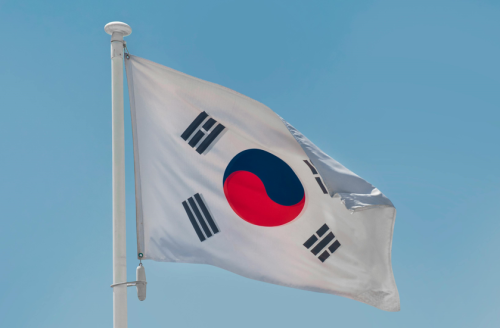
United States President Donald Trump has announced that he is hiking tariffs on South Korean exports, accusing the East Asian ally of failing to ratify its trade deal with Washington fast enough.
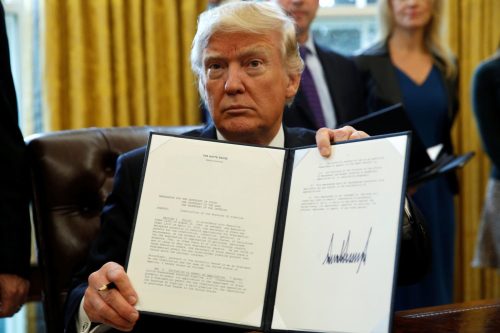
In a post on Truth Social on Monday, January 26, 26, Trump said he is “hereby increasing” tariffs from 15 per cent to 25 per cent over the failure of South Korea’s legislature to ratify the trade pact struck between Washington and Seoul in 2025.
Trump said the higher tariff rate would apply to automobiles, lumber and pharmaceutical products, as well as any goods covered under his baseline “reciprocal” tariff.
“South Korea’s Legislature is not living up to its Deal with the United States,” Trump said.
You Might Also Like
“Why hasn’t the Korean Legislature approved it?” Trump added.
The White House had not issued an executive order giving the higher tariffs legal effect as of Monday night.
South Korea’s presidential office, Cheong Wa Dae, said in a statement that Seoul had not received any notification about the tariffs from the US side.
It said Kim Yong-beom, director of national policy, would convene a meeting on Tuesday, January 27, 2026, to discuss Trump’s announcement.
South Korean Minister of Trade Kim Jung-Kwan, who is currently in Canada, will also travel to the US immediately to hold talks with US Secretary of Commerce Howard Lutnick, the office said.
The US and South Korea announced a framework trade deal in July, under which Trump agreed to lower his reciprocal tariff on South Korean goods from 25 per cent to 15 per cent.
Trump agreed to extend the 15 per cent tariff rate to South Korean auto exports following his summit with South Korean President Lee Jae Myung on the sidelines of the Asia-Pacific Economic Cooperation (APEC) forum in Gyeongju, South Korea, in October.
Under the agreement, Seoul agreed to invest Ksh45.15 trillion in key US industries, including semiconductors and shipbuilding.
A related bill drafted by Lee’s Democratic Party has been pending in the National Assembly since November.
Trump’s trade salvoes have been a major concern for South Korea’s economy, which is heavily dependent on exports and has faced flagging growth in recent years.
The South Korean economy grew 1 per cent in 2025 after contracting 0.3 per cent in the final quarter. That was the weakest performance for Asia’s fourth-largest economy since 2020, when the COVID-19 pandemic brought much economic activity to a grinding halt.
South Korea’s exports accounted for about 44 per cent of gross domestic product (GDP) in 2024, well above the OECD average of 30 per cent.
Despite Trump’s tariffs sapping demand for South Korean automobiles and machinery, South Korea counts the US as its top export destination after China.
South Korean exports to the US came to Ksh15.84 trillion in 2025, about 17 per cent of the total, an on-year decline of 3.8 per cent.
Author
Latest News




Advertisement
More on Business