Transporters oppose plan to reintroduce mandatory rail haulage to Naivasha
By Ndiritu Wanjiru, February 11, 2026The Kenya Transporters Association (KTA) has opposed a move by the Kenya Revenue Authority to reintroduce rail haulage of cargo to the Naivasha Inland Container Depot (ICD) from Mombasa, terming the move unconstitutional.
In a press statement shared on Wednesday, February 11, 2026, the association said it was aware of the reports that the KRA Commissioner General was suggesting a move to force importers serving neighbouring countries to clear cargo through the Naivasha ICD, in what the KRA says will ease congestion at the Mombasa port.
In the statement, the KTA Chairperson, Newton Wang’oo, stated that the directive would violate free market principles and slow down the gains. President William Ruto abolished the policy in 2022 in a move aimed at ending the haulage, restoring market freedom and revitalising economic activity.
“It is therefore with deep concern that KTA has taken note of reports attributed to the Commissioner General of KRA suggesting an intention to compel importers, particularly those serving other countries, to use the Naivasha ICD under the pretext of decongesting the port of Mombasa,” the statement read.
The transporters association also noted that the Naivasha ICD lacks any defensible commercial or logical justification grounded in independent and credible feasibility analysis. It further implied that no rational importer serving landlocked countries would voluntarily select Naivasha ICD as a clearance point.
The association’s sentiments oppose the KRA announcement that the Naivasha ICD will be prioritised for long-haul cargo destined for Uganda, Rwanda, DRC and South Sudan. The Mombasa port, he noted, would now focus on short-haul traffic within the country.
The association notes that any policy that forces importers to use a prescribed mode of transport or pay predetermined tariffs is unconstitutional and unlawful. The association maintained that the choice of clearance points and mode of transport rests solely with the cargo owner.
The transporters insisted they are not opposed to the Standard Gauge Railway (SGR) or rail transport in general. However, they rejected what they described as coercion, price-fixing and state-mandated allocation of cargo in a liberal economy.
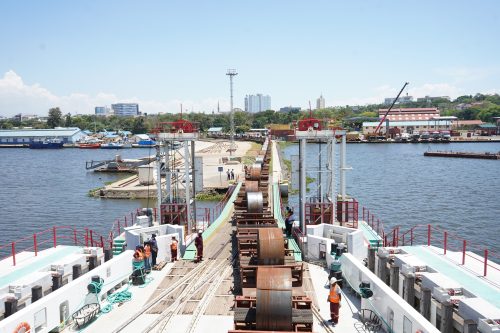
Executive directives on Rail haulage
They warned that any attempt to reintroduce forced rail haulage, whether directly or through administrative pressure or regulatory circulars, would violate constitutional provisions and existing court precedents.
In 2019, then President Uhuru Kenyatta directed that it be used to decongest Mombasa, a directive that was reversed by his successor, William Ruto, in 2022, immediately after assuming office.