Trade CS explains how Kenya can unlock global export potential
By Luke Oluoch, October 6, 2025Trade Cabinet Secretary Lee Kinyanjui has emphasised the importance of Kenya aligning with international standards, explaining that it is among the ways the country can tap into and unlock its potential in global markets
Speaking during the opening of the 24th COMESA Summit on Monday, October 6, 2025, the CS termed the summit a fitting forum to engage stakeholders in the sector on how to achieve that objective.
Employment
“Horticulture is more than flowers, fruits, and vegetables. It is jobs for millions, empowerment for women and youth, foreign exchange for our economies, and a gateway to new markets,” he stated.
While noting the significant role that the Kenyan horticultural sector plays in driving the country’s economy, Kinyanjui stressed the need for the industry to shift from farm production to developing logistical systems that adequately address prevailing challenges.
“Kenya’s own experience, exporting over 70 per cent of cut flowers to the EU, shows what is possible when we strengthen value chains and align with international standards.
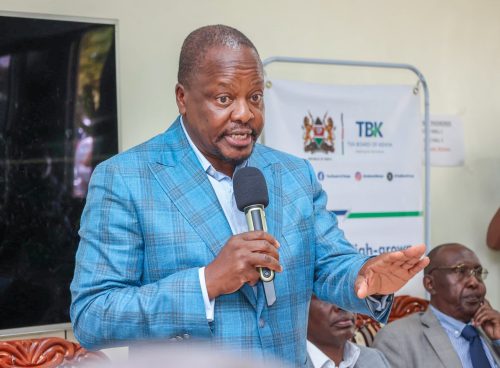
“We must build not only our production capacity at the farm level, but also strengthen our logistical systems to effectively export the highly persishable horticultural products,” he added.
“This is a good conversation across the investors, service provider, and support across the entire value chain so that we bridge where there are gaps,” he stated.
From subsistence to economic mover
Mirroring his sentiments, Agriculture CS Mutahi Kagwe also noted the need to adopt resilient business measures to transform the horticultural sector from subsistence to a key driver of economic growth and global competitiveness.
Kagwe noted that the industry has suffered losses in 2024 due to the huge transport costs of the perishable flowers.
“The horticulture sector has struggled with air freight capacity shortages and escalating transport costs. The challenges led to massive losses in 2024.
The challenges underline the need for resilient measures to address this industry,” he stated.
He further noted that the COMESA region should also open up on the existence of the intra-regional market within the region’s countries as well as in the global market.
24th COMESA
“Sometimes we forget the potential of trade within COMESA itself. I would like to urge the COMESA countries to become consumers of Cut flowers too,” he stated.
This year’s edition of the COMESA summit is focusing on key sectors including agriculture and agro-processing, digital technology and ICT, manufacturing and industrial equipment, financial services and fintech, tourism and hospitality, mining and energy, as well as textiles and leather products.