Trade CS defends plans to privatise Kenya Pipeline amid uproar
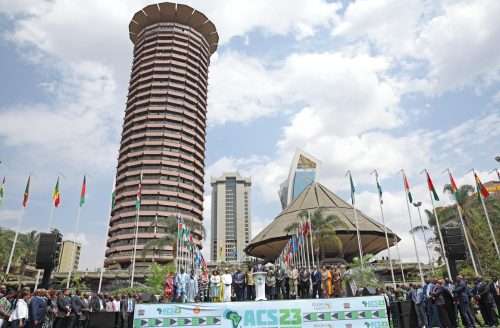
By Kenneth Mwenda, August 5, 2025Trade Cabinet Secretary Lee Kinyanjui has weighed in on the growing public concern over the sale of key national assets like the Kenya Pipeline Company (KPC), Kenyatta International Convention Centre (KICC), and Bomas of Kenya, stating that privatisation should not be feared but understood as a global economic norm.
Responding to questions on the issue during a radio interview on Tuesday, August 5, 2025, Kinyanjui drew comparisons to successful privatisation cases such as Safaricom and British Airways, suggesting that public outcry often stems from misinformation and resistance to economic realities.
“First, I need us to agree that governments across the world were never designed for business,” Kinyanjui said. “They are designed to create an environment for businesses to thrive, but they themselves should not do business.”
He gave the example of Safaricom, which was once a department under Telkom Kenya before being opened up to private investment.
“The moment we allowed it to go private, now Safaricom is the biggest in Africa. Privatisation allows creativity, flexibility, mobilisation of capital, and so on,” he said.
Kinyanjui explained that similar models exist globally, citing British Airways, which was once government-owned in the UK before being privatised through the sale of shares.
“There is nothing wrong with that. And the moment a product is taken to the stock exchange and is now on sale, it means you and I can buy. And if you do not buy, do not blame those who have bought,” he added.
Public assets spark debate
His remarks follow recent developments in September 2024, where the High Court declared the 2023 Privatisation Act unconstitutional, particularly blocking the sale of KICC on grounds that it is a national monument protected under Article 11(2) of the Constitution and the Monument and Heritage Act.
The court ruled that the law lacked meaningful public participation and undermined the public’s role in managing sovereign wealth. Other entities affected by the ruling include Kenya Pipeline Company, Kenya Seed Company, and Kenya Literature Bureau.
Meanwhile, in July 2025, the Cabinet approved a plan to reinstate KPC into the privatisation programme, arguing that it would inject efficiency, private capital, and expand shareholder value. The plan includes listing KPC on the Nairobi Securities Exchange.
Separately, in March 2025, the State Department for Culture, Arts and Heritage denied claims that Bomas of Kenya has been sold to a Turkish firm, clarifying that the facility is undergoing renovation to transform it into a modern international convention centre and remains a government asset held in public trust.
Kinyanjui’s position highlights a broader ideological shift within government, from public-sector ownership to market-driven solutions aimed at boosting competitiveness, efficiency, and innovation.