Advertisement
Spiralling paper, ink prices threaten printing industry
Tuesday 08th February, 2022 05:56 AM|
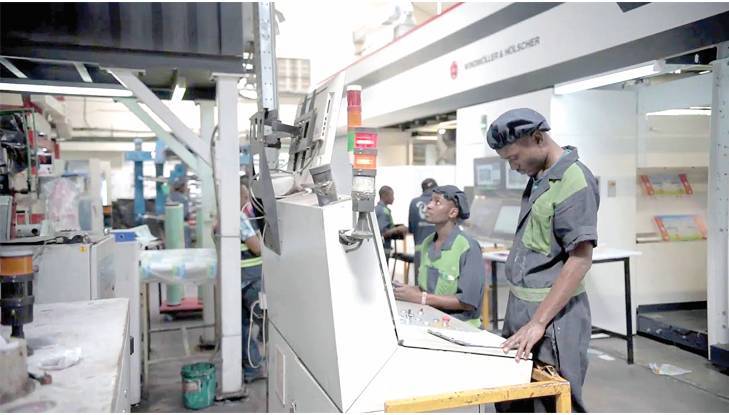
Printing a document at your local cybercafe will soon be costlier following a surge in the cost of business operations in the paper and ink industry.
Several suppliers in the industry and related companies like digital branding and graphic arts have notified their customers in recent months about price changes amidst high hopes of a rebounding economy. All these are attributed to the challenging business environment consisting of the surging cost of raw materials, global pricing, and turbulent freight chain due to Covid-related restrictions.
Since July 2021, local suppliers who mainly import from China, have increased the prices of its uncoated paper by up to 50 per cent while prices of the coated ones have gone up by 100 per cent due to the surging global demand. Eagle Industries Ltd, one of the biggest suppliers in Nairobi’s Koja area, for instance, is now retailing its adhesive sticker paper A1 size at Sh7,500 per ream, from Sh3,200 in mid-2021.
Increase their prices
The bond paper goes for Sh4,200 from Sh3,400 while art card paper surged from Sh2,700 to Sh3,800 over the same period.
Masterprint Graphics Ltd and its rival Mattel Printing and Branding House have already been forced to increase their prices for runs by at least 20 per cent to cushion themselves from the rising cost of production. This is in addition to the previous price reviews that slightly surged the printing costs towards the end of 2021.
Ink companies and suppliers have equally acted fast. Prices of Inkjets, ink toners, cartridges, and coatings have shot up in the latest blow to the printing industry. One litre of HP ink toner retails at Sh19,000 per litre compared to Sh10,500 per litre in July 2021 while offset printing ink costs about Sh1,000 per kilogramme from Sh800.
One of the biggest challenges to commercial printers, according to experts, is the supply-demand mismatch coupled with high importation costs, taxes, and low turn time.
Due to global border restrictions and bureaucracy, international imports are taking up to two months compared to one month before the pandemic.
“The sharp increase of freight rates, raw material input costs, and stiff competition from big economies like America who are willing to pay extra is making the global shifts inevitable,” Nuru Mohamed, Masterprint Graphics Limited director said.
He warned that with the decrease of paper-making raw material, pulp, from Brazil, the “ high prices are likely to be followed by subsequent increases.”
Data from Statista, which places China as the leading paper and cardboard producer, estimates that the global demand for paper will increase steadily over the next decade, hitting about 416 million tonnes in 2022 and 461 million by 2030.
However, although the paper crisis is likely to impact other basic commodities such as toilet papers and school books, players in the sector are optimistic that they will withstand the test of time and reap big due to the much-sought branding and printing during the electioneering period.
Branding businesses
Further from the crisis, most branding businesses are moderately doing better, experiencing a spike in operations.
“We are surviving right now because our branding works have augmented the need for campaign posters, calendars, and T-shirts,” Mohamed noted.
A survey by the Central Bank of Kenya targetting the impact of political heat up on business already shows that most chief executive officers expect persistence of higher input prices, especially for imports where supply chain constraints will continue.
Author
People.Reporter
View all posts by People.ReporterLatest News








Advertisement
More on Business