Ruto seeks IMF backing as budget deficit widens
By Kenneth Mwenda, May 14, 2026President William Ruto has held talks with the International Monetary Fund (IMF) over a new multi-billion-shilling financing programme as Kenya moves to plug a widening budget deficit and rising debt pressures.
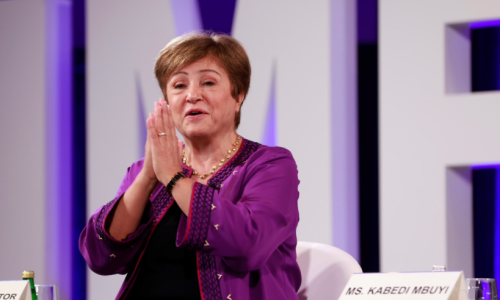
The meeting took place in Nairobi on May 12, 2026, with IMF Managing Director Kristalina Georgieva, on the sidelines of the Africa Forward Summit, which Kenya co-hosted with French President Emmanuel Macron.
Treasury officials say discussions on a new programme have advanced and could be concluded between June and July, after months of negotiations that followed the end of Kenya’s previous IMF arrangement in March 2025.
Finance officials argue the new deal is aimed at stabilising public finances rather than providing direct budget support.
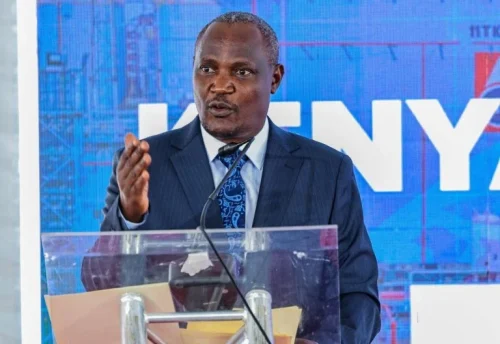
Cabinet Secretary for the National Treasury John Mbadi said Kenya is close to an agreement.
“Most likely, we will have an agreement in June or July on whether we get a funded programme,” Mbadi said. “We just need to be in a programme with them to support the strengthening of our fiscal position in the case of shocks like the ones we have now.”
Kenya is facing growing fiscal pressure. The government has projected a budget of about Ksh4.82 trillion for the 2026-27 financial year, against expected revenue of Ksh3.6 trillion. That leaves a deficit of around Ksh1.14 trillion.
Officials plan to finance the gap through a mix of domestic borrowing and external financing, which could include a new IMF-supported programme.
Debt pressure intensifies further
Public debt has also remained high. Treasury data shows total debt stood at about Ksh12.4 trillion as of May 2026. The debt-to-GDP ratio has risen to about 67.6 per cent and is projected by the IMF to climb further in the coming years.
The government had previously left IMF funding out of its medium-term fiscal projections to 2030, after earlier discussions stalled following the end of the last programme. However, rising global risks have pushed the negotiations back into focus.
These risks include higher global prices for fuel, fertiliser and food, partly driven by geopolitical tensions in the Middle East. Kenya, which depends heavily on imports for these commodities, has been exposed to cost pressures that have affected inflation and public spending.
The IMF has signalled support for Kenya’s broader reform efforts. In her remarks at the Africa Forward Summit, Georgieva said African economies must strengthen institutions, reduce debt risks and attract private investment.
She said countries must “deal decisively with the burden of debt” through restructuring where necessary and by shifting from heavy borrowing towards more equity-based financing.
She also noted that the IMF has expanded concessional lending to African countries and increased support for homegrown reform programmes.
At the same time, President Ruto used the summit to criticise global financial imbalances and called for reforms that would give African economies more control over their development path. He argued that Africa must rely more on domestic resource mobilisation and less on external borrowing.
The proposed IMF programme is expected to come with policy conditions, including tighter spending controls and reforms in state-owned enterprises. However, officials say the arrangement is also expected to provide a financial cushion against external shocks and help unlock additional support from other lenders.
Kenya has been operating without an active IMF programme since March 2025, when the previous arrangement ended without completing its final review.
If successful, the new deal would restore a formal IMF-supported framework and give the Treasury more flexibility as it prepares the next budget cycle. Talks between Nairobi and the Fund are continuing.