PS Mueke confirms Kenya is the leading milk producer in Africa, overtaking Egypt
By Sharon Atieno, June 10, 2026Principal Secretary, State Department for Livestock Development, Jonathan Mueke, said that Kenya has overtaken Egypt to become Africa’s leading milk producer after milk output rose from 4.6 billion litres to 5.4 billion litres, a performance driven by increased livestock numbers and improved dairy production systems.
“Kenya is the highest producer of milk in Africa. We oscillate between Egypt and Kenya, and right now we are ahead, growing from 4.6 billion litres to 5.4 billion litres,” Mueke revealed during an interview with a local TV station.
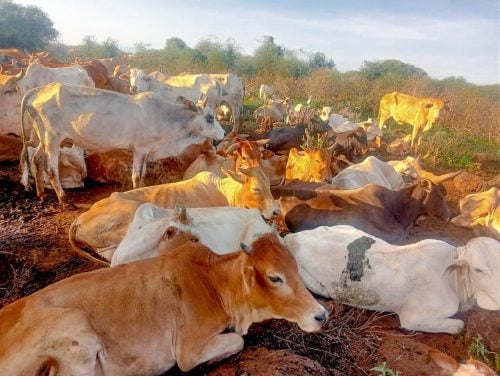
Speaking on Wednesday, June 10, 2026, Mueke said the rise in production has been supported by a steady increase in livestock population, which now stands at 22 million cattle, alongside 35 million goats, 28 million sheep and 6 million camels.
“The country’s livestock population now stands at 22 million cattle, 35 million goats, 28 million sheep and 6 million camels,” he said.
Livestock growth driving dairy output
Mueke noted that the expansion of livestock numbers across the country has directly contributed to higher milk production, particularly in dairy-friendly regions such as the highlands, where most counties continue to prioritise livestock farming.
He added that Kenya’s improved dairy output is also the result of better animal husbandry practices and targeted government interventions aimed at increasing productivity per animal.
Productivity per cow improves
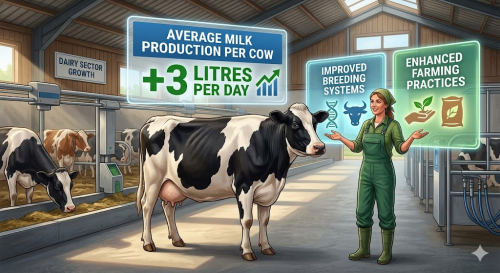
The PS said average milk production per cow has increased by about three litres per day, attributing the growth to improved breeding systems and enhanced farming practices within the dairy sector.
He further explained that artificial insemination has played a key role in improving herd quality and boosting milk yields across farms.
Sexed semen boosting dairy production
Mueke highlighted the use of sexed semen technology as one of the key interventions transforming the sector, saying it increases the likelihood of farmers getting female calves, which are crucial for milk production.
“With sexed semen, a farmer is able to get with 95 per cent accuracy, a female calf, a heifer, instead of a bull calf,” he said.
He added that this approach has reduced losses for farmers, as male calves do not contribute to milk production.
Mueke said the combined effect of rising livestock numbers, improved breeding technologies and expanded dairy farming has firmly placed Kenya at the top of Africa’s milk production rankings.