Petrol station owners warn of imminent fuel price increase
By Aloys Michael, April 22, 2026The Petroleum Outlets Association of Kenya (PAOK) has criticised the government’s decision to lower Value Added Tax (VAT) on petroleum products, stating that the measure is unlikely to provide significant relief to consumers.
According to the association, any short-term benefits could be outweighed by underlying inefficiencies within the fuel importation and pricing framework.
Speaking during an interview on a local TV station on Tuesday, April 21, 2026, PAOK Chairperson Martin Chomba cautioned that the tax reduction might eventually lead to higher fuel prices if systemic issues remain unresolved, adding that without improved oversight of procurement, distribution, and market regulation, the government’s intervention may have a limited impact on stabilising fuel costs.
“The government of Kenya doesn’t own even one litre of oil. All they do is regulate and control logistics. We are so used to VAT that we have forgotten the meaning, which means that you have added value to that product, which is not the case here. The VAT on fuel is pointless because the government doesn’t add any value to fuel,” Chomba said.
At the same time, Chomba argued that recent tax adjustments on petroleum products would do little to ease long-term pressure on pump prices, insisting that structural issues in the oil supply chain, among them the muffling of the National Oil Corporation (NOC), remain the real problem.
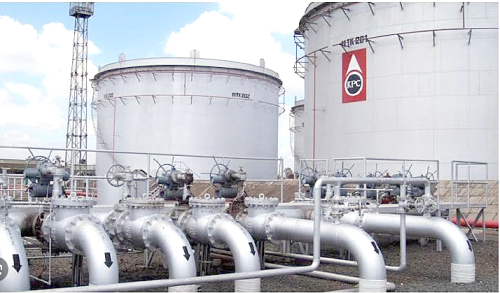
The petrol station owners slammed the government over releasing only Ksh6.2 billion out of the Ksh17 billion from the Petroleum Development Levy (PDL) Fund in an effort to stabilise fuel prices and cushion consumers from global shocks.
According to PAOK, the government should have used the Ksh17 billion to stabilise prices at the moment so that Kenya does not suffer further shocks in the event that the current situation in the Middle East continues for the next three months.
“The government, instead of using the whole of the Ksh17 billion fuel levy stabilisation fund to stabilise the prices, opted instead to use only about Ksh6 billion. In the next three months, the fuel prices are going to be exponentially higher, because we do price based on the weighted average of ships arriving between 9 to 10th of every month, and we also have nothing now to moderate it,” he said.

Fare hikes pushback
Meanwhile, the matatu operators in Kenya had cautioned against imposing unjustified fare increases following the latest fuel price review.
In a press briefing on Monday, April 20, the National Taxpayers Association of Kenya (NTA) warned PSV operators, emphasising that arbitrary fare hikes are placing an unnecessary financial burden on commuters.
The association urged transport providers to align pricing with actual fuel cost adjustments to protect the public from exploitation.
“This is uncalled for, and we should not continue to really rob Kenyans in broad daylight. So we are calling all the associations to observe this despite the economic challenges that come with the fuel shocks,” the association’s Chief Executive Officer (CEO), Patrick Nyangweso, said.

Moreover, NTA said the direct impact of the fuel hike on operating costs for a typical 14-seater matatu is modest compared to the sharp fare increments now being charged on several routes.
According to the calculation, a 14-seater diesel matatu covering the 160-kilometre trip between Nairobi and Nakuru consumes about 32 litres of diesel for a round trip of 320 kilometres, assuming an average fuel efficiency of 10 kilometres per litre.
Following the latest fuel price adjustment, diesel costs have risen by Ksh18.35 per litre, increasing from Ksh178 to Ksh196.63, which pushes the additional fuel expense per round trip to about Ksh587.
Despite this modest rise, the association reports that some matatu operators have hiked fares by as much as Ksh300 per passenger on certain routes. With a full capacity of 14 passengers, this results in an extra Ksh4,200 per trip, significantly surpassing the actual increase in fuel costs.
“If you do your mathematics rightly, Matatus are making exorbitant profits, and this is what we don’t think as a taxpayer association, we want to encourage this,” he said.