Modern markets rekindle hope for Kisumu traders amid project delays
By Viola Kosome, July 16, 2026Traders across Kisumu County have expressed optimism over the construction of 14 modern markets under the national government’s Economic Stimulus Programme (ESP), saying the facilities could improve hygiene, reduce post-harvest losses and boost incomes.
However, they are also demanding faster implementation and greater transparency after contracts for some projects were terminated without public explanation.
The projects, being implemented by the State Department for Housing and Urban Development, are spread across all seven sub-counties and are at different stages of implementation.
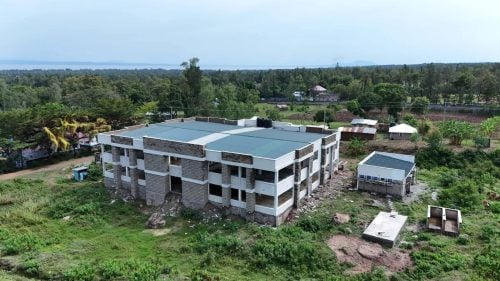
Kisian and Holo markets
While markets in Kisian and Holo in Kisumu West are nearing completion, others are still at the design stage, and projects in Dago and Kombewa have stalled following the cancellation of contractors.
For many traders, the new facilities represent more than modern buildings, they offer hope for safer and more dignified working conditions after years of operating in congested, open-air markets exposed to rain, dust and poor sanitation.
Jane Achieng, who sells vegetables at Muhoroni Market, said traders often lose produce during the rainy season because of inadequate shelter and poor drainage.
“We have waited for a decent market for years. A modern market will help us protect our produce and attract more customers, but what we need now is timely completion. Delays only prolong the challenges we face every day,” she said.
At Mamboleo Trading Centre, fish trader Rose Atieno said women traders stand to benefit significantly if the new market is equipped with essential services.
“Most women here rely on small businesses to educate their children and support their families. We need clean water, proper sanitation, cold storage for fish, reliable security and fair allocation of stalls. A modern building alone is not enough if those services are missing,” she said.
Peter Ouma, a cereals trader in Kisian, said the nearly completed market could transform business along the busy Kenya-Uganda transport corridor but called for complementary infrastructure.
“A market succeeds when customers can access it easily. Besides completing the building, authorities should improve access roads, provide electricity and ensure enough loading space for traders. That will help us expand our businesses and create jobs for young people,” he said.
According to the project status, construction of Mowlem Market in Kisumu East has reached about 12 per cent. The Ksh58.8 million facility will accommodate 300 traders once complete. Another market planned for Mamboleo Trading Centre, estimated to cost Ksh70 million, has completed the design stage and is awaiting procurement.
Mixed progress across markets
In Kisumu West, Kisian and Holo markets, each valued at Ksh58.8 million, are about 98 per cent complete and are expected to serve 300 traders each.
However, the proposed Dago Market remains in limbo after the government terminated the initial construction contract. Although officials have indicated that the project will be re-advertised, no reason has been publicly provided for the cancellation.
Muhoroni Market is about 18 per cent complete, while additional markets are planned for Masogo/Kibigori, Kopere, Koru and Miwani, where designs have been completed but construction has not yet started.
Nyakach Sub-county is set to benefit from a Ksh70 million market at Nyakwere Trading Centre, while Seme has the Kaloka Market under construction and another proposed market at Daraja Mbili awaiting procurement.
The Kombewa Market project is also expected to be re-advertised after the initial contract was terminated.
Principal Secretary for Internal Security Raymond Omollo, who has been monitoring the implementation of national government projects, said the markets are intended to provide organised trading spaces for small-scale businesses and improve the working environment for traders.
“The aim of the government is to give our small-scale traders a place to trade with ease,” he said.
Once completed, the 14 markets are expected to provide space for about 4,200 traders across Kisumu County.
Omollo said the markets are part of the government’s efforts to improve the working environment for micro, small and medium-sized enterprises by providing traders with modern facilities that meet basic standards of safety, sanitation and accessibility.
He noted that the facilities are strategically being established in key trading centres and border towns to stimulate local commerce, strengthen regional trade and create more opportunities for small businesses to grow.
Omollo added that the markets are expected to reduce post-harvest losses, improve the handling of farm produce and provide traders with a more conducive environment to conduct business.
“The aim of the government is to give our small-scale traders a place to trade with ease,” he said.
Even so, traders say the true measure of success will not be the number of projects announced, but whether the markets are completed on schedule, equipped with essential amenities and allocated fairly to the small-scale entrepreneurs they are meant to serve.