Mbadi warns shilling could sink to Ksh180 against US dollar if fuel import deal is scrapped
By Kenneth Mwenda, May 23, 2026Treasury Cabinet Secretary John Mbadi has warned that Kenya’s shilling could weaken sharply to as low as Ksh180 against the US dollar if the government-to-government (G-to-G) fuel import arrangement is scrapped.
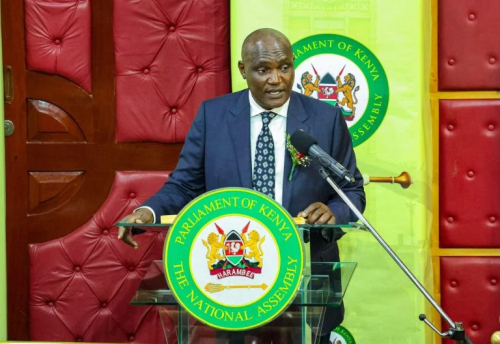
He spoke on Saturday, May 23, 2026, during an ODM Brigade-attended Sabbath service at Raliew Central SDA Church in Rarieda, where he defended the fuel import framework amid growing political pressure to abolish it.
Mbadi said fuel pricing in Kenya is driven by global supply conditions, transport routes and foreign exchange pressures, not only domestic policy decisions.
“The prices come up automatically. When demand is high and supply is low, prices rise automatically,” he said. “Fuel into Kenya has to be costly because demand is high and supply is low.”
He argued that Kenya is operating under unusual global conditions that have pushed up landing costs significantly.
“The landing costs and the routes that the fuel products are taking are longer. Therefore, the prices are high. The prices have increased with not less than 80 per cent in landing costs,” Mbadi said.
The CS explained that these pressures have forced the government to intervene through subsidies and tax adjustments to soften the impact on consumers.
“In the first month, we spent Ksh6.2 billion to subsidise fuel products. In May, we spent Ksh5 billion, and another Ksh2.7 billion has been added. We have also reduced VAT on fuel to 8 per cent from 16 per cent,” he said.
Mbadi said the VAT reduction alone has lowered pump prices by about Ksh15 per litre, adding that the government continues to absorb part of the cost to protect households and businesses.
He defended the G-to-G fuel import model, saying critics who call for its removal do not fully understand the risks involved in liberalising fuel procurement.
“This is not a local issue. We are responding as a government under extreme and extraordinary circumstances, like a COVID period,” he said.
Dollar demand risks rising
Mbadi warned that removing the structured fuel import arrangement would expose the country to supply and currency risks.
“If you do not have a reliable supplier you have a contract with, you cannot guarantee fuel supply. You may end up with a country dry,” he said. “If you liberalise fuel importation, the demand for dollars will be high, and that will strain the shilling.”
He explained that Kenya relies heavily on the US dollar to import petroleum products. Without deferred payment arrangements under the G-to-G deal, importers would rush to the market for dollars, increasing demand and weakening the local currency.
“You will find the shilling moving from 129 or 130 to 160, even 180. And once the shilling weakens, fuel becomes more expensive than what we see today,” Mbadi warned.
His remarks come at a time of heightened political debate over fuel pricing and import arrangements. Opposition leaders have accused the government of mismanaging the sector and called for the cancellation of the G-to-G framework.
Leaders from the United Opposition, including Rigathi Gachagua, Kalonzo Musyoka, Fred Matiang’i and Eugene Wamalwa, have argued that the G-to-G system lacks transparency and benefits politically connected players.
Mbadi rejected those claims, insisting the arrangement was designed to stabilise supply and shield Kenya from global shocks, not to serve political interests.
He said the government continues to balance fuel subsidies, tax policy and service delivery needs in a difficult economic environment.
“When we reduce taxes, it affects service delivery. We must be honest about that,” he said.
Mbadi added that decisions on fuel policy carry consequences that go beyond politics, and warned against what he termed misinformation on the issue.
“We are doing what is necessary to protect Kenyans from suffering under these global conditions,” he said.