Advertisement
Mbadi explains why Kenya raised Ksh193.8B to pay eurobond ahead of schedule
Saturday 04th October, 2025 10:31 PM|

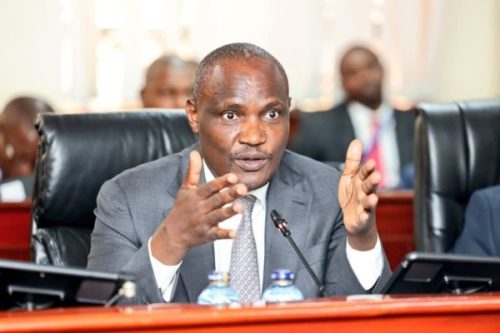
Treasury Cabinet Secretary John Mbadi has come out to explain the reasoning behind raising USD1.5 billion (Ksh193.8 billion) from international investors and channelled part of the money towards paying off part of the 2028 Eurobond ahead of schedule.
Appearing on a local TV on Saturday, October 4, 2025, Mbadi indicated that the government went into the market early to alleviate the debt pressure.
The Treasury CS informed the country that the move will also allow the government to focus on its development agenda rather than shifting all the attention to servicing debt.
“That is easier as opposed to (4:45) waiting for a 1 billion US dollar bond and paying it once. It puts a strain on the economy,” Mbadi told the local TV station.
Paying in tranches
You Might Also Like

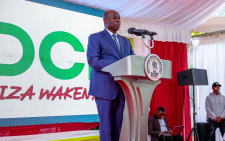

At the same time, the CS explained that the Kenya Kwanza administration had resolved to pay the maturing eurobond in tranches to avoid the fear of defaulting and reduce pressure on the economy.
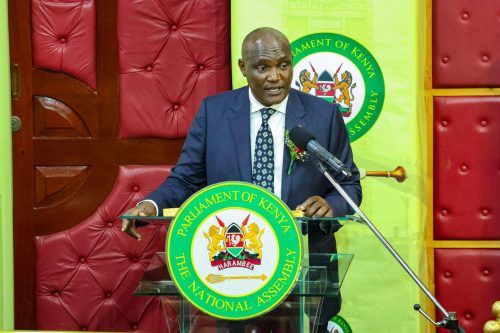
“This is the right time to go to the market. And we went to the market because we have the 2028 Eurobond falling due. We decided to deal with it. And we floated the Eurobond in two tranches. So, the USD1.5 billion Eurobond is a seven-year Eurobond, with a principal of USD750 million. We will repay 250 million US dollars per year, terminating in 2032, meaning we will pay 250 million in 2030. In 2031, we pay 250, and in 2032, we pay 250,” the CS explained.
“That is easier as opposed to waiting for a 1 billion US dollar bond and paying it once. It puts a strain on the economy,” he reiterated.
Less pressure on the shilling and economy
Further, Mbadi lauded the decision, indicating that it will reduce strain on the Kenyan economy and also stabilise the Kenyan shilling in the international market.
Kenya will also escape the pressure of default due to maturing loans with no money to repay.
Securing the funds
The raising of USD1.5 billion (Ksh193.8 billion) was confirmed by Treasury Principal Secretary Chris Kiptoo.
Out of the money raised, USD1 billion (Ksh129.24 billion) was used to settle the Eurobond, easing the burden of future repayments.
”The Government is pleased to announce that it has successfully raised USD1.5 billion (Ksh193.8 billion) from international investors and, at the same time, paid off USD1 billion of the 2028 Eurobond ahead of schedule,” the statement read in part.
‘This is the third such transaction since 2024, and it shows the Government’s firm commitment to managing debt more wisely, paying off loans on time, and protecting Kenyans from sudden repayment shocks.”
According to the Treasury, the deal was structured into two parts: a seven-year loan at an interest rate of 7.875 per cent and a twelve-year loan at 8.8 per cent
In total, this translated to an effective rate of 8.7 per cent, which is one per cent lower than what Kenya would have paid earlier in the year.
Author
Lutta Njomo
View all posts by Lutta NjomoLatest News

Advertisement
More on Business