Mbadi explains govt’s plan to become a minority shareholder in Safaricom
By Mabonga Makhanu, July 4, 2026Treasury Cabinet Secretary John Mbadi has defended the government’s proposal to reduce its shareholding in Safaricom, arguing that the State should not be involved in running commercial enterprises.
Speaking to journalists in Kisumu on Saturday, July 4, 2026, Mbadi dismissed criticism over the government’s plan to lower its stake in the telecommunications giant from 35 per cent to 20 per cent through the sale of part of its shares.
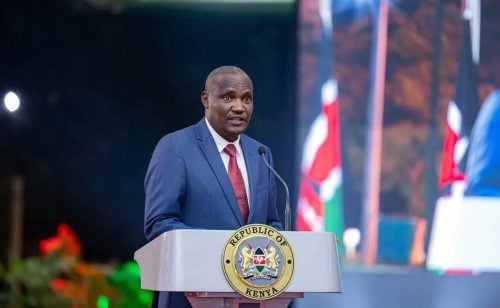
Responding to concerns that the move would further reduce the government’s influence in the company, Mbadi said the state has always been a minority shareholder in Safaricom.
“We have been minority shareholders in Safaricom even before this divestiture. A minority shareholder is one with less than 50 per cent. We have been having only 35 per cent. Now we are having 20 per cent. What’s the difference? We will continue to be minority shareholders,” he said.
The Treasury CS added that he would support an even further reduction in the government’s stake if it would enable the state to raise resources for development.
“In fact, I want us to be an even further minority shareholder by divesting more, to raise money and do other constructive things. We should not be in business. That is something I have said many times. The government has no business being in business. Business is for private people. The government’s role is to provide an enabling environment for them,” Mbadi said.
He argued that Safaricom’s growth accelerated after the government opened up ownership of the company to private investors.
Safaricom was once owned 100 per cent by the government, and it was a small company. The moment it was partially divested, it became a big company. We should not have the mindset that the government should run businesses. Government does not have the capacity to run major businesses,” he added.
The divestiture

The proposed divestiture comes as the government seeks to raise more than Ksh240 billion from the sale of part of its Safaricom stake.
According to the Treasury, the proceeds will be channelled into the recently proposed National Infrastructure Fund and the Sovereign Wealth Fund to finance key infrastructure and long-term investment projects.
Court battles
The proposal has, however, attracted opposition, with Wiper leader Kalonzo Musyoka, former Attorney General Justin Muturi and other petitioners moving to court to challenge the planned share sale, arguing that it should not proceed without complying with constitutional and legal requirements.