KRA pushes for wider powers to access individual data for taxes
By Aloys Michael, May 9, 2026Kenya Revenue Authority (KRA) is seeking sweeping new powers to access and use personal and third-party data to assess taxpayers under proposals contained in the Draft Finance Bill 2026, raising concerns among tax experts over possible abuse and increased compliance burdens.
The proposals, contained in amendments to the Tax Procedures Act, would allow the taxman to determine an individual’s tax liability using information collected from multiple digital and administrative sources, even where a taxpayer has already filed self-assessed returns.
The move signals a major shift from Kenya’s long-standing voluntary self-assessment tax system towards a more data-driven enforcement model as the government intensifies efforts to widen the tax base and seal revenue leakages.
“Under the proposed new Section 18A of the Tax Procedures Act, the KRA Commissioner would be empowered to determine whether a person has entered into or carried out a tax avoidance scheme and assess taxes as if the scheme had not been entered into or carried out,” it reads in a part.
The Bill states that the Commissioner may rely on a broad range of information sources, including withholding tax filings, employer payroll deductions, electronic tax invoice systems, whistleblower information, audit findings, and data submitted under other laws.
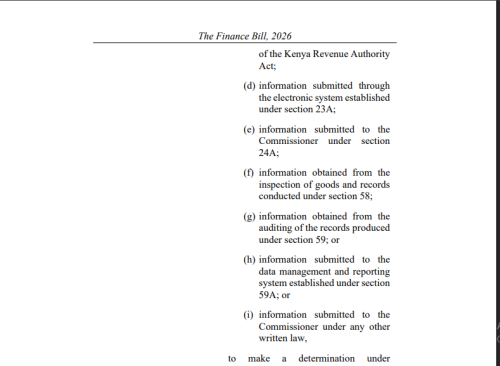
“KRA may rely on information submitted through the electronic system established under section 23A, information obtained from the auditing of records, and information submitted to the Commissioner under any other written law to make tax determinations,” the draft reads.
The proposals would effectively permit the taxman to reconstruct a taxpayer’s income profile using secondary data sources already within government systems and digital platforms.
However, tax experts say the changes could significantly expand KRA’s powers at a time when the authority is increasingly relying on technology and integrated data systems to enforce compliance.
The Bill further proposes a new Section 29A allowing the Commissioner to issue tax assessments based on information obtained from the same data streams, including electronic tax systems and third-party reports.
In another major shift, the Finance Bill also proposes allowing KRA to generate prepopulated tax returns on behalf of taxpayers. The amendment to Section 75 of the Tax Procedures Act states that:
“the Commissioner may use the information technology contemplated under subsection (1) to generate a prepopulated tax return on behalf of a person required to submit or lodge a tax return.”
Taxpayers would then be allowed to rely on the pre-filled returns generated by KRA when filing taxes.

The government argues the measures are intended to improve tax administration efficiency, curb tax avoidance schemes, and enhance revenue collection amid mounting fiscal pressure and rising public debt obligations.
However, analysts warn that the proposals may expose taxpayers to assessments based on incomplete or inaccurate data held by third parties, potentially triggering disputes with the tax authority.
There is also caution that taxpayers may struggle to verify the source of information used against them, particularly where data is obtained from whistleblowers, digital systems, or external agencies.
The proposed law broadly defines a “tax benefit” to include “a reduction in the liability of a person to pay tax,” “an entitlement to a refund,” or “a postponement of a liability for the payment of tax.”
Critics argue that the broad wording could give KRA wide discretion in interpreting ordinary tax planning arrangements as tax avoidance schemes.
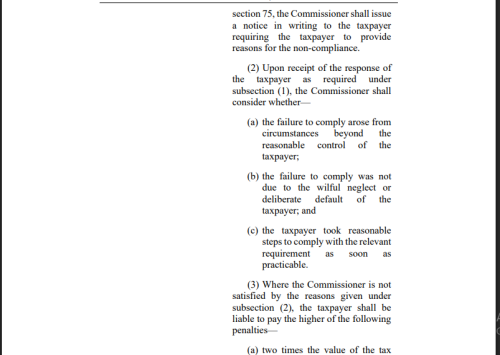
The Bill also gives the Commissioner up to five years to issue assessments arising from such determinations.
KRA reforms
The latest proposals come as KRA deepens its use of digital tools such as eTIMS, iTax, and integrated payment monitoring systems to track transactions across the economy.
At the same time, the Finance Bill introduces stricter reporting obligations for virtual asset service providers, requiring them to file detailed information returns on users and reportable transactions.
The Treasury says the changes are aimed at modernising Kenya’s tax administration framework in line with global digital tax enforcement trends.
But business groups and tax advisers are expected to push for clearer safeguards, stronger oversight mechanisms, and enhanced taxpayer protections before Parliament considers the final law.
The Draft Finance Bill 2026 is currently under review and is expected to trigger intense public debate over