Kenya’s Ksh204B Safaricom windfall: What the govt plans to build with Vodacom deal money
By Aloys Michael, July 15, 2026Kenya is set to receive a major financial boost after the government’s landmark sale of a 15 per cent stake in Safaricom to South Africa’s Vodacom, with Ksh204 billion from the transaction expected to strengthen foreign exchange reserves and finance strategic national projects.
The proceeds from the Safaricom stake sale are yet to reflect in state coffers, two weeks after the transaction was completed. Still, Central Bank of Kenya (CBK) Governor Kamau Thugge said the funds are expected to be received shortly and will significantly improve the country’s external position.
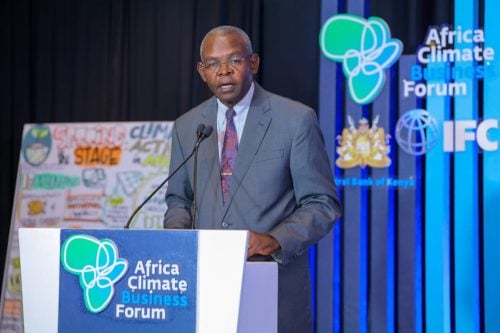
Speaking during the 23rd East African Banking School (EABS) Conference in Mombasa, Thugge said the Ksh204 billion payment was just about to be captured in Kenya’s reserves, pushing the country closer to a stronger foreign currency buffer.
“We have seen our current account widen more than we had anticipated, but luckily we have enough financial inflows including foreign direct investments. We have seen monies from Safaricom; it is yet to hit our reserve position, but I think it is just about to,” Thugge said.
The CBK governor said the Safaricom deal proceeds would help lift Kenya’s foreign exchange reserves to about Ksh2.07 trillion, equivalent to nearly seven months of import cover.
How will the money be spent?
The government has said the money raised from selling its Safaricom shares will be channelled through the National Infrastructure Fund to support major development projects across the country.
National Treasury Cabinet Secretary John Mbadi previously said the funds would help finance strategic infrastructure investments, including roads, energy systems, water projects and airports.
The government has maintained that the transaction was conducted legally, transparently and with parliamentary approval, following clearance from the Court of Appeal.
The sale involved 6,009,814,200 ordinary Safaricom shares transferred to Vodacom at Ksh34 per share, generating Ksh204 billion for the government.
Vodacom-Safaricom deal ownership structure
The Ksh204 billion transaction formed part of Vodacom’s wider acquisition of an additional 20 per cent stake in Safaricom, a deal valued at $2.1 billion (approximately Ksh272 billion).
Through the transaction, Vodacom increased its ownership in Safaricom to 55 per cent, becoming the telecommunications company’s majority shareholder.
Of the additional 20 per cent stake acquired by Vodacom, 15 per cent came from the Government of Kenya, while the remaining five per cent was sold by Vodafone Group Plc.
The Kenyan government retained a 20 per cent stake in Safaricom, which remains listed on the Nairobi Securities Exchange. The government’s stake sale has already contributed to improved investor confidence and increased foreign currency inflows into Kenya.
Kenya’s foreign exchange reserves rose to $14.13 billion (Ksh1.83 trillion) as of July 10, supported by stronger external inflows, including proceeds from the Safaricom transaction, World Bank budget support and other investments.
Thugge also pointed to the recent Ksh96.98 billion World Bank Development Policy Operation loan and proceeds from the Kenya Pipeline Company divestiture as additional contributors to the country’s reserves.
Another major expected boost is the planned Ksh110.55 billion acquisition of a 66 per cent stake in NCBA Group by South Africa’s Nedbank, which the CBK governor said would provide further foreign exchange support once completed.
What Safaricom deal effect on shilling
The stronger foreign exchange position has helped Kenya maintain relative stability in the exchange rate, with the shilling trading at around Ksh130 against the US dollar for nearly two years despite global economic uncertainty.
Thugge said Kenya expects to maintain reserve coverage of between 5.5 and six months of imports, providing a cushion against external shocks, including rising global risks and geopolitical tensions.
The Safaricom stake sale is among the largest corporate transactions in Kenya’s history and marks a significant shift in the ownership structure of one of East Africa’s most valuable companies.
For Kenyans, the key question now is how quickly the Ksh204 billion windfall will translate into visible infrastructure improvements, from roads and energy projects to water systems and airports.