Advertisement
KCB now trains gun on Ethiopia after Congo deal
Monday 21st November, 2022 08:20 AM|
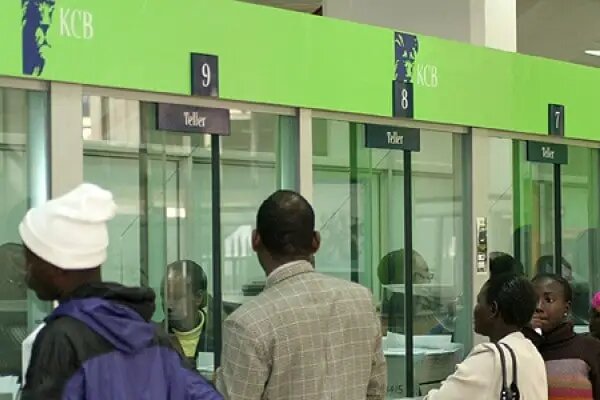
KCB Group is eyeing Ethiopia as the next frontier for expansion after the most populous nation in Eastern Africa moved to open up its financial sector to foreign banks.
The bank which has been on an expansion spree making acquisitions in Democratic Republic of Congo (DRC), Rwanda and South Sudan, is now eyeing the populous nation to deepen its regional presence.
“The Group is keenly following the developments in Ethiopia as it seeks to grow its regional footprint,” the bank said in its financial statements for the third quarter.
Regional business
“KCB, which has presence in six countries and a representative office in Ethiopia, has been keen to tap into new growth opportunities while reinforcing existing market capabilities.”
Currently, KCB is in the process of acquiring a controlling 85 per cent of the Democratic Republic of Congo’s (DRC’s) Trust Merchant Bank (TMB) for an estimated Sh17 billion. The deal was expected to be completed before the end of this year.
In Ethiopia, the administration is keen to attract more foreign investment is its decision to open up the country’s banking industry to them, the prime minister’s office announced on Saturday.
Ethiopia, a nation of more than 100 million people and one of the largest economies in sub-Saharan Africa, has attracted the attention of foreign investors for a long time in key sectors including banking, telecoms, transportation, aviation, and others.
Transforming financial sector
To encourage foreign investment inflows and support general economic growth, Prime Minister Abiy Ahmed’s administration has been striving to open up a number of economic sectors, including the telecoms sector.
The prime minister’s office said in a Facebook post that allowing foreign investors into the banking sector would “transform our country’s economy by boosting it to have a better link with the international market.”
During a meeting, the Cabinet approved the policy and adopted a draft resolution, according to a tweet from state-affiliated news outlet Fana.
The administration of Abiy last year authorised a private telecom provider to compete with state-owned Ethio Telecom in one of the most lucrative areas of the economy.
Kenya’s Safaricom spent $850 million for the license, together with South Africa’s Vodacom, Britain’s Vodafone, and Japan’s Sumitomo and has been rolling out the project in bits due to ongoing tiff between regions in the country.
Truce key to success
Ethiopia reached a peace agreement with the Tigray People’s Liberation Front (TPLF) rebels this month in a deal brokered by regional leaders, however, peace now depends on post-conflict plans for Tigray soldiers.
The truce is necessary in ending the two-year conflict but real peace will bank on demobilisation in the region cpoupled with the effectiveness of reintegration plans for combatants. This will then open up the country further for more trade.
For the first nine months of 2022 KCB Group registered a 21 per cent increase in net profit to post Sh30.6 billion. As non-funded income surged by 30 per cent due to higher foreign currency earnings and loan fees, total revenue jumped by 15 per cent to Sh92.1 billion.
Operating expenses increased from Sh34.8 billion to Sh41.6 billion, a 19 per cent increase. This was mostly due to the impact of the BPR Bank purchase in Rwanda, which raised business expenses and labour costs.
The cost to income ratio for the lender is currently 45 per cent.
Regional business
“M-PESA usage continues to grow, driven by our Fintech solutions including payment, lending and savings, and international remittances,” said Safaricom Chief Executive Officer Peter Ndegwa.
Digital loans have become in Kenyans daily lives was underlined by President William Ruto in September, when he spelled out a raft of measures to lower their cost to increase financial inclusion. Fuliza loans attract daily interests of between Sh3 and Sh25, while Mshwari disburses at 9 per cent interest rate. This is in comparison to the commercial bank’s weighted average lending rates of 12.41 per cent as of September 2022.
Kenyans use the money to buy basic household commodities like food and settling utility bills, thereby cushioning them from inflationary pressures, with the cost of living having risen to 9.6 per cent last month from 9.2 per cent in September, above the 9.5 per cent market forecasts.
The rate has also breached the upper limit of the Central Bank’s target range of between 2.5 per cent and 7.5 per cent for the fifth straight month. The telco’s half year net profits declined by 10 per cent to Sh33.4 billion, due to the impact of new capital investment in its Ethiopian venture, review of mobile termination rates and introduction of excise tax on sim cards which slowed growth in its Kenyan operations.
Revenue service grew slightly by 4.6 per cent while voice and messaging dipped by 3.8 per cent to Sh39.9 billion and Sh5.4 billion respectively. However, Mpesa revenue partly offset the decline in the legacy telco services, growing by 8.7 per cent to Sh56.9 billion from Sh52.3 billion a year ago. Mobile data revenue posted a double digit rate of growth at 11.3 per cent to Sh26.3 billion from Sh23.6 billion while fixed data service revenues recorded the highest growth at 23 per cent to Sh6.8 billion.
Author
John Otini
View all posts by John OtiniLatest News



Advertisement
More on Business