Fuel shortage forces some matatus to hike fares
By Kenneth Mwenda, April 7, 2026Matatu fares have risen sharply in several towns as a fuel shortage continues to disrupt transport and daily life. Commuters travelling between Nakuru and Nairobi are among the hardest hit, with operators increasing prices as they struggle to access fuel.
In Nakuru, fares that usually stand at about Ksh450 have climbed to as high as Ksh600. Operators say they have little choice but to pass on the higher costs to passengers.
Kelvin Chumo, an official at Satima Sacco, said the situation has worsened over the past few days.
“Saa hizi tuko na changamoto ya mafuta, na magari. Juu ukipata saa hizi gari, na gari yenyewe kabla ifike hapa, wanalalamika kuhusu mafuta kutoka mahali wametoka,” he said.
Shortage and unavailability
He explained that both the shortage of fuel and limited vehicle availability have affected operations.
“Abiria pia kutoka hapa tumewapandishia fare kutoka Nakuru to Nairobi, which wanalipanga normal Ksh450, for now it’s Ksh600. Unaona pia hawa abiria wetu wanahuzunika.”
Chumo added that the crisis is still recent but already painful for commuters.
“Hii mambo ya kukosa mafuta na fare kupanda haijakaa sana, ni siku ya nne leo. Leo ni siku ya nne abiria wetu wakilipa shillingi mia sita, ambao tunahuzunika. Tunaomba waangalie sector ya magari pia na tena hii sector ya mafuta.”
Passengers now face longer waits and fewer options, with some choosing to delay their journeys altogether. Others have no choice but to pay the higher fares.
The shortage has also affected private motorists. Many report moving from one petrol station to another in search of fuel, often without success.
James Gitonga, a motorist travelling through the region, described the challenges he faced on the road.
“Nimetoka upande wa Mwea, nimekuja huku Nakuru naelekea mkutano wa Kanisa kule Eldoret. Nimepata huko Karatina na Nyeri, petrol stations nyingi hazina mafuta.”
He said he had to settle for a more expensive option just to continue his journey.
“Mahali napata kuna mafuta nataka kujaza tank. Nimelazimika kuweka V-Power sababu hakuna mafuta hii ingine ya kawaida. Na unajua V-Power iko ghali kiasi.”
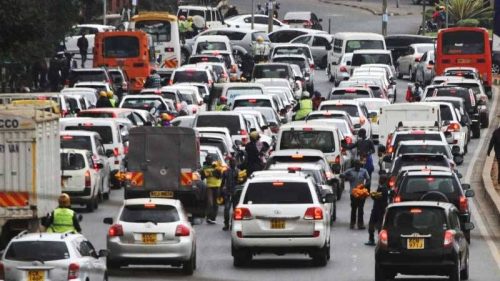
Fuel shortages worsen nationwide
Reports from Karatina and Nyeri show that several petrol stations have run dry, while others only stock premium fuel. Similar scenes have emerged in parts of Nairobi and Kisumu, where some stations have closed due to a lack of supply.
Transport operators have urged the government to step in and stabilise the situation. They warn that the matatu sector, which supports millions of commuters every day, cannot sustain prolonged disruptions.
The pressure could increase further in the coming days. Martin Chomba, chair of the Petroleum Outlets Association of Kenya, has warned that fuel prices may rise in the next review.
Speaking during an interview with a local radio station, he said the increase could range between Ksh30 and Ksh60 per litre when the new prices are announced on April 14. He explained that the projections are based on the cost of shipments that arrived at the Port of Mombasa between March 9 and April 10.
Chomba noted that the current stability in pump prices is only temporary and does not reflect the true cost of supply.
If prices rise as expected, transport costs will likely increase further, putting more strain on households already dealing with high living expenses.
For now, commuters and motorists continue to bear the brunt of the shortage, with no clear end in sight.
Government moves to block controversial fuel shipment
Energy Cabinet Secretary Opiyo Wandayi on Tuesday, April 7, 2026, ordered One Petroleum Ltd to remove a 60,000-metric-tonne shipment of super petrol imported outside the Government-to-Government (G-to-G) framework.

Wandayi said the consignment breached established procedures and threatened price stability, noting that a similar G-to-G shipment costs Ksh140,000 per metric tonne compared to Ksh198,000 per tonne for the disputed cargo – a difference that could raise pump prices by about Ksh14 per litre.
The government directed One Petroleum to withdraw invoices, stop oil companies from paying, and remove the fuel from Kenya. The Energy and Petroleum Regulatory Authority (EPRA) was instructed to exclude the shipment from monthly fuel cost calculations.
Wandayi reaffirmed Kenya’s commitment to the G-to-G framework, promising vigilance against artificial shortages, unjustified price increases, and exploitation by profiteers.