Advertisement
Explainer: How Trump’s 25% tariffs on countries trading with Iran could affect Kenya
Tuesday 13th January, 2026 09:42 AM|

Kenya could face new economic challenges following United States (US) President Donald Trump’s announcement of a 25 per cent tariff on countries trading with Iran.
The directive, made on Monday, January 12, 2026, applies to any nation doing business with Iran and is final and conclusive, according to Trump.
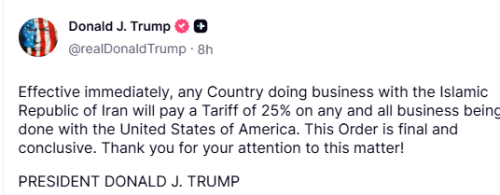
“Effective immediately, any Country doing business with the Islamic Republic of Iran will pay a Tariff of 25 per cent on any and all business being done with the United States of America. This Order is final and conclusive. Thank you for your attention to this matter!” he wrote on his Truth Social platform.
While Iran’s main trading partners include China, Turkey, the United Arab Emirates (UAE), and Iraq, Kenya has also been a key supplier of goods, particularly tea.
You Might Also Like


In recent years, Iran has emerged as a growing market for Kenyan tea, with exports climbing from 3.2 million tons in 2020 to 13 million tons in 2024.
The U.S. tariff now threatens this trade, raising concerns among Kenyan exporters and farmers, many of whom already struggle with low returns.
Tea farmers, in particular, worry that any disruption in exports to Iran could worsen the meagre bonuses they currently receive, undermining their incomes and livelihoods.
Kenya and Iran have been working to strengthen trade ties despite past setbacks. In late 2024, Iranian authorities temporarily banned Kenyan tea imports over quality concerns.
This led to renewed discussions during the 7th Kenya–Iran Joint Commission for Cooperation held in Nairobi in August 2025, chaired by Prime Cabinet Secretary Musalia Mudavadi.
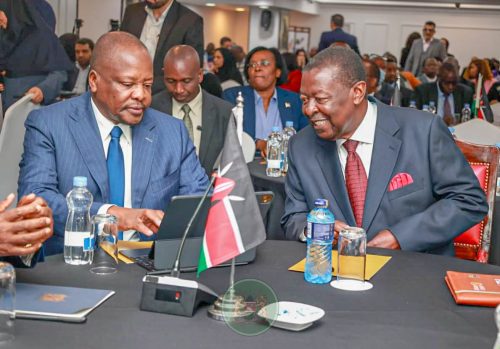
PHOTO: @kilimoKE / X
The talks aimed to resolve the tea dispute and explore broader cooperation in agriculture, technology, manufacturing, and renewable energy.
Export market at risk
Kenya has also been looking to diversify exports beyond tea, including horticulture, livestock, and minerals. Iranian investment in Kenya’s Special Economic Zones and renewable energy projects was expected to support industrial growth, while technology transfer in agro-processing could boost agricultural productivity and food security.
Trump’s 25 per cent tariff, however, could put these initiatives at risk. Any trade with Iran may now attract heavy U.S. penalties, potentially discouraging Kenyan exporters and investors from pursuing these opportunities.
For farmers, the immediate concern is that reduced demand from Iran could drive tea prices lower, further squeezing already tight margins.
The government will now need to weigh the benefits of expanding trade with Iran against the risks of the U.S. tariffs.
For now, the move casts a shadow over Kenya’s export growth ambitions and the financial stability of its agricultural sector, as the tea farmers, for example, continue to jolt the government over meagre bonuses.
Author
Latest News




Advertisement
More on Business