EPRA explains fuel price drop delay despite global oil cost decline
By Aloys Michael, July 2, 2026The Energy and Petroleum Regulatory Authority (EPRA) has explained why the recent decline in global oil prices has not yet translated into lower fuel prices at local pumps, saying motorists will have to wait between 30 and 45 days before any reductions are reflected.
Speaking during an interview on Wednesday, July 1, 2026, EPRA Petroleum and Gas Director Edward Kinyua said although international oil prices have started falling following a truce in the Middle East, the fuel currently being sold in Kenya was procured weeks earlier when global prices were significantly higher.
“The supply and pricing of fuel are highly dependent on the geopolitical environment. This was one of the worst crises. But I am happy to note that there is a truce and the global oil prices are dropping,” Kinyua said.
He explained that before the Middle East crisis, the Free on Board (FOB) cost of super petrol stood at about 686 dollars per tonne before surging to 1,061 dollars per tonne at the peak of the conflict. Diesel prices rose from 637 dollars per tonne to 1,383 dollars per tonne, while kerosene increased from 681 dollars per tonne to 1,500 dollars per tonne.

Kinyua said the delay in passing on lower global prices is due to the time required to refine, ship and deliver fuel to Kenya.
“The international oil prices have dropped, but remember that the barrel has to go into a refining process and then the logistics of ordering, loading, voyage and discharging,” he disclosed.
“Between now and when the barrel arrives in Mombasa, it takes between 30 and 45 days. That is why it may not be immediately reflected at the pump because whatever we have now was ordered 30 days before,” Kinyua explained.
Kinyua also addressed concerns over the government’s temporary relaxation of fuel quality standards, saying the measure was introduced to cushion the country against supply disruptions caused by the Middle East conflict.
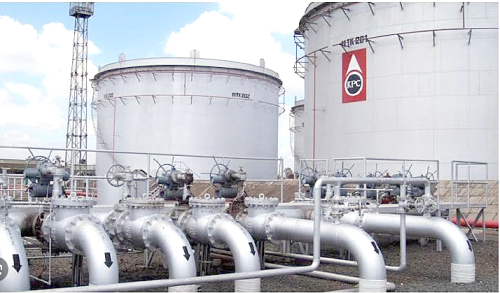
Quality of fuel
He noted that Kenya has progressively reduced the sulphur content in fuel to curb environmental pollution.
“Before 2015, we were at 500 parts per million. We then went to 50 parts per million. Then last year in August, there was a more stringent requirement, and we went to 10 parts per million,” he said.
According to Kinyua, Kenya had used fuel with a sulphur content of 50 parts per million (ppm) for nearly a decade before transitioning to the cleaner 10 ppm standard last year.
However, disruptions linked to the closure of the Strait of Hormuz forced the country to diversify its fuel imports by sourcing products from Europe and India, where many suppliers still produce fuel that meets the 50 ppm standard.
“This crisis broke out, and we started diversifying our sources. Because of the closure of the Strait of Hormuz, we had to go and source from Europe and India. The supplier levels in some of these countries are still at 50 parts per million,” he disclosed.