East Africa’s clean cooking crisis deepens as one billion Africans risk dirty fuels – SDG7
By Aloys Michael, July 8, 2026Kenya has emerged as one of Africa’s strongest performers in expanding electricity access, but a new global energy report warns that the country’s next energy revolution will not be about connecting more homes to the grid; it will be about ensuring families can cook without relying on charcoal, firewood and other polluting fuels.
The latest Tracking SDG 7: The Energy Progress Report 2026, launched on Wednesday, July 8, 2026, warns that 970 million people in Sub-Saharan Africa currently lack access to clean cooking, making the region the global epicentre of the crisis. Unless governments accelerate investment and policy reforms, that number is projected to reach one billion people by 2027, even as electricity access continues to improve.
The findings reveal a challenge for Kenya and the wider East African Community (EAC), where governments have invested heavily in expanding electricity networks, but millions of households still depend on biomass fuels that contribute to indoor air pollution, deforestation, greenhouse gas emissions and rising household costs.
The report notes that while global progress has been made in reducing the number of people using polluting cooking fuels, Sub-Saharan Africa is moving in the opposite direction because rapid population growth is outpacing access improvements.
“Universal access to clean cooking by 2030 remains out of reach under current policies and investment,” the report states, adding that between 1.6 billion and 1.8 billion people are still expected to lack clean cooking by the end of the decade unless action accelerates.
Kenya’s next energy challenge
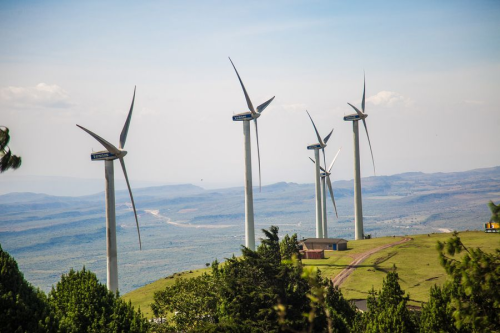
Kenya has become a continental leader in renewable energy, with geothermal, wind and solar powering an increasingly clean electricity grid. The SDG7 report also identifies Eastern Africa as one of Africa’s strongest-performing regions on electricity access, highlighting progress driven by Kenya alongside Rwanda, Mauritius and Seychelles.
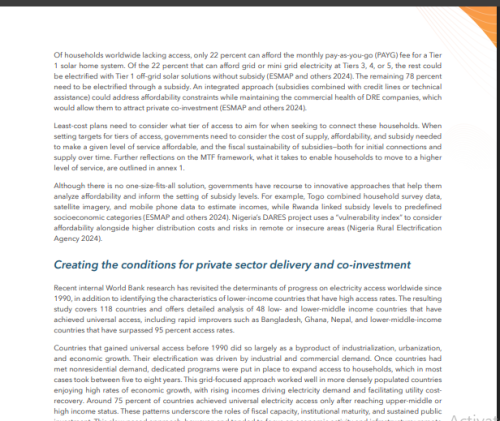
Yet electricity access tells only part of the story. Millions of Kenyan households, particularly in rural and low-income urban communities, continue to cook using charcoal, firewood and other solid biomass because cleaner alternatives such as liquefied petroleum gas (LPG), electric cooking, ethanol and biogas remain unaffordable or inaccessible.
The result is a widening gap between electricity access and clean cooking access, a challenge that now defines the country’s broader energy transition.
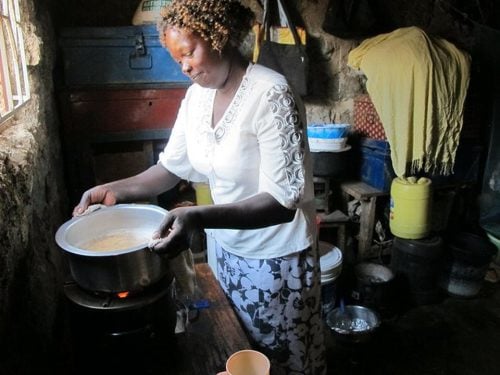
For Kenya, the key question is no longer simply how many homes are connected to electricity, but how many families can afford to abandon charcoal and firewood altogether.
Why clean cooking matters beyond the kitchen. The report stresses that clean cooking is not merely an energy issue.
It is equally a public health, education, gender equality, climate and economic development issue.
Traditional cooking fuels expose households to dangerous indoor air pollution, disproportionately affecting women and children who spend the most time around cooking fires. Families also spend countless hours collecting firewood, reducing time available for education and income-generating activities, while continued dependence on charcoal accelerates forest degradation across East Africa.
“Accelerating access to clean fuels and technologies for cooking demands high-level political leadership paired with cross-ministerial coordination to align policies on energy, health, development, climate, agriculture and food security,” the report says.
Can East Africa coordinate its response?
The report presents an opportunity for the East African Community to pursue a coordinated regional clean cooking strategy.
Kenya has expanded LPG adoption while exploring electric cooking powered by its growing geothermal electricity supply. Rwanda has promoted electric cooking and cleaner household energy solutions as part of its green growth agenda. Uganda and Tanzania continue expanding LPG markets, while Burundi and South Sudan still face significant affordability and infrastructure challenges.
As governments invest in regional power interconnections and renewable energy, experts say clean cooking should become a central pillar of East Africa’s energy integration agenda rather than an afterthought.
The report estimates that achieving universal access to clean cooking globally would require about Ksh1 trillion in annual investment, with around half directed to Sub-Saharan Africa, underlining the scale of financing needed across the region.
One of the report’s most overlooked recommendations could have the biggest impact.
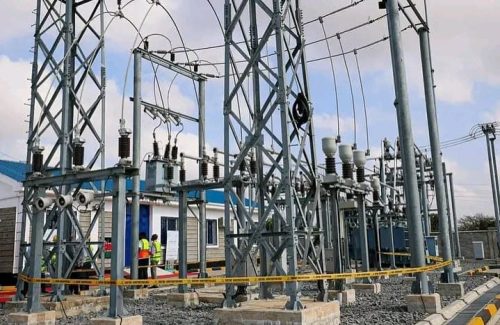
Rather than focusing exclusively on households, it urges governments to prioritise schools, hospitals, clinics, prisons and other public institutions, many of which still rely on charcoal and firewood despite having electricity connections.
“Schools, clinics, hospitals, prisons, and other public institutions still rely on polluting fuels. Yet the problem suggests an opportunity. Electric cooking in schools can cut costs, reduce smoke exposure and improve efficiency,” the report says.
For Kenya, where school feeding programmes serve millions of learners each year, electrifying institutional kitchens could reduce fuel costs, improve air quality, lower emissions and stimulate demand for locally manufactured electric cooking appliances.
The same approach could help hospitals reduce operating costs while improving workplace safety and environmental sustainability.
The report also highlights another neglected dimension of the crisis: displaced populations. Nearly 50 million forcibly displaced people worldwide are estimated to lack access to clean cooking, yet they are often excluded from national energy planning.
Ultimately, the SDG7 report argues that East Africa cannot claim a successful energy transition if electricity access improves while kitchens remain dependent on polluting fuels.