David Ndii clarifies Kenya is refinancing, not repaying Eurobond debt
By Kiprono Keileb, October 5, 2025Presidential Council of Economic Advisors Chairperson David Ndii has weighed in on Kenya’s latest Eurobond transaction, clarifying that the government is refinancing its external debt rather than repaying it outright.
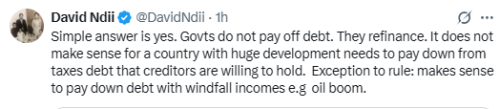
Responding to a question on X asking whether the government was borrowing to pay back debt, Ndii offered a straightforward response that sparked widespread online debate.
“The simple answer is yes. Governments do not pay off debt. They refinance. It does not make sense for a country with huge development needs to pay down from taxes debt that creditors are willing to hold,” Ndii said in a statement posted on his official X account on Sunday, October 5, 2025.
He added that paying off national debt using tax revenue only makes sense when a country receives a sudden financial windfall, such as during an oil boom. “Exception to the rule: it makes sense to pay down debt with windfall incomes, e.g., an oil boom,” he wrote.
Ndii’s remarks came shortly after the government announced that it had settled part of the 2028 Eurobond ahead of schedule, a move that the Treasury said was meant to ease pressure on the country’s foreign reserves and restore investor confidence.
Kenya pays part of 2028 Eurobond
According to a Treasury official, the early settlement was achieved through a refinancing deal that saw Kenya issue a new Eurobond while using the proceeds to buy back part of the old one. This approach, they said, allows the government to manage repayment timelines more efficiently while maintaining liquidity for development programmes.
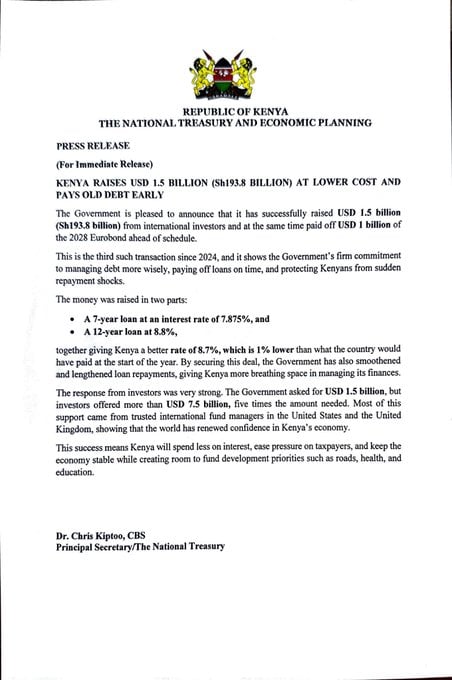
“Kenya successfully raised USD 1.5 billion (Sh193.8 billion) at a lower cost from international markets to pay off part of the 2028 Eurobond ahead of schedule,” Kiptoo said, adding that the move will reduce taxpayers’ burden.”
“This prudent move eases pressure on taxpayers, boosts investor confidence, and creates fiscal space to fund key development priorities such as roads, health, and education,” Kiptoo said.
The money was raised through two tranches: a 7-year loan at an interest rate of 7.875 per cent and a 12-year loan at 8.8 per cent. Combined, this resulted in Kenya achieving a better rate of 8.7 per cent, which is one percentage point lower than the country would have paid at the beginning of the year.
The economist, who serves as the chair of President William Ruto’s Council of Economic Advisors, has consistently defended the administration’s fiscal strategies, arguing that Kenya’s debt profile remains manageable if refinancing is properly executed.
As Kenya continues to grapple with rising debt servicing costs and revenue shortfalls, Ndii’s remarks shed light on how the government is juggling immediate financial obligations with the need to sustain development momentum.