CS Kinyanjui: How geopolitical tensions risk affecting Ksh164B exports to Middle East
By Kenneth Mwenda, April 21, 2026Kenya’s export sector has come under pressure after disruptions along key global trade routes slowed shipments and pushed up costs, Trade Cabinet Secretary Lee Kinyanjui has said.
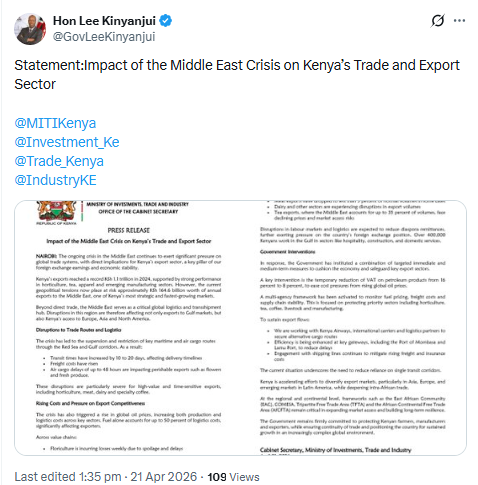
In a statement released on April 21, 2026, the Ministry of Investments, Trade and Industry said the ongoing Middle East crisis has forced cargo vessels and aircraft to avoid the Red Sea and Gulf corridors, resulting in longer journeys and delays.
According to the CS, the geopolitical tensions risk affecting Kenya’s exports to the Middle East, worth Ksh164.6 billion annually.
Transit times for goods have increased by between 10 and 20 days, while air cargo now faces delays of up to 48 hours. The ministry warned that the changes have disrupted delivery schedules and raised costs across export sectors.
“The crisis has led to the suspension and restriction of key maritime and air cargo routes,” the statement said. “Transit times have increased, freight costs have risen, and air cargo delays are impacting perishable exports such as flowers and fresh produce.”
Key sectors affected
Kenya depends on efficient logistics to sustain exports, especially for time-sensitive goods. The delays have hit horticulture, meat, dairy and speciality coffee hardest, as these products rely on quick delivery to maintain quality.
Flower exporters now face weekly losses due to spoilage and late arrivals in overseas markets. Meat exports have dropped sharply, in some cases to less than five per cent of normal volumes. Dairy producers have also reported disruptions, with export volumes falling.
Tea exporters are also feeling the strain. The Middle East accounts for up to 35 per cent of Kenya’s tea exports in some markets. Traders now face falling prices and reduced access due to the ongoing disruptions.
“Across value chains, the effects are severe,” the ministry said. “Floriculture is incurring losses weekly due to spoilage and delays, while meat and dairy exports have dropped significantly.”
Costs rise, remittances risk
The crisis has also increased the cost of doing business. Global oil prices have risen, pushing up transport and production costs. Fuel now accounts for up to 50 per cent of logistics expenses, putting further pressure on exporters.
“These disruptions affect delivery timelines and raise costs across the board,” the statement added. “High-value and time-sensitive sectors are the most affected.”
Beyond goods, the ministry warned that the crisis could affect Kenya’s foreign exchange inflows. More than 400,000 Kenyans work in Gulf countries, mainly in hospitality, construction and domestic services. Any slowdown in those economies could reduce diaspora remittances.
“The disruptions in labour markets and logistics are expected to reduce diaspora remittances,” the statement said, noting the potential impact on the country’s foreign exchange position.
Kenya recorded exports worth Ksh1.1 trillion in 2024, but about Ksh164.6 billion in annual exports to the Middle East are now at risk. The region also serves as a key logistics hub for goods heading to Europe, Asia and North America, meaning the impact extends beyond direct trade.
Government interventions
To respond, the government has introduced measures to cushion exporters. These include a temporary reduction of VAT on petroleum products from 16 per cent to 8 per cent to ease fuel costs.
Officials are also working with Kenya Airways and other logistics partners to secure alternative cargo routes and reduce delays. At the same time, authorities are improving efficiency at the Port of Mombasa and Lamu Port to keep goods moving.
Kinyanjui said the government will continue to support exporters as they adjust to the changing environment.
“The government remains firmly committed to protecting Kenyan farmers, manufacturers and exporters,” he said. “We will ensure continuity of trade while positioning the country for sustained growth.”