Advertisement
China hits growth goal after exports boom defied US tariffs
Monday 19th January, 2026 11:23 AM|
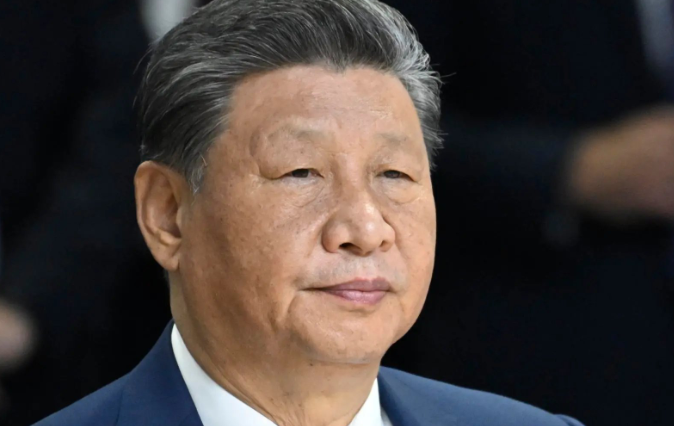
China says its economy grew by 5 per cent in 2025, meeting Beijing’s official target as a record trade surplus boosted growth.
But Chinese government figures also showed economic growth slowed to 4.5 per cent in the final three months of 2025, compared to a year earlier.
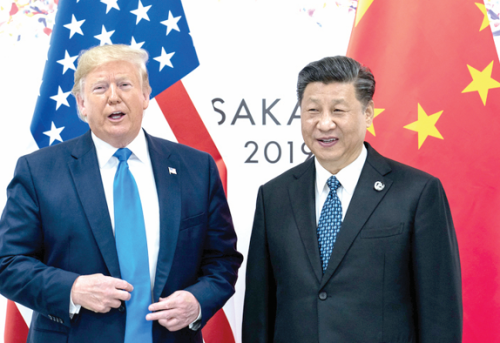
Beijing had set a goal of “around 5 per cent” economic growth in 2025, despite struggles to boost domestic spending, a prolonged property crisis and the turmoil caused by US President Donald Trump’s tariff policies.
Experts say the figures point to a “two-speed economy”, with manufacturing and exports propping up growth, while within the country, people are still spending cautiously and the property market continues to weigh on the economy.
You Might Also Like

Even as China’s official figures show it hit its growth goal, some analysts question the accuracy of the data, given weak investment and consumer spending.

“While the headline [gross domestic product] print came in at 5 per cent for 2025, matching the government’s target, we think growth is weaker than official figures suggest,” said Zichun Huang, China Economist at Capital Economics.
Huang added that her company’s own calculations suggest China’s official growth figures “overstate the pace of economic expansion” by at least 1.5 percentage points.
Also on Monday, Chinese data showed the country registered the lowest number of births last year since records began in 1949.
The total number of births dropped to 7.9 million in 2025, figures from China’s National Bureau of Statistics showed.
Economists say the falling birth rate will compound domestic challenges by weakening demand for housing and consumer goods, adding pressure to an already struggling property market.
Officials said the country’s population declined for a fourth year in a row in 2025, falling 3.4 million to 1.4 billion.
The figures highlight China’s deepening demographic crisis even as the government tries to boost birth rates by offering couples incentives to have more children.
China reported the world’s largest-ever trade surplus last week – the value of goods and services sold overseas compared to its imports – of Ksh174.93 trillion, driven by a rise in exports to markets outside the US.
“China is effectively pushing growth through exports at a loss, and that is not sustainable. Cutting prices may keep volumes up, but it undermines profits and, ultimately, growth,” Alicia Garcia-Herrero, chief economist for Asia Pacific at French bank Natixis, told the BBC.
Speaking on Monday, January 19, 2026, Kang Yi, head of China’s National Bureau of Statistics, said the country’s economy “faces problems and challenges, including strong supply and weak demand”, but added that it will be able to “maintain stable, sound growth momentum this year.”
Analysts warn that growing reliance on exports leaves China more exposed to global trade tensions, especially as uncertainty grows over US tariff policy.
The US president recently threatened to impose new levies on countries that trade with Iran or oppose his plan to take control of Greenland.
Author
Latest News






Advertisement
More on Business