Advertisement
China creates a new visa, competing with the US in wooing global tech talent
Monday 10th November, 2025 10:05 AM|
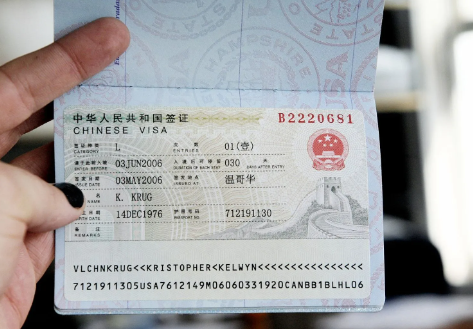
Vaishnavi Srinivasagopalan, a skilled Indian IT professional who has worked in both India and the U.S., has been looking for work in China. Beijing’s new K-visa program targeting science and technology workers could turn that dream into a reality.
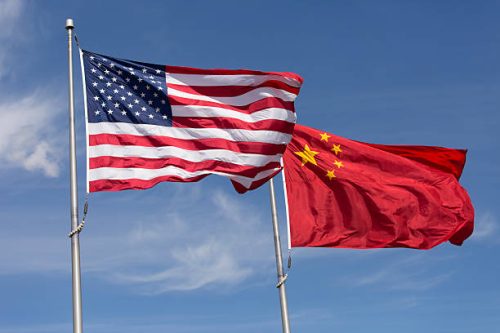
The K-visa rolled out by Beijing last month is part of China’s widening effort to catch up with the U.S. in the race for global talent and cutting-edge technology. It coincides with uncertainties over the U.S.’s H-1B program under tightened immigration policies implemented by President Donald Trump.
“(The) K-visa for China (is) an equivalent to the H-1B for the U.S.,” said Srinivasagopalan, who is intrigued by China’s working environment and culture after her father worked at a Chinese university a few years back. “It is a good option for people like me to work abroad.”
He K-visa supplements China’s existing visa schemes, including the R-visa for foreign professionals, but with loosened requirements, such as not requiring an applicant to have a job offer before applying.
You Might Also Like



Stricter U.S.policies toward foreign students and scholars under Trump, including the raising of fees for the H-1B visa for foreign skilled workers, Ksh12,920,000, for new applicants, are leading some non-American professionals and students to consider going elsewhere.
“Students studying in the U.S. hoped for an (H-1B) visa, but currently this is an issue,” said Bikash Kali Das, an Indian master’s student of international relations at Sichuan University in China.
China wants more foreign tech professionals
China is striking while the iron is hot.
The ruling Communist Party has made global leadership in advanced technologies a top priority, paying massive government subsidies to support research and development of areas such as artificial intelligence, semiconductors, and robotics.
“Beijing perceives the tightening of immigration policies in the U.S. as an opportunity to position itself globally as welcoming foreign talent and investment more broadly,” said Barbara Kelemen, associate director and head of Asia at security intelligence firm Dragonfly.

Unemployment among Chinese graduates remains high, and competition is intense for jobs in scientific and technical fields. But there is a skills gap China’s leadership is eager to fill. For decades, China has been losing top talent to developed countries, as many stayed and worked in the U.S. and Europe after they finished their studies there.
The brain drain has not fully reversed.
Many Chinese parents still see Western education as advanced and are eager to send their children abroad, said Alfred Wu, an associate professor at the National University of Singapore.
Still, in recent years, a growing number of professionals, including AI experts, scientists, and engineers, have moved to China from the U.S., including Chinese-Americans. Fei Su, a chip architect at Intel, and Ming Zhou, a leading engineer at a U.S.-based software firm Altair, were among those who have taken teaching jobs in China in 2025.
Many skilled workers in India and Southeast Asia have already expressed interest in the K-visa, said Edward Hu, a Shanghai-based immigration director at the consultancy Newland Chase.
Competition for foreign workers
With the jobless rate for Chinese aged 16-24, excluding students, at nearly 18 per cent, the campaign to attract more foreign professionals is raising questions.
“The current job market is already under fierce competition,” said Zhou Xinying, a 24-year-old postgraduate student in behavioral science at eastern China’s Zhejiang University.
While foreign professionals could help “bring about new technologies” and different international perspectives, Zhou said, “some Chinese young job seekers may feel pressure due to the introduction of the K-visa policy.”
Kyle Huang, a 26-year-old software engineer based in the southern city of Guangzhou, said his peers in the science and technology fields fear the new visa scheme “might threaten local job opportunities”.
A recent commentary published by a state-backed news outlet, the Shanghai Observer, downplayed such concerns, saying that bringing in such foreign professionals will benefit the economy. As China advances in areas such as AI and cutting-edge semiconductors, there is a “gap and mismatch” between qualified jobseekers and the demand for skilled workers, it said.
Author
Latest News








Advertisement
More on Business