Advertisement
Carbon Pricing 2026: Why Africa risks missing ksh13.8T green industrial boom
Saturday 23rd May, 2026 11:57 PM|

Africa could emerge as the world’s next major green industrial zone as global climate rules reshape manufacturing, trade and investment flows.
But experts warn the continent risks missing the opportunity unless governments move quickly to align industrial policy with the accelerating low-carbon economy.
A new World Bank report shows carbon pricing is rapidly evolving beyond environmental policy into a powerful industrial strategy tool, with governments increasingly using carbon revenues to finance clean energy, green manufacturing and industrial transformation.
The State and Trends of Carbon Pricing 2026 report says governments globally raised about Ksh13.8 trillion from carbon pricing systems in 2025, with emissions trading systems generating more than 70 per cent of revenues.
You Might Also Like


Much of that money is now being redirected into green industrial infrastructure.

“Planned and newly operational carbon pricing instruments and border carbon adjustments are allocating a significant share of revenues to fund green investments, along with general budget support,” the report states.
The shift is creating major opportunities for East Africa, particularly Kenya, which already possesses some of the foundations needed for a low-carbon industrial economy.
Kenya generates most of its electricity from geothermal, hydro, wind and solar sources, giving it one of Africa’s cleanest electricity grids. The country is also rapidly expanding electric mobility adoption while pursuing green hydrogen ambitions linked to its renewable energy capacity.
Combined with strategic infrastructure such as the Port of Mombasa and regional transport corridors connecting Uganda, Rwanda, South Sudan and eastern Democratic Republic of Congo (DRC), analysts say Kenya could position itself as a future hub for low-carbon manufacturing and exports.
If European and Asian markets increasingly demand low-emissions products under emerging climate trade rules, East Africa could compete as a green production zone for fertiliser, textiles, processed agricultural goods and potentially green steel.

But the global race is accelerating as the World Bank says carbon pricing systems now cover 29 per cent of global greenhouse gas emissions through 87 implemented instruments worldwide.
At the same time, major emerging economies are embedding carbon pricing directly into industrial strategy.
“Carbon pricing instruments are currently under development in major emerging markets and developing economies,” the report says, citing planned systems in Brazil, Thailand and Türkiye, as well as carbon taxes and trading systems in Malaysia and India.
India this year launched one of the world’s largest emissions trading systems through its Carbon Credit Trading Scheme, initially covering seven industrial sectors and about 490 industries.
Vietnam has also started implementing a national emissions trading system as governments compete to attract green investment and shield exports from emerging climate tariffs.
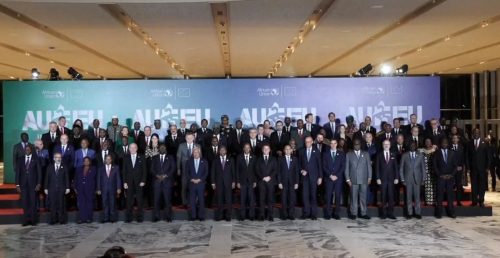
For Africa, the growing importance of carbon-linked trade rules creates both opportunity and risk.
Clean energy
The European Union’s Carbon Border Adjustment Mechanism (CBAM), which began its definitive phase in 2026, effectively places a carbon cost on imported goods entering Europe.
The World Bank says the mechanism is already influencing industrial policy worldwide.
“Despite its relatively low coverage of traded goods, the EU CBAM has created a motivation for carbon pricing globally, especially for EU trade partners,” the report states.
That could significantly affect East African exports over time, particularly cement, fertiliser, steel, textiles, tea processing and horticulture cold-chain logistics.

Analysts say Kenya’s clean energy advantage could become increasingly valuable if manufacturers seek low-carbon production bases closer to European and Middle Eastern markets.
But major questions remain unanswered, as Kenya still lacks a fully operational carbon pricing framework, while East African Community member states have yet to harmonise climate trade rules or industrial decarbonization strategies.
Without coordinated policy, experts warn African manufacturers could struggle to meet emerging carbon accounting standards demanded by international buyers.
The World Bank says nearly one-third of global greenhouse gas emissions could be covered by carbon pricing systems by 2030 if planned instruments become operational.
Author
Latest News








Advertisement
More on Business