Advertisement
Kenya risks being left behind as carbon pricing goes global – report
Saturday 23rd May, 2026 11:42 PM|

Kenya risks falling behind in the rapidly changing global trade order as major economies adopt carbon pricing systems that are increasingly shaping access to export markets, industrial investment and green manufacturing, according to a new World Bank report.
The State and Trends of Carbon Pricing 2026 report shows that 87 carbon pricing instruments, including emissions trading systems (ETSs) and carbon taxes, now cover 29 per cent of global greenhouse gas emissions.
But while countries from India and Vietnam to Brazil and Thailand accelerate the rollout of carbon markets, Kenya remains in the category of nations where carbon pricing systems are still under consideration or under development.
The World Bank says the rapid expansion of carbon pricing is no longer being driven purely by climate goals.
You Might Also Like



“While the EU Carbon Border Adjustment Mechanism (CBAM) applies to less than one per cent of global GHG emissions, it continues to be a driver for policy reforms,” the report states.
That shift is becoming critical for Kenya because the European Union (EU) remains one of the country’s largest export markets for flowers, vegetables, tea and manufactured goods.
Under the EU CBAM, importers of carbon-intensive products into Europe must declare the emissions embedded in goods and surrender certificates covering those emissions.
The mechanism effectively places a carbon price on imported goods entering the EU.
The World Bank warns that countries with high emissions intensity risk losing competitiveness in European markets.
“If a country’s emissions intensity exceeds that of EU producers, its exports lose competitiveness in the EU market. Conversely, having a lower emissions intensity than EU producers can boost a country’s export competitiveness,” the report says.
That could directly affect Kenya’s cement, fertiliser, steel and aluminium-linked industries, as well as tea processing and horticulture cold-chain logistics that depend heavily on energy-intensive refrigeration and transport systems.
Export markets stiff competition
Meanwhile, countries competing with Kenya for export markets and green industrial investment are moving much faster.
India this year launched one of the world’s largest emissions trading systems through its Carbon Credit Trading Scheme, covering seven industrial sectors and approximately 490 industries.

Vietnam has also begun implementing an ETS, while Thailand and Malaysia are developing carbon taxes and trading systems to align with global climate trade rules.
The World Bank estimates that global carbon pricing coverage could rise to nearly one-third of global emissions by 2030 if planned systems are implemented.
“Carbon pricing instruments are currently under development in major emerging markets and developing economies,” the report states, citing planned systems in Brazil, Thailand and Türkiye as well as carbon taxes in Malaysia.
This reflects a growing recognition that carbon pricing is increasingly tied to industrial competitiveness, trade protection and investment attraction rather than environmental policy alone.
The report notes that governments globally raised about Ksh13.8 trillion from carbon pricing in 2025, with emissions trading systems accounting for more than 70 per cent of revenues.
Much of that money is now being directed toward green industrial transformation.
“Planned and newly operational carbon pricing instruments and border carbon adjustments are allocating a significant share of revenues to fund green investments, along with general budget support,” the report says.
The EU, for example, is channelling carbon revenues into industrial decarbonization, energy transition and climate innovation funds.
Kenya may still hold important advantages in the emerging low-carbon economy.
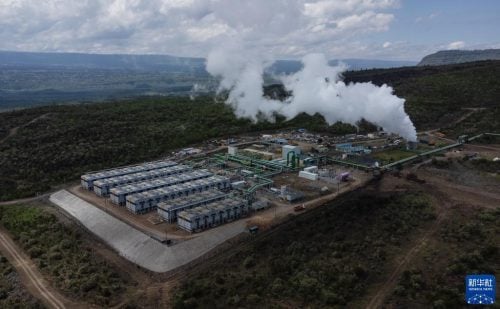
The country generates most of its electricity from geothermal, hydro, wind and solar energy, giving it one of Africa’s cleanest power grids.
But experts warn that without a formal carbon pricing framework or clear emissions accounting systems, Kenya could struggle to prove its low-carbon competitiveness to global buyers and investors.
The World Bank says the push toward carbon pricing is accelerating globally despite political and economic tensions.
“Nearly one-third of global GHG emissions could be covered by carbon pricing by 2030 if planned carbon pricing instruments become operational,” the report states.
Author
Latest News








Advertisement
More on News