Advertisement
75% of Kenyans feel govt lacked justification to increase fuel prices – TIFA
Thursday 04th June, 2026 11:22 AM|

A new national survey shows that most Kenyans believe the government did not have a valid reason for raising fuel prices in April 2026, adding fresh pressure on the administration as living costs remain high.
The findings come from the latest release of the TIFA Research national survey conducted between May 2 and 11, 2026, and published on June 4, 2026. The study covered 2,013 adults drawn from all 47 counties through face-to-face household interviews.
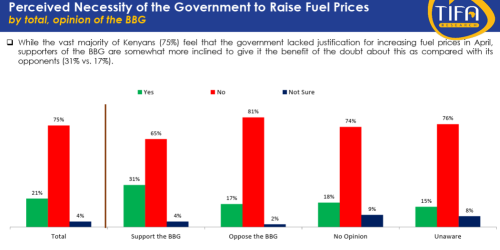
According to the report, 75 per cent of respondents said the government was not justified in increasing fuel prices. Only 21 per cent said the decision was necessary, while 4 per cent were unsure.
The survey asked respondents directly: “Do you think it was necessary for the government to do this?” The results show a clear public rejection of the policy, reflecting widespread concern over the cost of living.
You Might Also Like

The findings also show sharp differences in opinion depending on political alignment. Among supporters of the Broad-Based Government arrangement, 31 per cent accepted the fuel price increase as necessary. However, even within this group, a majority still rejected it. Opposition was far stronger among critics of the arrangement, with 81 per cent saying the increase was not justified.
The report links these views to broader economic pressure facing households. Many Kenyans continue to report worsening personal finances since the 2022 election, and the fuel price increase appears to have intensified that perception.
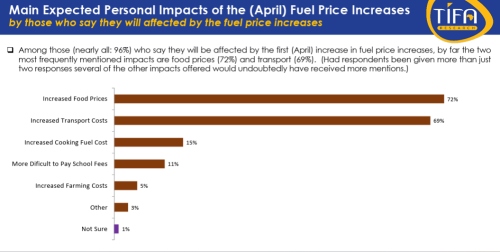
Most respondents said the rise in fuel costs would directly affect their daily lives. The most common concerns were higher food prices and transport costs. According to the survey, 72 per cent expected food prices to rise further, while 69 per cent pointed to transport as a major impact area.
These concerns are closely tied to inflation trends. The report notes that rising prices for transport and food already form the core of household strain.
“Cost-of-living pressures are increasingly shaping public sentiment and perceptions of national well-being,” the report states.
Fuel prices stir debate
Fuel pricing has also become a political issue. The survey shows that taxation, inflation, and general cost pressures dominate public debate on government performance. Many respondents link fuel price increases to broader concerns about taxation and government revenue needs.
The report also highlights a wider trust problem. Across key institutions such as Parliament, the police, and the presidency, negative trust levels exceed positive ones. This suggests that dissatisfaction with economic policy is feeding into a broader lack of confidence in governance.
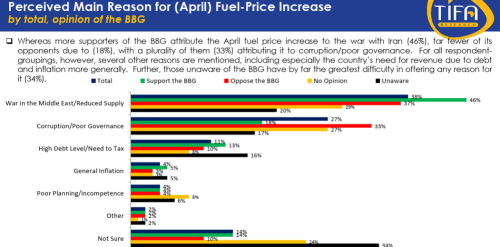
While some respondents attributed the fuel price increase to global factors such as international conflict and supply disruptions, a larger share pointed to domestic causes. These included poor planning, corruption, high public debt, and the need for increased taxation.
A significant proportion of respondents also said they did not understand the reasoning behind the decision. This uncertainty, according to the report, reflects weak communication between the government and the public on economic policy decisions.
The survey places the fuel price issue within a wider pattern of economic dissatisfaction. It shows that nearly two-thirds of Kenyans believe their personal financial situation has worsened since the 2022 election. Only a small minority says they are better off.
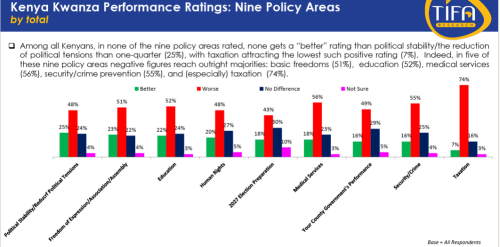
It also finds that taxation is viewed as the most poorly performing area of government policy. Respondents rated it worse than health, security, education and other key services.
Despite differences in political opinion, concern over fuel price cuts across regions, income groups, and political affiliations. The report notes that economic pressure affects both supporters and opponents of government policy, even if criticism is stronger among opposition groups.
In its conclusion, the survey argues that fuel pricing has become a key symbol of economic hardship. It states that rising living costs, especially in transport and food, continue to shape how Kenyans view government performance and national direction.
Author
Kenneth Mwenda
Kenneth Mwenda is a business, sports, and politics digital writer with over seven years of experience in journalism, covering breaking news, feature stories, and in-depth analysis across a range of beats.
For inquiries, he can be reached at [email protected]
View all posts by Kenneth MwendaLatest News







Advertisement
More on Business