Advertisement
High Court dismisses Rastafarian bhang legalisation petition
Wednesday 15th July, 2026 11:12 AM|
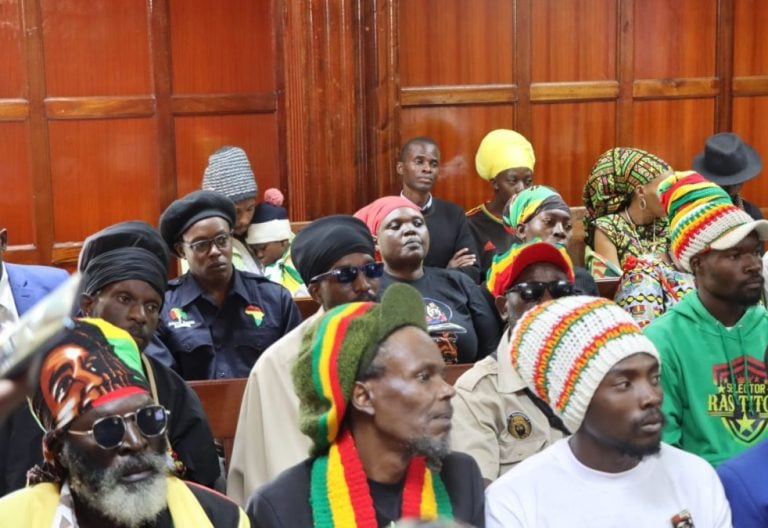
The High Court has dismissed a petition filed by the Rastafarian Society of Kenya pushing for the legalisation of bhang for spiritual use in Kenya.
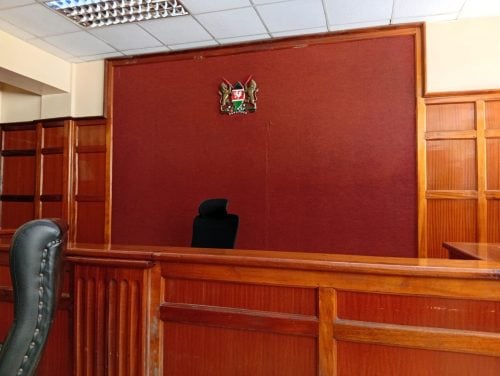
Delivering the judgement, Justice Bahati Mwamuye on Wednesday, July 15, 2026, stated that the society did not prove to the court how marijuana is important in their faith.
Further, Judge Mwamuye has noted that the Rastafarian community evidence tendered in court over the use of bhang in their religion was inconsistent.
“The evidence on the centrality of cannabis to the Rastafari faith was also inconsistent and does not demonstrate that its use is an essential element of the religion,” Judge Mwamuye ruled.
Rastafarians have not exhausted available avenues
You Might Also Like
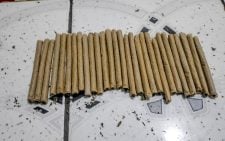


Mwamuye has also stated that the Rastafarians have failed to prove how the impugned provisions of the Narcotic Drugs and Psychotropic Substances Control Act violate their constitutional rights.
Notably, the court has found that the petitioners have also not exhausted the available legal and administrative mechanisms before invoking the constitutional jurisdiction of this court.
However, Judge Mwamuye has noted that there was a need to have a national social conversation outside of courts and legislative houses on what to do with this phenomenon in light of what it has become in our society.
He stated that the petitioners showed that products that contain cannabinoids are being freely sold in mainstream shops and supermarkets. So-called weed cookies are openly marketed, sold, and consumed in our country.
The Rastafarian society had challenged the constitutionality of several provisions of the Narcotics, Drugs, and Psychotropic Substances Control Act, which criminalise the possession, use, and cultivation of cannabis.
According to the Rastafarians, bhang is a sacred sacrament integral to the practice of the Rastafari faith.
The petitioners argued that those provisions, by imposing an absolute prohibition on personal or spiritual cannabis use, fail to accommodate the private sacramental use of the plant by members of the Rastafari faith, thereby violating their fundamental rights to freedom of religion.
In addition, they averred that they were not seeking the blanket decriminalisation of cannabis, but their case was circumscribed to only seeking an exemption for its use in private worship and designated places of worship within the Rastafari faith.
Author
Zipporah Ngwatu
A journalist by profession and a lawyer by mindset, I report with precision, clarity, and integrity. My work focuses on telling stories as they are - grounded in fact, supported by evidence, and written in a language everyone can understand, free of jargon. I cover stories others often avoid, guided by a commitment to truth. If I didn’t report it, it didn’t happen! You can reach me at: [email protected]
View all posts by Zipporah NgwatuLatest News






Advertisement
More on News